Guides
How to Store Sports Cards: Sleeves, Toploaders and Humidity
How to store sports cards in penny sleeves, toploaders, one-touch holders and binders, what graders want for shipping, and archive humidity guidance.
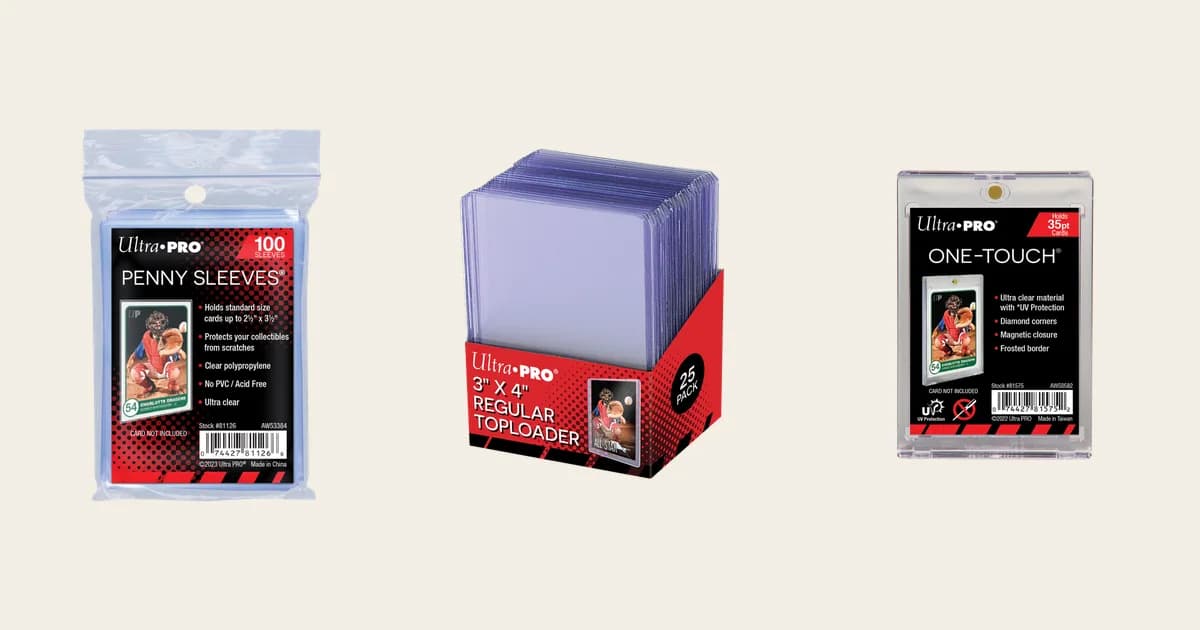
How to store sports cards comes down to three layers: a soft sleeve against scratches, a rigid holder against bends, and a cool, dry, dark place for the box. This guide uses the supply maker's own specifications, the graders' packing rules and Library of Congress preservation guidance, with every price dated October 10 or 11, 2026.
TL;DR: Sleeve each card you care about in a penny sleeve, then put it in a toploader (Topps' setup for valuable cards) or a semi-rigid holder (PSA's requirement for grading submissions, which bans toploaders). Cards thicker than 35pt need a holder rated higher, such as a 55pt or 100pt ONE-TOUCH. Store boxes cool and dry: the Library of Congress suggests 30 to 50% relative humidity and 70°F or below for photographs.
How to store sports cards (quick answer)
Sleeve first, then hold, then box. Topps' glossary says "Valuable cards are typically placed in a thin penny sleeve and then in a toploader for maximum protection." For a grading submission PSA wants a semi-rigid holder instead. Keep the boxes somewhere dry, cool and out of the light.
Key Takeaways
- Penny sleeve: the first layer; Ultra PRO rates its sleeves for cards "up to 35 points in thickness."
- Toploader: rigid 3 by 4 inch holder for standard cards up to 35pt, about $0.24 each on Ultra PRO's list price.
- ONE-TOUCH: magnetic holder in 35pt, 55pt and 100pt sizes, $3 to $3.99 each.
- Grading: PSA says "Do not use toploaders"; use semi-rigid holders of 3 5/16 by 4 7/8 inches.
- Environment: 30 to 50% relative humidity, 70°F or below, little light (Library of Congress, for photographs).
- Plastics: the Library of Congress lists polyester, polyethylene and polypropylene as suitable.
Overview: how to store sports cards with the right holder
Each holder solves a different problem. The table uses Ultra PRO's product pages, read on October 10 and 11, 2026; prices change, so treat them as a dated snapshot.
| Holder | What the maker says | Card thickness | Ultra PRO list price | Per holder |
|---|---|---|---|---|
| Penny sleeve | "non-PVC, archival safe, and acid-free polypropylene film" | up to 35pt | $3.99 for 100 | $0.04 |
| Regular toploader (3" x 4") | "super clear, rigid PVC plastic" | up to 35pt | $5.99 for 25 | $0.24 |
| Semi-rigid holder (1/2" lip) | listed for standard size cards | standard cards | $35.99 for 200 | $0.18 |
| ONE-TOUCH magnetic holder | "non-PVC materials," UV protection on the package | 35pt, 55pt or 100pt versions | $3.99 single (35pt); $14.99 for 5 | $3.00 to $3.99 |
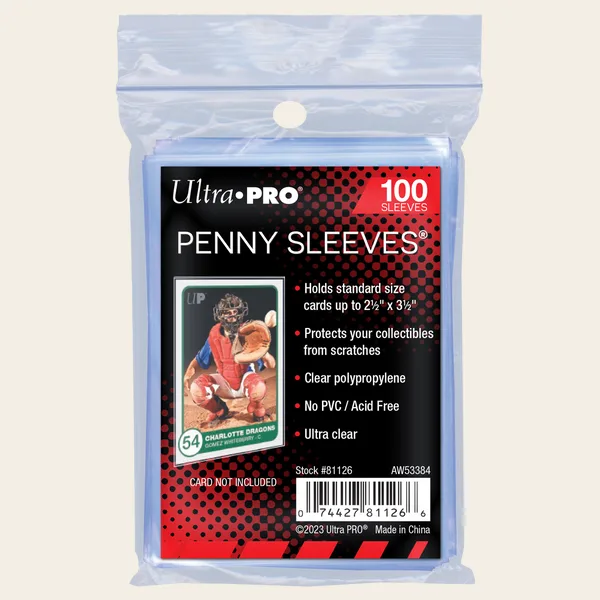 Product image: Ultra PRO
The name tells you the price point. Topps' glossary says the most popular kind of sleeve, the penny sleeve, "gets its name from being inexpensive: they cost a penny." At Ultra PRO's list price of $3.99 for 100, that is about four cents each. Our beginner guide to collecting covers the card types you are likely to be sleeving.
Analysis: penny sleeves and toploaders for everyday storage
Sleeve before anything rigid. Ultra PRO's 100-count penny sleeves hold standard cards "up to 35 points in thickness" and are made with "non-PVC, archival safe, and acid-free polypropylene film." The sleeve keeps the surface from rubbing against the hard holder.
Toploader for keeping. Ultra PRO's regular toploader has "outer dimensions of 3" x 4"" and is "designed to safely store standard size cards (2-1/2" x 3-1/2") up to 35 points in thickness." A card thicker than 35pt, such as a relic or patch card, needs a holder rated above that; Ultra PRO lists 55pt and 100pt ONE-TOUCH versions.
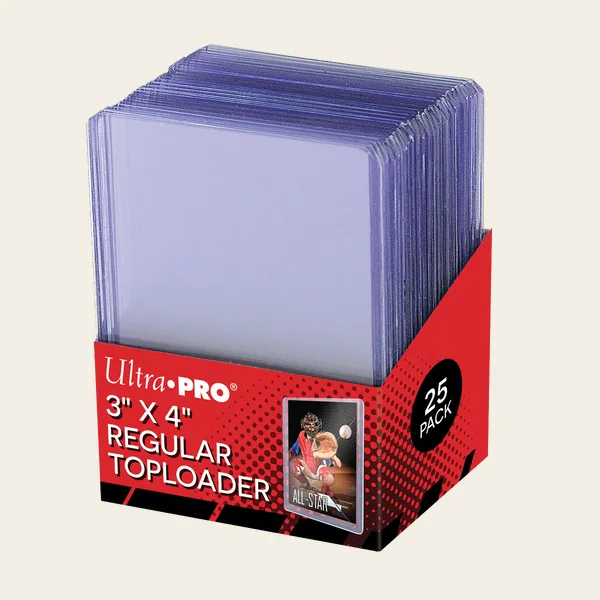 Product image: Ultra PRO
The PVC question. Ultra PRO's toploader page says it is "Made with super clear, rigid PVC plastic," while the same maker describes its penny sleeves, 9-pocket pages and ONE-TOUCH holders as non-PVC. The Library of Congress, writing about photographs, says "Suitable plastic enclosures are made of uncoated polyester, polyethylene, and polypropylene," a list that does not include PVC. We did not find guidance on how long a card can sit in a PVC holder on the PSA, CGC or Ultra PRO pages we read.
GODEEPER: Why grading companies count slabs, and what those counts do and do not mean. What Is a Pop Report? PSA, SGC and CGC Population Explained →
Analysis: magnetic ONE-TOUCH holders and thick cards
ONE-TOUCH holders close with a magnet and are sold by thickness. Ultra PRO's pages list versions for cards "up to 55pt in thickness" and "up to 100pt in thickness," plus a 35pt version whose package reads "Holds 35pt Cards." They are "made with non-PVC materials to provide acid-free protection," and the package lists "Ultra clear material with *UV Protection."
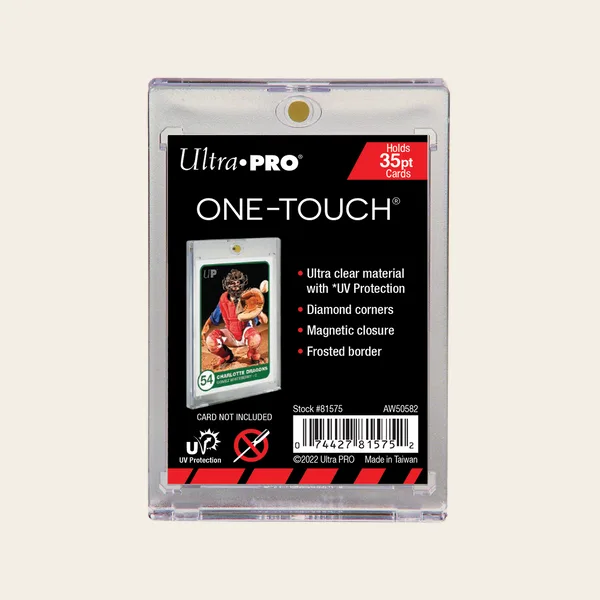 Product image: Ultra PRO
The trade-off is cost and bulk. A regular toploader works out to about $0.24 on Ultra PRO's list price, against $3.99 for a single 35pt ONE-TOUCH or $3.00 each in a five-pack, as of October 10, 2026; the five-pack was out of stock on October 15 and 16. Collectors also raise space: one r/baseballcards commenter says toploaders use 90% less space than ONE-TOUCH holders (see the community section below).
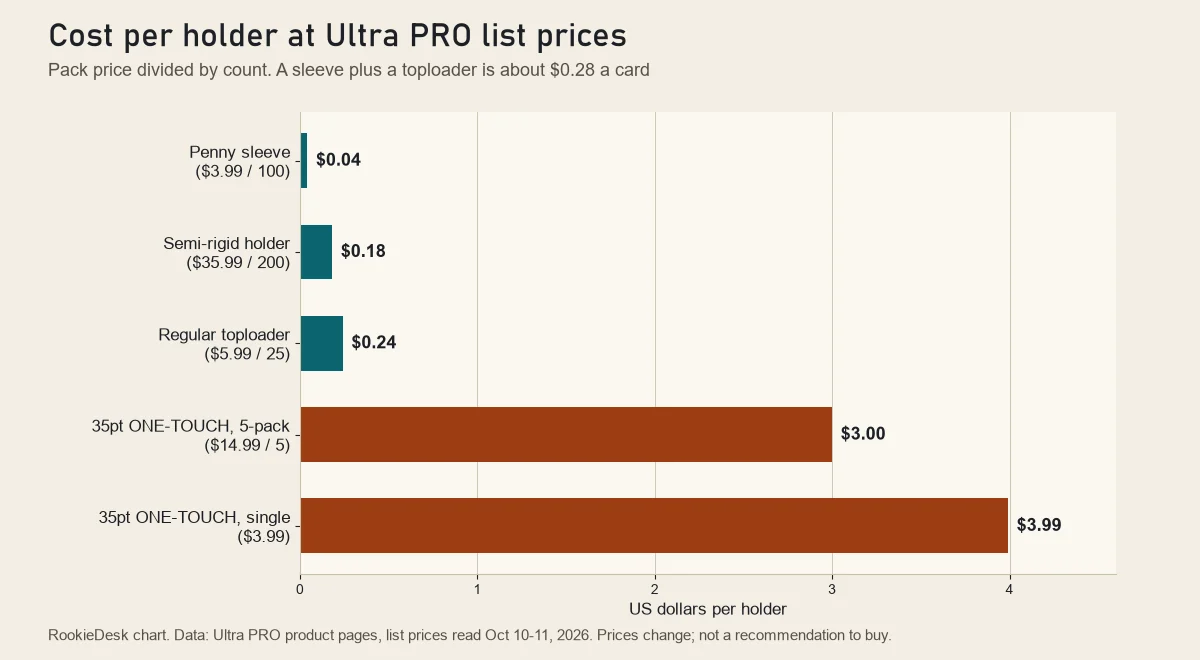 Chart: RookieDesk, from Ultra PRO list prices (October 10 and 11, 2026)
Analysis: binders, storage boxes and graded slabs
Binders. Ultra PRO's 9-pocket pages for standard cards come 35 to a pack, are listed at $7.99 (out of stock on October 10, 2026 and October 15, back in stock on October 16) and are marked "Acid-Free and No PVC." If you reuse an old photo album, the Library of Congress advises: "Avoid albums with colored, "magnetic," or sticky self-adhesive pages." The Library of Congress page is about photo albums and does not discuss card holders.
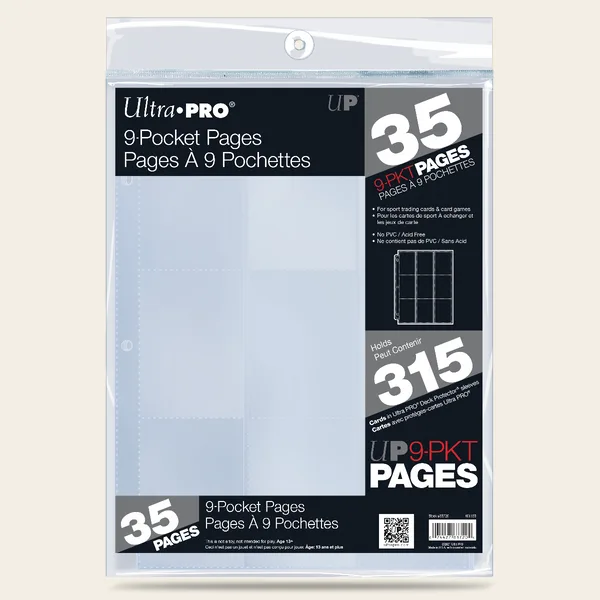 Product image: Ultra PRO
Graded cards. Ultra PRO says its Graded Card Box "is sized to hold 10 PSA or Beckett graded cards" and is made of "archival-safe polypropylene material," listed at $7.99 on October 10, 2026 and marked down to $6.39 on October 16. A slab protects against handling; light still matters, and the Library of Congress warns that "Light can cause permanent and irreversible damage." What a grade is worth tracking is covered in our sports card grading guide.
Analysis: temperature, humidity and light
We did not find a storage climate on the Ultra PRO, PSA or CGC pages we read, so we use the Library of Congress' guidance, the closest official guidance we found. It is written for photographs, not sports cards:
- Humidity and temperature: "A relatively dry* (30-50% relative humidity (RH)), cool** (70°F or below), and stable environment is best."
- Stability: a mixed collection should have "a set point between 30% and 50% without cycling more than +/- 5% a day."
- Mold risk: "Mold tends to grow when the RH is greater than 60% and the temperature is above 75-80° F."
- Light: "Light can cause permanent and irreversible damage."
On those numbers, a damp basement (mold risk above 60% humidity) or a hot attic (above 70°F) works against you, and so does direct light.
What graders want when you ship cards
Storage and shipping are different jobs, and the graders are specific. PSA's shipping guide: "Place each card into a clear penny sleeve," then "Slide each sleeved card into a semi-rigid holder. Make sure both sides are fully visible. Do not use toploaders, tape, pull tabs, or sticky notes." It adds: "For standard trading cards, semi-rigid holders must be 3 5/16" x 4 7/8." PSA's full list: "You'll need your submission form, clear penny sleeves, semi-rigid card holders, cardboard dividers, rubber bands, a new shipping box, bubble wrap, and packing tape."
CGC's packing page asks you to "place each card into a protective sleeve," then "Put all of your cards in between two cardboard pieces that are larger than the cards," and to "Ensure that the rubber bands are not too tight." The CGC page we read did not mention toploaders either way. For SGC, a secondary guide from Grader's Choice says "SGC requires cards to be submitted in semi rigid holders" and not in top loaders; we could not load SGC's own packing page to confirm.
For a PSA submission, move each card from its toploader into a semi-rigid holder when you pack it. Fees per card are in our PSA grading fees guide, and the grading fee calculator adds up PSA, SGC and CGC for the same order.
Community: toploader or one-touch?
An r/baseballcards thread titled "One-Touch v Top Loader: Which to use?" (December 2022) is still a fair summary. u/Bsneed51 answered in one line: "For storage, to loader. For display, one touch." u/already-heard added: "Top loaders for storage, if it’s a valuable card I also put it in a team bag for extra protection." On space, u/JayBruceFan32 wrote: "The top loaders use 90% less space and weight next to nothing compared to one touch holders." (thread)
Our take
Based on the maker's specifications, the graders' rules and the archive guidance cited above: cheap layers do most of the work. A four-cent penny sleeve and a toploader or semi-rigid holder cover standard cards up to 35pt, Ultra PRO's rating, and thicker cards need a holder rated for them. Match the holder to the job: toploader or ONE-TOUCH at home, semi-rigid for PSA. Then control the room: no holder controls humidity or light, and the Library of Congress notes mold tends to grow above 60% relative humidity.
Frequently Asked Questions
The six questions above cover the best basic setup, toploaders versus ONE-TOUCH, PVC, PSA submissions, humidity and graded cards.
What is the best way to store sports cards?
Put each card you want to protect in a penny sleeve, then in a toploader or semi-rigid holder, and keep the holders upright in a box away from light. Topps' glossary describes the sleeve-then-toploader setup for valuable cards. Store them somewhere cool and dry; the Library of Congress suggests 30 to 50% relative humidity.
Should I use toploaders or one-touch holders?
Both protect a card; they differ in cost, space and thickness. On Ultra PRO's list prices checked October 10 and 11, 2026, a regular toploader works out to about $0.24 each and a 35pt ONE-TOUCH to $3 to $3.99. ONE-TOUCH holders come in 35pt, 55pt and 100pt sizes for thicker cards.
Are toploaders made of PVC?
Ultra PRO's regular 3 by 4 inch toploader page says it is made with super clear, rigid PVC plastic. Its penny sleeves, 9-pocket pages and ONE-TOUCH holders are described as non-PVC. The Library of Congress lists uncoated polyester, polyethylene and polypropylene as suitable plastic enclosures for photographs.
Can I send cards to PSA in toploaders?
No. PSA's shipping guide says to place each card in a clear penny sleeve, slide it into a semi-rigid holder with both sides visible, and not to use toploaders, tape, pull tabs or sticky notes. For standard cards PSA says semi-rigid holders must be 3 5/16 by 4 7/8 inches.
What humidity is safe for storing sports cards?
Card makers do not publish one, so we use archive guidance. The Library of Congress recommends a relatively dry, cool and stable space, 30 to 50% relative humidity and 70°F or below for photographs, without swings of more than 5% a day. It notes mold tends to grow above 60% humidity.
How should I store graded cards?
Ultra PRO sells a graded card box that it says holds 10 PSA or Beckett graded cards and is made of archival-safe polypropylene.
How we checked this
Holder specifications and prices come from Ultra PRO's product pages, read on October 10, 2026, with the toploader page re-read on October 11. Packing rules come from PSA's shipping guide and CGC's packing page, read on October 10; the SGC rule comes from a secondary guide because SGC's own page did not load for us. Topps' glossary lines were read on Topps Ripped on October 10 for our beginner guide; the site could not be re-opened on October 11. Climate figures come from three Library of Congress preservation pages. The Reddit comments were read on the thread's feed on October 10. Per-holder costs are RookieDesk's arithmetic from the list prices. We did not test any of these products. Full source table: data/sources/how-to-store-sports-cards.sources.md.
References
- PSA, shipping guide: https://www.psacard.com/info/shipguide
- CGC Cards, shipping cards to CGC: https://www.cgccards.com/services/shipping-cards-to-cgc/
- Ultra PRO, 3" x 4" regular toploaders (25ct): https://www.ultrapro.com/products/3-inch-x-4-inch-clear-regular-toploaders-25ct-for-standard-size-cards
- Ultra PRO, 100ct penny sleeves: https://www.ultrapro.com/products/100ct-penny-sleeves-2-5-x-3-5-soft-trading-card-protectors
- Ultra PRO, 35pt ONE-TOUCH magnetic holder: https://www.ultrapro.com/products/35pt-uv-one-touch-magnetic-holder
- Ultra PRO, 100pt ONE-TOUCH (5ct): https://www.ultrapro.com/products/100pt-uv-one-touch-magnetic-holder-5ct
- Ultra PRO, graded card box: https://www.ultrapro.com/products/graded-card-box-for-toploaders-one-touch
- Library of Congress, care of photographs: https://www.loc.gov/preservation/care/photo.html
- Library of Congress, light and preservation: https://www.loc.gov/preservation/care/light.html
- Library of Congress, care, handling and storage of photographs (leaflet): https://www.loc.gov/preservation/care/photolea.html
- Topps Ripped glossary, toploader: https://ripped.topps.com/definition/toploader/
- Topps Ripped glossary, card sleeve: https://ripped.topps.com/definition/card-sleeve/
- Ultra PRO, 55pt ONE-TOUCH: https://www.ultrapro.com/products/55pt-uv-one-touch-magnetic-holder
- Ultra PRO, 9-pocket pages (35ct): https://www.ultrapro.com/products/9-pocket-page-for-standard-size-cards-35ct
- Grader's Choice, SGC card grading guide (secondary): https://graderschoice.com/sgc-card-grading-guide/
- Reddit r/baseballcards, "One-Touch v Top Loader: Which to use?": https://www.reddit.com/r/baseballcards/comments/zl44nf/onetouch_v_top_loader_which_to_use/
Related Reading
- Numbered Cards Explained: What /99, /25 and 1/1 Mean: the cards most collectors move into a toploader first.
- CGC Grading Fees 2026: Every Tier and Price for Sports Cards: what it costs to send a stored card to CGC.
- What Is a Case Hit? Sports Card Case Hits Explained: the rare inserts that usually go straight into a holder.
About the author

Editorial desk
The RookieDesk desk. We read the paperwork before you open the box: Topps' checklists and odds sheets, the box art, grader fee pages. Every number links to its source and carries the date we checked it.
Keep reading
How to Read Sports Card Odds: Topps Odds Sheets Explained
Guides · 11 min
What Is a Case Hit? Sports Card Case Hits Explained
Guides · 8 min

SP vs SSP Cards: What Short Prints and Variations Mean
Guides · 8 min
How to Start Collecting Sports Cards: 2026 Beginner Guide
Guides · 14 min

Numbered Cards Explained: What /99, /25 and 1/1 Mean
Guides · 8 min
What Is a Pop Report? PSA, SGC and CGC Population Explained
Guides · 8 min
CGC Grading Fees 2026: Every Tier and Price for Sports Cards
Guides · 9 min
SGC Grading Fees 2026: Every Tier After the September Change
Guides · 8 min
Disclaimer
RookieDesk publishes data, not investment or financial advice. Odds are the manufacturer's published odds, not a promise of what any one box contains. Checklists, release dates, grading fees and prices change after publication; each one here carries the date we checked it. Confirm critical details with the manufacturer, grader or seller before you buy or submit. RookieDesk is independent and not affiliated with any card manufacturer, league or players association, and carries no affiliate links, ads or sponsored posts; see our independence note. Articles are researched and written with AI tools, and every fact is checked against its cited source before publishing; see how we use AI.