Guides
How to Start Collecting Sports Cards: 2026 Beginner Guide
How to start collecting sports cards in 2026 with Topps' own definitions: card types, hobby vs blaster boxes, reading a checklist and PSA's sleeve rules.
How to start collecting sports cards comes down to three things: knowing what is in a pack, choosing a box format, and protecting what you pull. This guide uses Topps' own glossary and PSA's packing rules for all three.
TL;DR: A pack mixes base cards (the most common set) with inserts, parallels and hits such as autographs and relics, per Topps Ripped's glossary. Hobby boxes carry more chase cards; blasters are retail boxes with 4 to 15 packs and fewer guaranteed hits. Read the checklist before buying, sleeve anything you care about, and use PSA's semi-rigid rule if you plan to grade.
How to start collecting sports cards (quick answer)
Pick one sport and one current product, learn the card types on its checklist, then decide between a hobby box, a retail box or buying singles. Topps Ripped's beginner guide puts it plainly: "Start with what you enjoy most, then expand into new areas like sets, parallels, or autographs as your collection grows." Protect the cards you keep with a penny sleeve, and a toploader or semi-rigid holder for the ones that matter.
Key Takeaways
- Base cards are the most common cards in a product and carry a number on the back that matches the checklist (Topps Ripped).
- Inserts, parallels and hits are the scarcer layers: inserts have their own designs, parallels re-use the base design with a physical difference, and hits are higher-valued chase cards such as autographs and relics.
- Hobby vs retail: hobby boxes "typically feature a greater number of chase cards"; retail boxes may share the base set but have "fewer guaranteed hits."
- Checklists list what can be pulled, not what is in your pack.
- Storage: penny sleeve first. Toploader for keeping, semi-rigid holder for a PSA submission.
- Data, not advice: nothing here says what to buy or what a card is worth.
Overview: what is in a pack of sports cards
A pack is a sealed mix of layers, from the most common card to the rarest. Topps Ripped's glossary, the source for every definition below, says most Topps packs "have between 4 and 16 cards, though the number will vary from product to product." The table sorts the layers from common to scarce.
| Card type | Topps Ripped's definition (quoted) | What to look for |
|---|---|---|
| Base card | "Base cards make up the base set, which is the most common set of cards in a sports or non-sport product." | Card number on the back that matches the checklist |
| Insert | "any non-base and non-parallel cards in a trading card set" | Its own theme, design and numbering |
| Parallel | "a similar look and design, but are distinguished by a unique physical quality" | Same photo and design as the base card, different color, finish or texture |
| Refractor | "a special printing technology to create a unique visual effect" | Rainbow sheen on a chromium card; colors "tend to be numbered" |
| Short print | "printed in lower quantities than other cards in the same set" | Often a variation of a base card |
| Variation | "different, usually in small and subtle ways, from its common counterparts" | Different photo or detail on the same card number |
| Numbered card | "the print run is specified on either the front or back of the card" | A stamp such as 10/100 |
| Autograph | "A card that is autographed by a player, celebrity, or other subject." | On-card signature or a sticker |
| Relic card | "contains a piece of memorabilia embedded in the card itself" | A swatch window |
| Patch card | "a multi-colored jersey patch embedded in the card itself" | A swatch with more than one color |
| Rookie card | "players' first cards once they make their Major League debut" | RC logo on the card |
| 1st Bowman | "their first official baseball card, released before their official rookie card" | "1st" or "1st Bowman," usually upper left |
| Redemption | the owner "redeems" the card with the manufacturer "and receives a hit" | A placeholder card with instructions |
| Case hit | "a special card will be inserted 'one per case'" in some products | Product-specific; not every product has one |
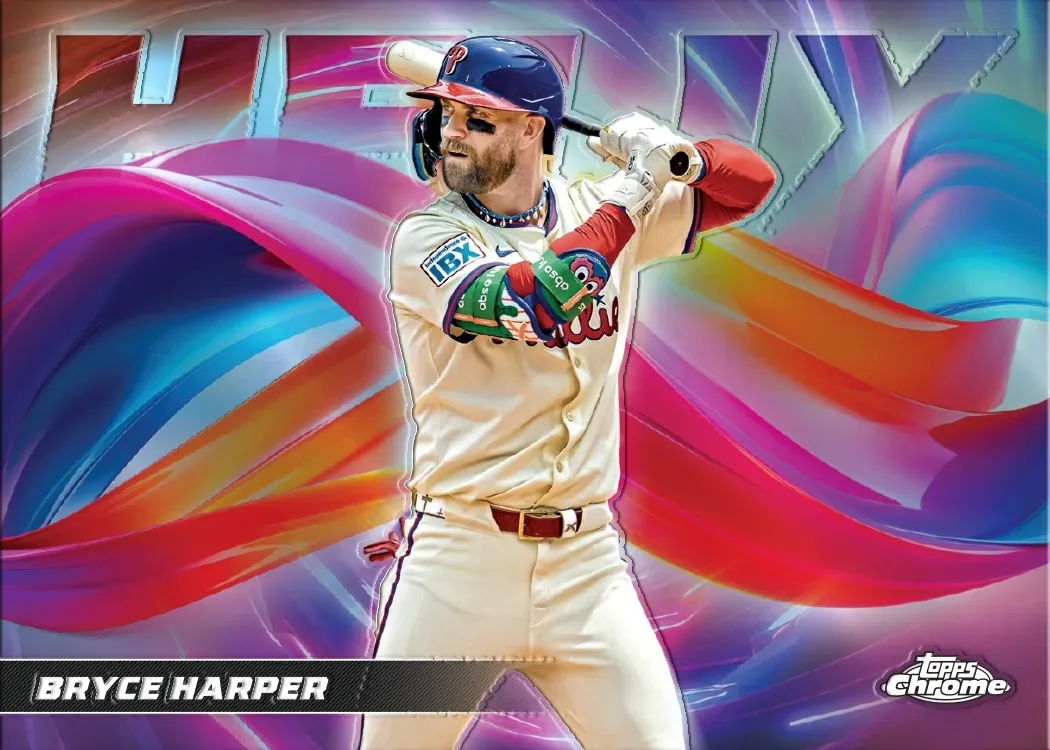 Card image: Topps (Topps Ripped 2025 Chrome Update guide)
Two of those terms deserve a closer look. A hit is "a modern hobby term referring to higher-valued chase cards," and Topps Ripped notes that manufacturers "will guarantee a certain number" of hits in some box formats. An on-card auto is one where "the player puts their signature directly on the card, rather than on a sticker affixed to the card." Two cards can both be autographs and still differ in how they were signed.
Parallels confuse most new collectors. Topps Ripped says they are told apart by "image variation, or the printing technology employed." Refractor colors are each "printed to a different quantity, and they tend to be numbered." If a parallel carries a stamped serial, the numbered cards guide listed further down explains what /99, /25 and 1/1 mean and where Topps prints the run.
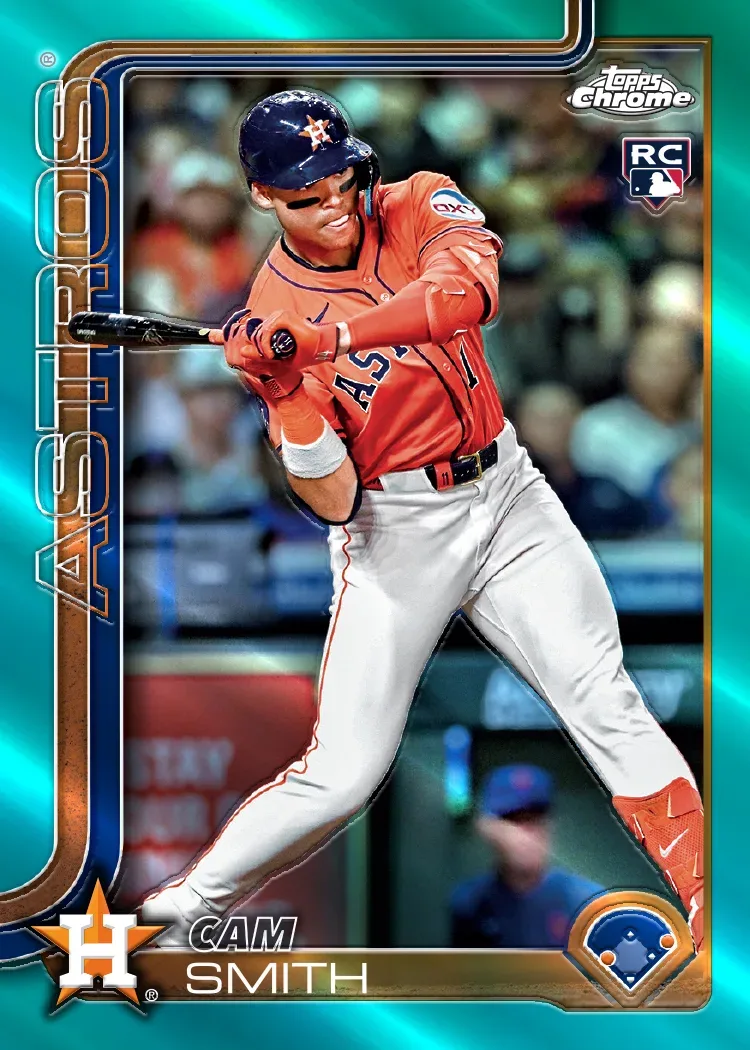 Card image: Topps (Topps Ripped 2025 Chrome Update guide)
The rarest layer is the one-of-one. Topps Ripped calls a 1/1 "the rarest type of trading card, making it especially appealing to collectors." Topps also sells Topps NOW cards, which its beginner guide says carry "a public print run, so you always know exactly how rare it is."
Analysis: hobby, retail, blaster and mega boxes
The box format decides how many chase cards you are paying for. Topps Ripped's definitions draw the main line between hobby and retail, and the individual box guides fill in the details for each product.
| Format | What Topps Ripped says | Where it is sold |
|---|---|---|
| Box (any) | "A box is a sealed container that holds packs of cards." In the most common configuration, a Topps box will contain 24 packs | Varies |
| Hobby box | "high-end boxes that typically feature a greater number of chase cards" | "usually distributed exclusively through hobby shops or online" |
| Retail box | "may have the same base set as a higher-end hobby box, but will have fewer guaranteed hits and chase cards" | Big-box stores |
| Blaster box | "Blaster boxes have anywhere from 4 to 15 packs" | "large retail stores like Walmart and Target" |
| Mega box (example) | 2024 Topps Resurgence Football Megabox: "48 total cards across six packs, with eight cards per pack"; "hits aren't guaranteed" | Retail |
| Case | "A case is a sealed collection of boxes" | Hobby shops, breakers |
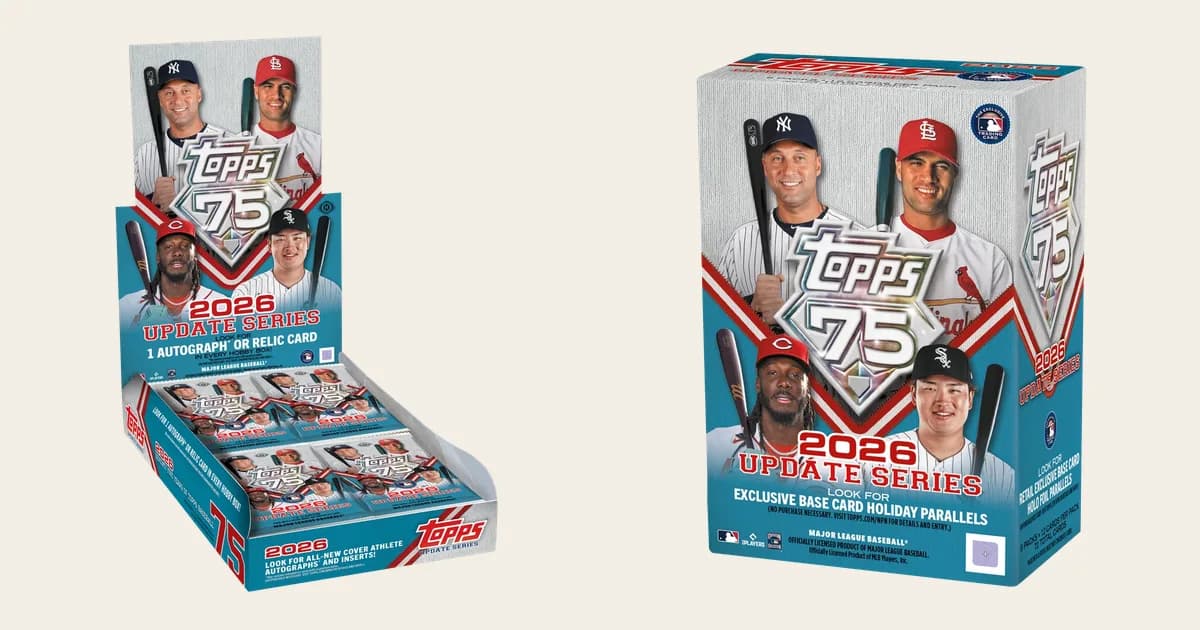
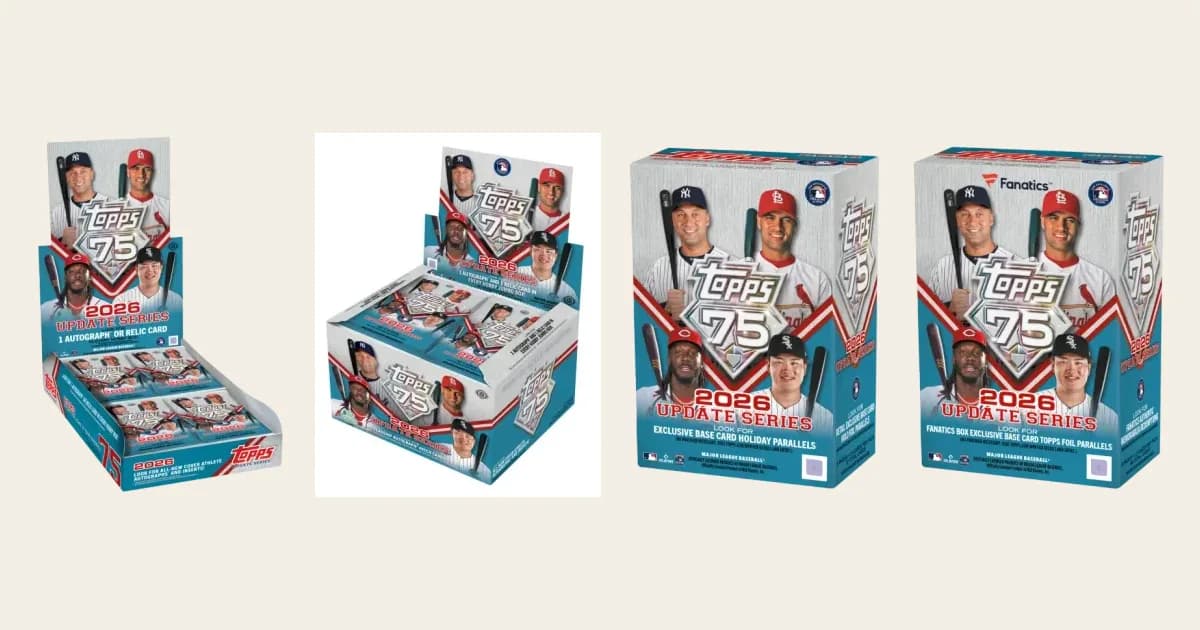
The two boxes at the top of this page show the split on one product. The 2026 Topps Update Series hobby box is printed with "1 autograph or relic card" in every hobby box. The value box beside it promises exclusive base card parallels instead of a hit, and its side panel reads "6 packs, 12 cards per pack, 72 total cards." Same base set, same design, a different promise on the box.
Topps' glossary has no standalone entries for jumbo, hanger or value boxes, so we do not define them from memory here. Each product's box guide lists what its formats hold. For 2026 releases, our hobby vs jumbo vs blaster explainer compares the formats product by product, and the 2026 Topps Update Series guide shows a full format lineup with Topps' odds for each box.
A box guarantee is product-specific. Topps' 2025 Chrome Update guide (dated December 9, 2025) promised "Chrome Rookie Autographs, the value core of the product, with at least one guaranteed per box." The Resurgence Megabox guide said "hits aren't guaranteed." Read the guarantee line for the exact box you are holding, not the brand name on the front.
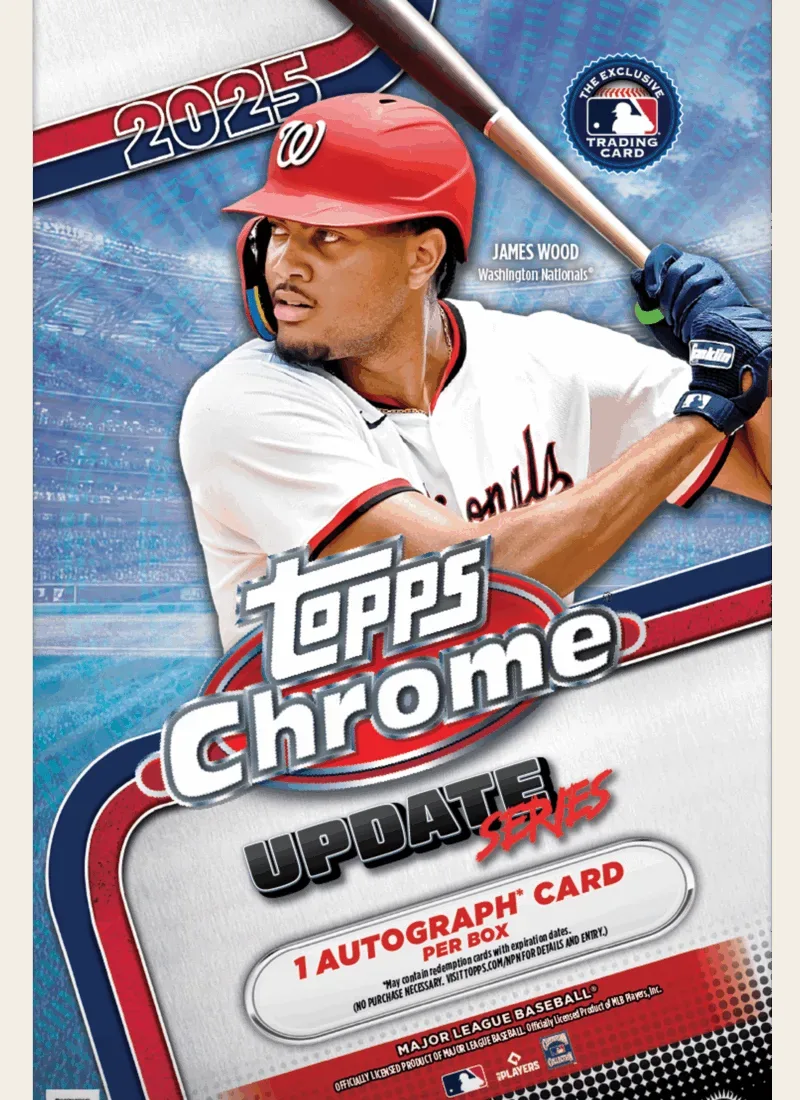 Product image: Topps (Topps Ripped 2025 Chrome Update guide)
GODEEPER: The rookie card rules, 1st Bowman cards and how to check whether a card is a true RC. Rookie Cards Explained: RC Logo, 1st Bowman and 2026 Classes →
Analysis: read the checklist before you buy
The checklist is the map of a product. Topps Ripped's definition is careful about what it does and does not promise: "A checklist doesn't tell you what cards you will pull from a given pack or box; instead, it tells you" what cards exist in the product. It is the list of possibilities, not a packing slip.
Start with the base set. Base cards "typically feature a card number on the back of the card, making them easily identifiable on the product checklist," so the number on your card is the line to look up. Then scan the sections below the base set: inserts, autographs, relics and variations each get their own block, often with their own card-number prefix.
Rookies are flagged on the checklist. A rookie card is a player's first card after his Major League debut. A 1st Bowman card comes earlier: "a player's first official baseball card, released before their official rookie card", and "designated '1st' or '1st Bowman,' usually in the upper left-hand corner." Topps' Chrome Update guide adds context on why that product draws rookie collectors: it "is where many players get their first widely recognized Chrome Rookie Cards." The same guide describes the RDPA, a rookie autograph "paired with the game-worn MLB Debut Patch from their very first game."
The checklist and the odds sheet are two different documents. The checklist names the cards; the manufacturer's odds sheet gives how often each box format produces them. Our Update Series rookies list shows what a checklist count looks like in practice: every rookie on the 2026 Update Series checklist by card number.
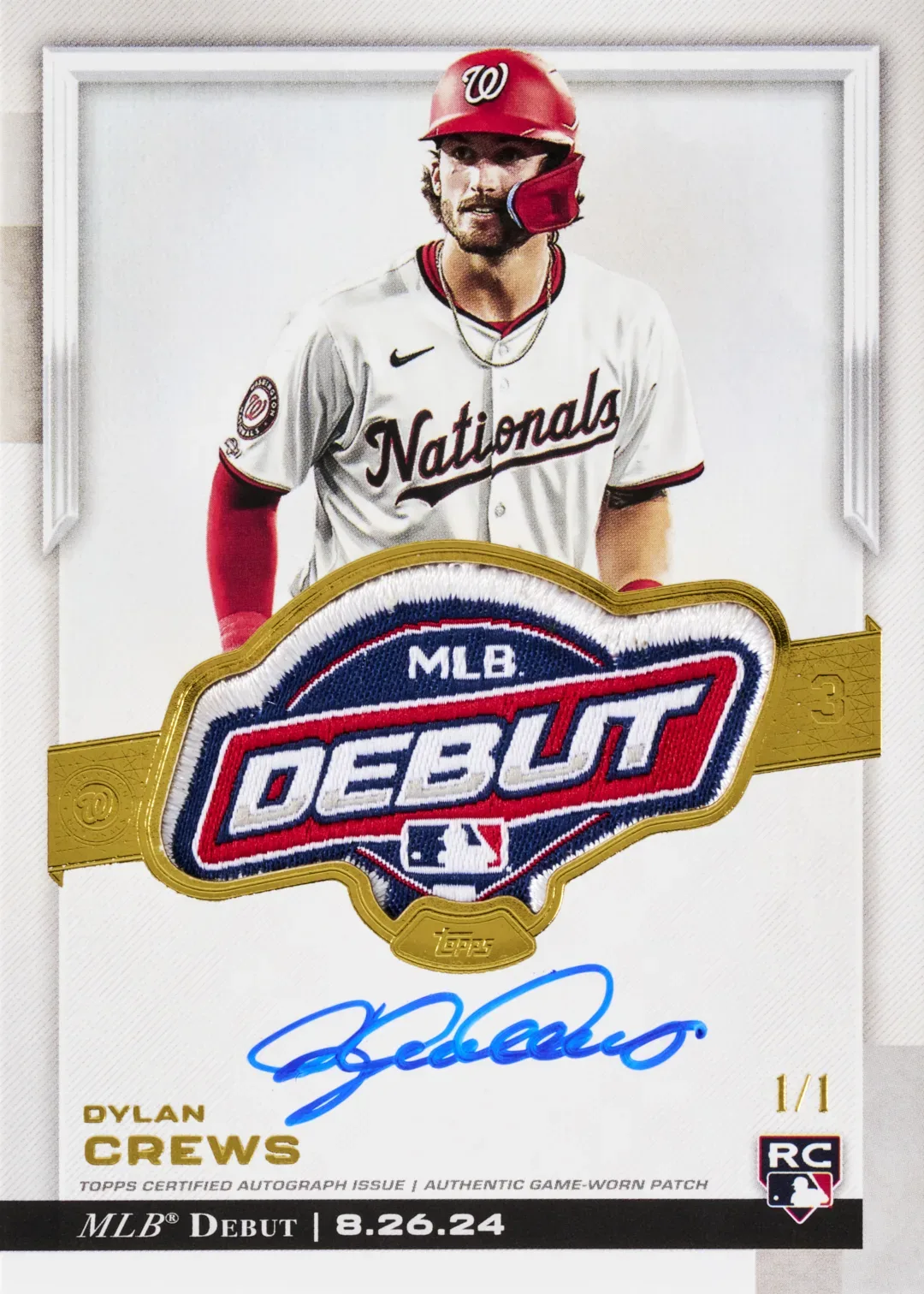 Card image: Topps (Topps Ripped 2025 Chrome Update guide)
How to start collecting sports cards without damaging them
Protect a card the moment it leaves the pack. The supplies are cheap and the rules come from Topps and PSA.
Penny sleeves. Topps Ripped's sleeve entry says the most popular kind, penny sleeves, "gets its name from being inexpensive: they cost a penny." PSA's shipping guide asks for "a clear penny sleeve" and warns: "Avoid solid or opaque sleeves, which can cause delays."
Toploaders for keeping. Topps' glossary says "Valuable cards are typically placed in a thin penny sleeve and then in a toploader for maximum protection." That is the common setup for a card you keep at home or carry to a show.
Semi-rigid holders for grading. PSA wants something different in a submission: "Slide each sleeved card into a semi-rigid holder. Make sure both sides are fully visible. Do not use toploaders, tape, pull tabs, or sticky notes." For standard cards, PSA says "semi-rigid holders must be 3 5/16" x 4 7/8." Both official sources are right for their purpose; the Topps line is about storage, the PSA line is about shipping to a grader.
Shipping a submission. PSA's supply list is "your submission form, clear penny sleeves, semi-rigid card holders, cardboard dividers, rubber bands, a new shipping box, bubble wrap, and packing tape," and it asks you to "Use packing tape to seal all seams securely. Avoid painter's tape, scotch tape, or reused tape."
Size matters for supplies. Wikipedia (a secondary source) notes that Topps' 1957 card size, "2-1/2 inches by 3-1/2 inches," became the standard "that remains the basic format for most sports cards produced in the United States," which is why standard sleeves and holders fit most modern base cards. Thick relic and patch cards need larger holders.
Beginner Guides: Card Types, Boxes and Grading
These guides go deeper on each topic in this pillar. New guides are added here as they publish.
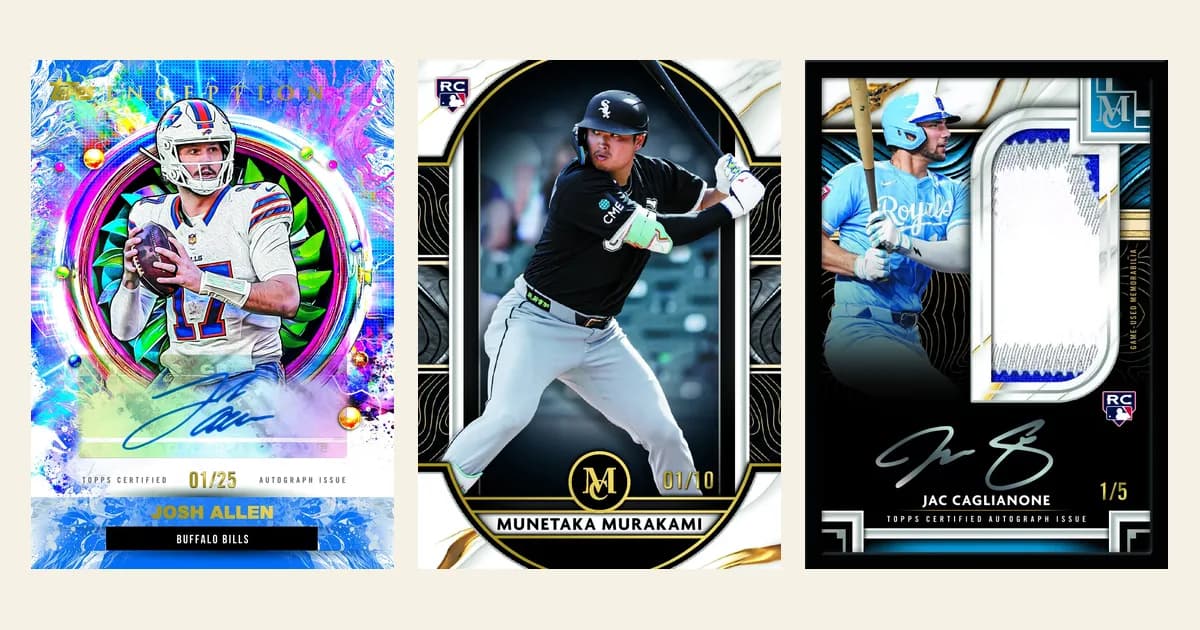
- Numbered Cards Explained: What /99, /25 and 1/1 Mean: how serial numbers work, with 2026 Topps examples from /50 to 1/1.
- Sports Card Grading 2026: PSA vs SGC vs CGC vs Beckett: what each grader charges, how long it takes and what is open now.
- PSA Grading Fees 2026: Every Tier, Price and Turnaround: PSA's tiers after the September 2026 changes.
Community: what collectors tell beginners
Experienced collectors repeat a few points to newcomers, and they line up with Topps' definitions. On the hobby vs retail question, u/fmlongo answered in an r/sportscards thread about Topps formats: "a hobby box has one guaranteed hit. No guaranteed hits in megas and/or value/blaster boxes." (thread). That comment was about one product; check the guarantee for yours.
On money, two answers to beginner threads say the same thing. u/ttoteno wrote in r/sportscards: "To put it plainly: Buy singles of cards you want. Buy boxes once in a while for fun. This is a hobby, not an investment." (thread). In r/baseballcards, u/bringsallyup told a new collector: "Avoid thinking you're gonna recoup any money spent on boxes/packs of "sealed wax"" (thread).
Our take
Based on the definitions and packing rules cited above: learn the vocabulary before spending. Every term a box advertises (hit, parallel, short print, case hit, RC) has a precise meaning in Topps' glossary, and the box guide plus the odds sheet tell you how often each one shows up in the format you are looking at. A hobby box and a blaster of the same product can share a base set and still be very different purchases, because the guarantee line changes. Read the checklist to know what exists, read the box guide to know what is promised, and sleeve what you keep. If you plan to grade, follow PSA's semi-rigid rule rather than the toploader habit.
Frequently Asked Questions
The FAQ on this page covers the questions beginners ask most: how to start, hobby vs blaster boxes, base cards, toploaders, checklists and rookie cards vs 1st Bowman cards.
What is the best way to start collecting sports cards?
Topps Ripped's beginner guide says to start with what you enjoy most, then expand into sets, parallels or autographs as the collection grows. In practice that means picking one sport and one product, reading its checklist, and deciding whether you want to open packs or buy the singles you want.
What is the difference between a hobby box and a blaster box?
Topps Ripped describes hobby boxes as high-end boxes with more chase cards, usually sold through hobby shops or online. Blasters are retail boxes sold at stores like Walmart and Target, with anywhere from 4 to 15 packs and fewer guaranteed hits than a hobby box of the same product.
What is a base card?
Base cards make up the base set, the most common set of cards in a product. Topps Ripped notes they usually carry a card number on the back, which is how you find them on the product checklist. Parallels, inserts and hits are everything that is not a plain base card.
Should I put my cards in toploaders?
For keeping a card at home, Topps Ripped's glossary says valuable cards typically go in a penny sleeve and then a toploader. For a grading submission, PSA's shipping guide asks for a clear penny sleeve inside a semi-rigid holder and says not to use toploaders.
What does a checklist tell you?
A checklist lists every card in a product that could be pulled: base cards, inserts, parallels and hits. Topps Ripped is clear that it does not tell you what you will get from a given pack or box. For that you need the box guide and the manufacturer's odds sheet.
Is a rookie card the same as a 1st Bowman card?
No. Topps Ripped defines a rookie card as a player's first card once he makes his Major League debut. A 1st Bowman is his first official baseball card, released before the rookie card and marked 1st or 1st Bowman, usually in the upper left corner.
How we checked this
Definitions come from Topps Ripped's glossary and beginner guide, read in a headless browser on October 10, 2026. Box facts come from Topps Ripped's 2025 Chrome Update guide (dated December 9, 2025) and its 2024 Resurgence Football Megabox guide (dated May 15, 2025). Storage and shipping rules come from PSA's shipping guide, read the same day. Wikipedia is used once, labelled as secondary, for the standard card size. Community quotes were read on the Reddit threads linked above. We did not open any boxes for this guide. Full source table: data/sources/sports-card-collecting-basics-guide-2026.sources.md.
References
- Topps Ripped, glossary (base card, insert, parallel, refractor, short print, variation, autograph, relic, patch, rookie card, 1st Bowman, redemption, case hit, hobby box, blaster box, retail box, box, pack, hit, checklist, toploader, card sleeve): https://ripped.topps.com/glossary/
- Topps Ripped, Card Collecting 101: https://ripped.topps.com/card-collecting-101
- Topps Ripped, 2025 Topps Chrome Update collecting guide: https://ripped.topps.com/topps-chrome-update-2025-collecting-guide
- Topps Ripped, 2024 Topps Resurgence Football Megabox guide: https://ripped.topps.com/how-to-collect-2024-topps-football-resurgence-megabox-product/
- PSA, shipping guide: https://www.psacard.com/info/shipguide
- Wikipedia, Trading card (secondary): https://en.wikipedia.org/wiki/Trading_card
Related Reading
- Sports Card Release Calendar 2026: Oct and Nov Dates: the upcoming Topps releases, so you can pick a product that is actually on shelves.
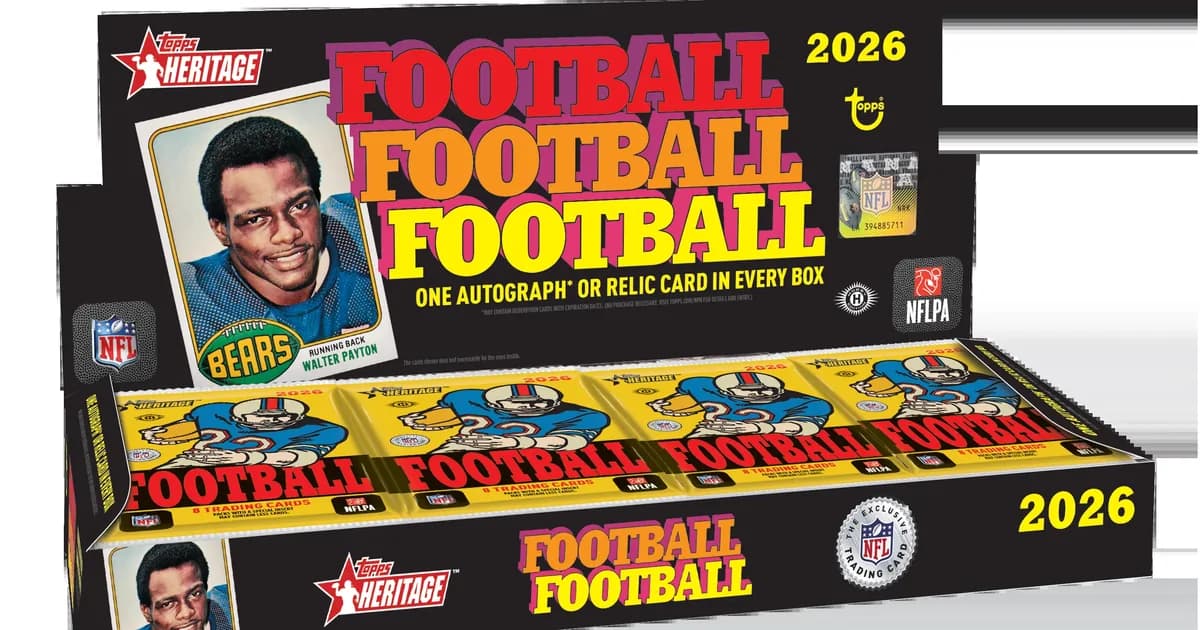
- 2026 Topps Heritage Football Checklist and Box Guide: a full product hub showing how to read one checklist section by section.
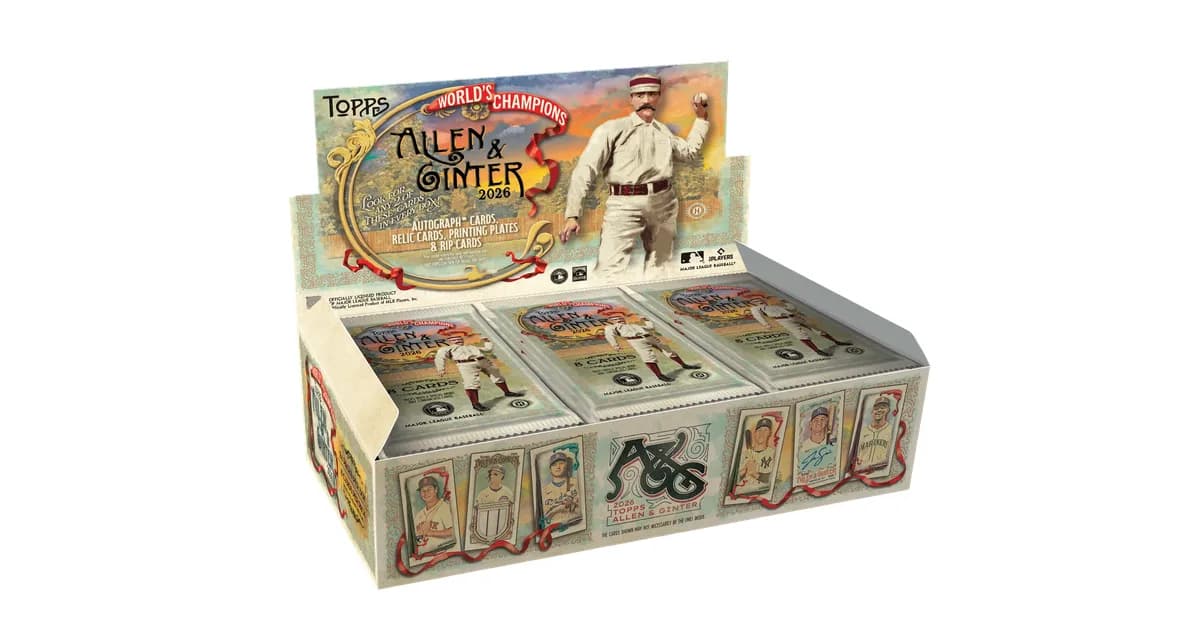
- 2026 Topps Allen & Ginter Checklist, Odds and Box Guide: a second worked example, with hobby and value box guarantees side by side.
About the author

Editorial desk
The RookieDesk desk. Every article is built from a source file: manufacturer checklists and odds sheets, grading company fee pages, and dated sale data, each linked in the article.
Keep reading
Numbered Cards Explained: What /99, /25 and 1/1 Mean
Guides · 8 min
Sports Card Boxes Explained: Hobby vs Jumbo vs Blaster
Guides · 15 min
2026-27 Topps Flagship Basketball Checklist and Box Guide
Guides · 9 min
2026 Topps Heritage Football Checklist and Box Guide
Guides · 10 min
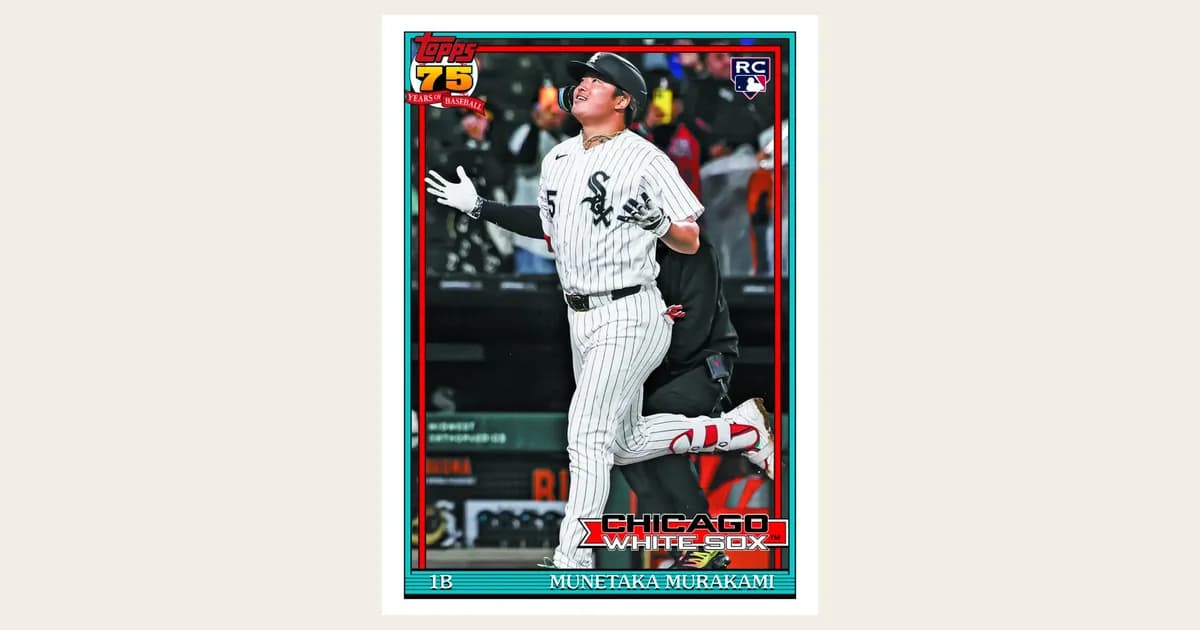
2026 Topps Update Rookies: All 111 Players on the Checklist
Guides · 11 min
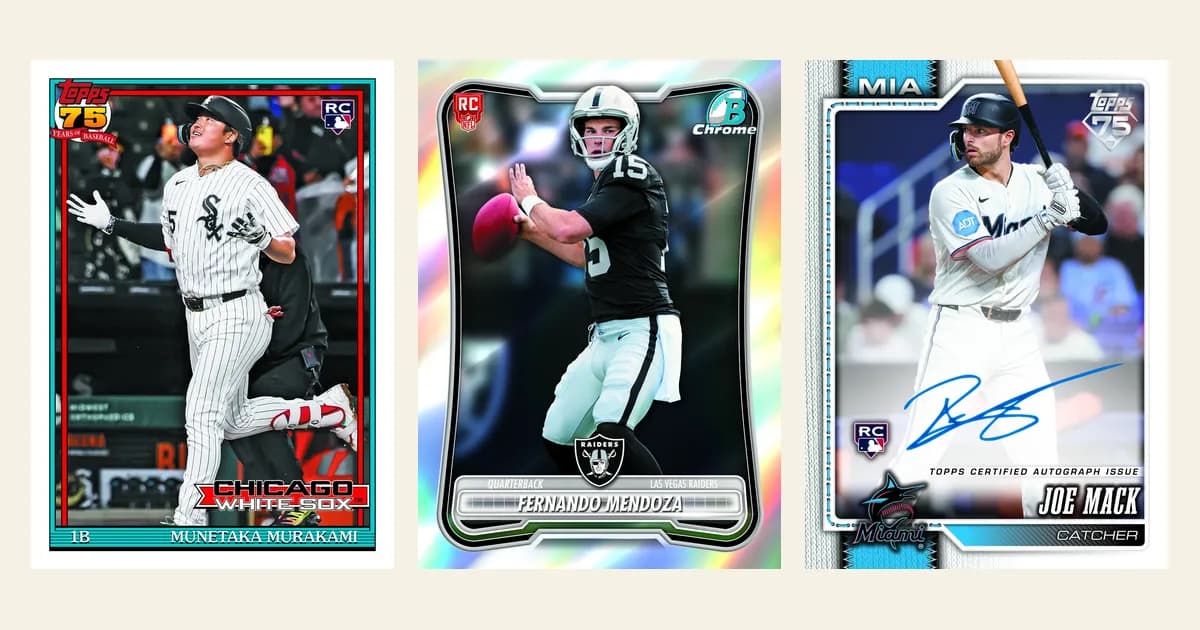
Rookie Cards Explained: RC Logo, 1st Bowman and 2026 Classes
Guides · 13 min
2026 Topps Allen & Ginter Checklist, Odds and Box Guide
Guides · 10 min
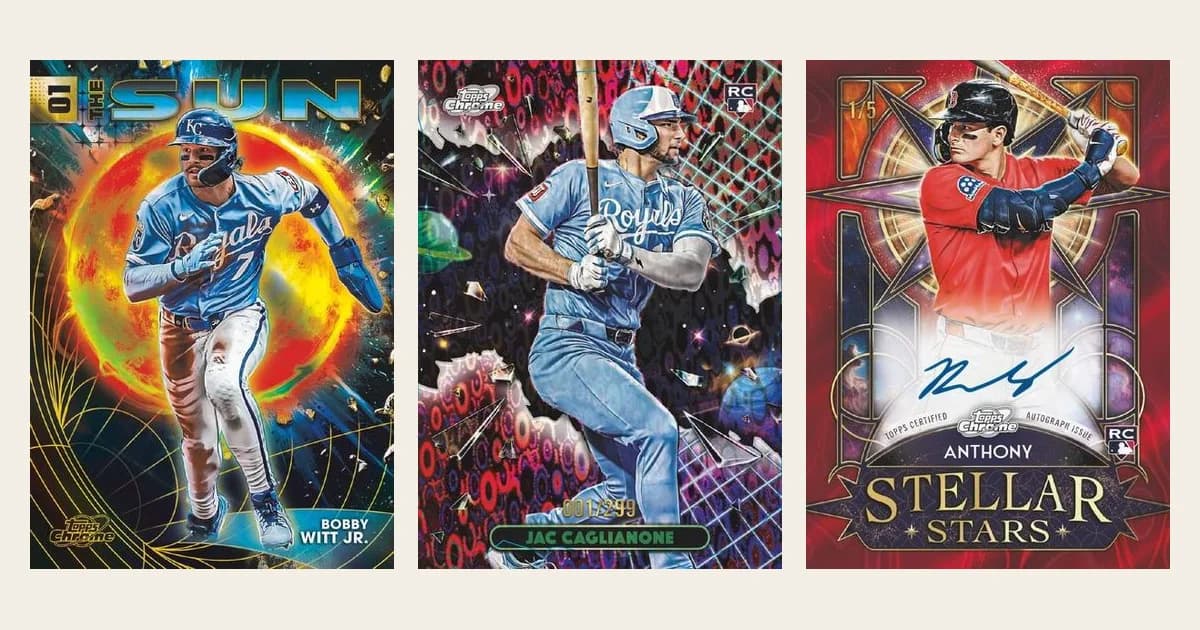
2026 Topps Cosmic Chrome Baseball Odds and Parallels Guide
Guides · 7 min
Disclaimer
RookieDesk publishes data, not investment or financial advice. Odds are the manufacturer's published odds, not a promise of what any one box contains. Checklists, release dates, grading fees and prices change after publication; each one here carries the date we checked it. Confirm critical details with the manufacturer, grader or seller before you buy or submit. RookieDesk is not affiliated with any card manufacturer, league or players association; see our independence note.