Guides
Crossover Grading: How PSA, CGC and SGC Handle Other Slabs
What crossover grading is, how PSA's minimum grade and CGC's same-or-higher rule work, what SGC adds, and how crossover differs from review and reholder.
TL;DR: At PSA you must set a minimum grade; the card is only moved into a PSA holder if it meets that grade, and the full grading fee is charged either way. CGC only crosses a card at the same or a higher grade unless you write "Cross at Any Grade." SGC lists crossovers on its main pricing page and says orders without a minimum grade take longer. A review (same grader, second look) and a reholder (same grader, new holder) are different services.
9 min readBy RookieDesk Editorial
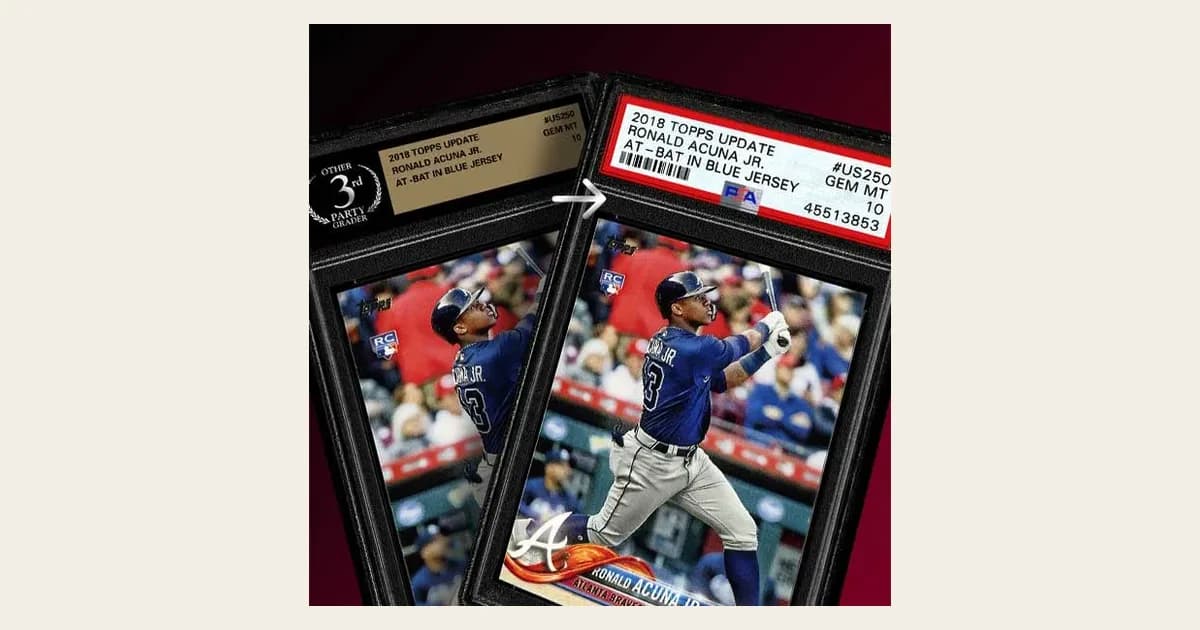
Crossover grading is how a card in one company's slab gets into another company's holder without you cracking it open first. PSA, CGC and SGC all offer it, and the rules decide whether you pay a fee and get the card back unchanged. This guide uses each grader's own pages, read on October 10 and 11, 2026.
What is crossover grading? (quick answer)
Crossover grading sends an already graded card to a different company. PSA's definition: "Crossover grading is for cards previously graded by other companies that you wish to cross over into a PSA holder." The new grader judges the card through the old slab, and only cracks it out if the result clears the bar you set.
Key Takeaways
- PSA minimum grade: "YOU MUST provide a minimum grade on the submission form." Writing "1" accepts any PSA numerical grade.
- PSA fee: "Regardless of the result, the grading price will be charged." A card that misses the minimum comes back in its original holder.
- CGC rule: CGC crosses a card only at "the same or higher than the grade assigned by the other grading service," unless you specify Cross at Any Grade.
- SGC: crossovers sit on SGC's main pricing page, and "Orders will have longer turnaround times if Crossovers are submitted WITHOUT a minimum grade."
- Review and reholder: PSA's Review is a second look at a PSA slab with no risk to the original grade; a reholder (PSA from $12.99, CGC $10 for Collector members as of October 11, 2026) keeps the grade and swaps the holder.
Overview: crossover grading rules at PSA, CGC and SGC
Each grader handles three questions differently: which slabs it takes, what bar the card has to clear, and what you pay if it does not cross.
| Grader | Slabs it takes | The bar | If the card does not cross | Price |
|---|---|---|---|---|
| PSA | "cards previously graded by other companies" | Your minimum grade (required) | "returned to you in the original holder"; full fee charged | Grading price of your tier (Standard $59.99, Express $199 on October 11, 2026) |
| CGC Cards | "a card in a PSA, Beckett* or SGC holder" | Same or higher grade, or Cross at Any Grade | "returned in its original holder and the full grading fee will still apply" | "According to Tier" (Standard $55 up to $3,000, Express $100 up to $10,000) |
| SGC | Not listed on the page text we could read | Slower if sent without a minimum grade | Not stated on the page text we could read | Listed on the main pricing page; crossover fee not readable to us (lowest standard grading tier $50 up to $1,500, October 10, 2026) |
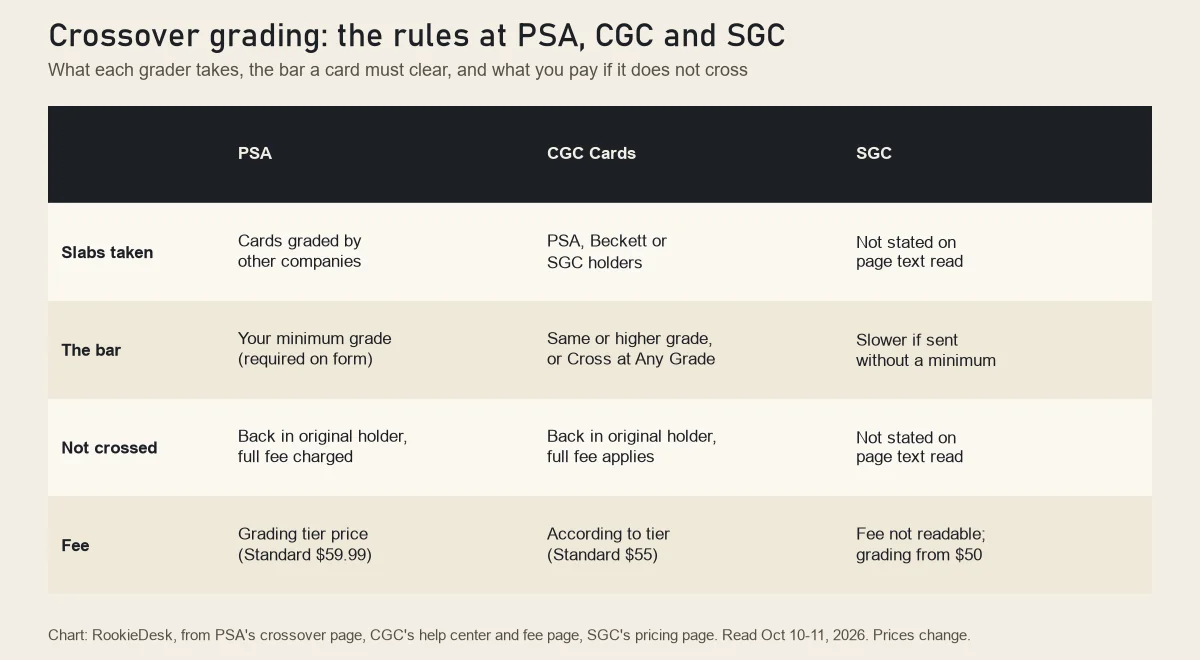 Chart: RookieDesk, from PSA's crossover page, CGC's help center and fee page, and SGC's pricing page (read October 10 and 11, 2026)
Beckett is the gap. On October 11, 2026 Beckett's grading site redirected to a notice saying "we've temporarily paused Base and Standard card grading submissions." Its October 15 update says "Phase 1 of Beckett's digital service restoration is underway" and lists its "Online Submission Center (Card Grading, US & EU)" as available, without service levels or prices. We found no Beckett crossover policy we could read, so this guide does not describe one. Our BGS vs PSA comparison covers what Beckett's labels and subgrades mean.
Analysis: how PSA crossover grading and minimum grade work
PSA grades the card without opening the old slab first: "PSA will evaluate the card inside its current holder." Your minimum grade is the switch. PSA defines it as "the lowest grade that you are willing to accept from PSA, anything lower will not be crossed over into a PSA holder," and says it "will only remove it and encapsulate it in a PSA holder if your item meets or exceeds the minimum grade."
PSA's own example asks for a minimum grade of 10:
- Minimum not met. "Item does not meet the minimum grade of 10 from PSA, and is returned in its original holder." Then: "Full grading fee is charged even if item does not meet minimum grade."
- Minimum met. "The card is encapsulated into a PSA holder and full grading is charged."
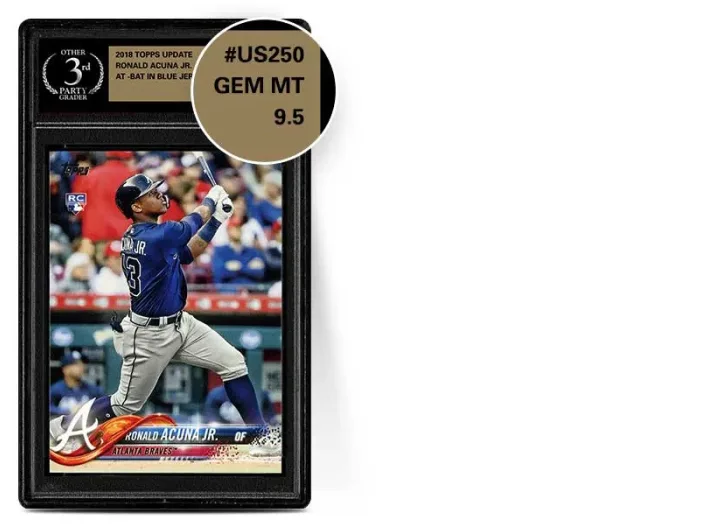 Image: PSA
In PSA's not met graphic, the callout on the old label reads 9.5. The card stays in that holder, and you have paid for a grading.
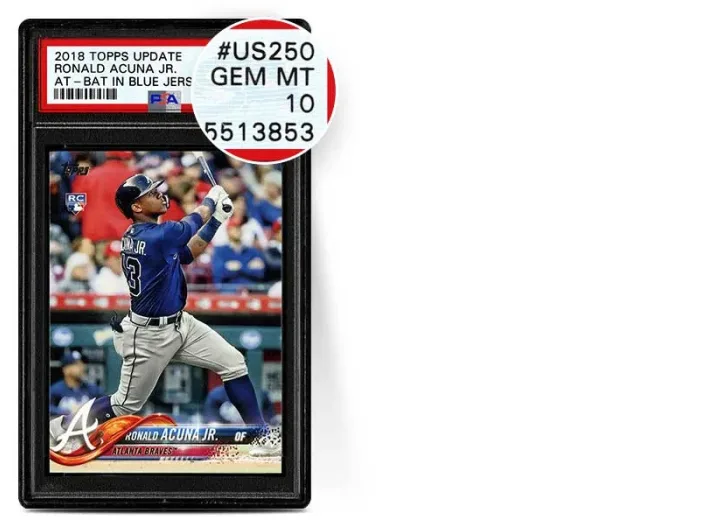 Image: PSA
If you would rather have the PSA holder at any grade, PSA's form rule is plain: "If you are willing to accept any PSA numerical grade, then put "1" in the minimum grade column."
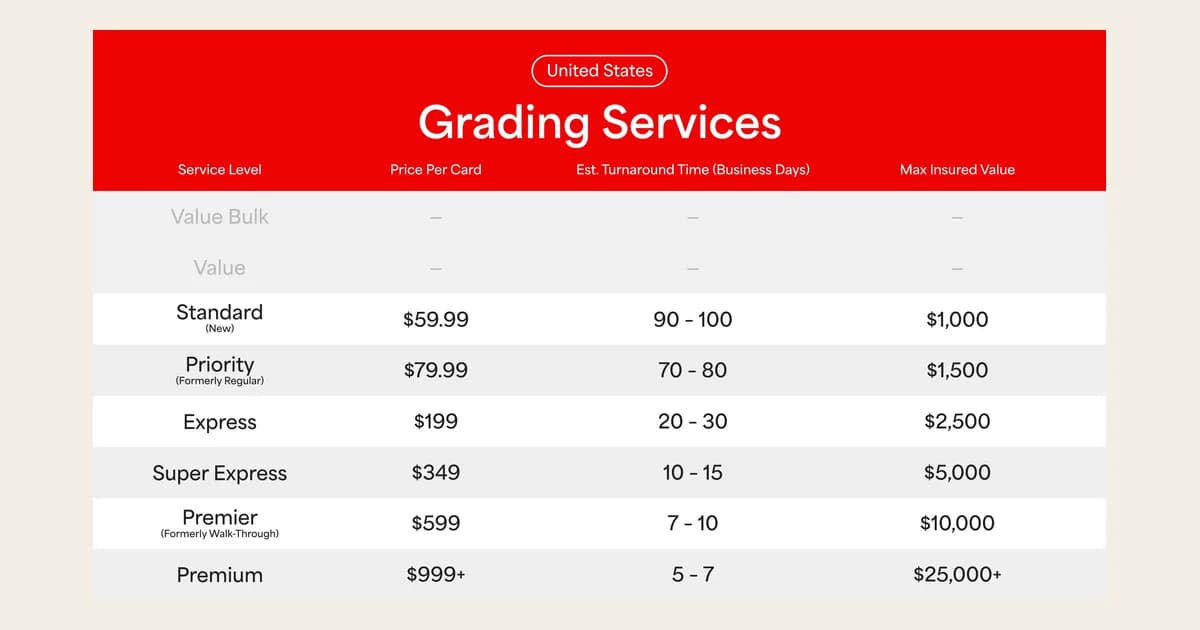
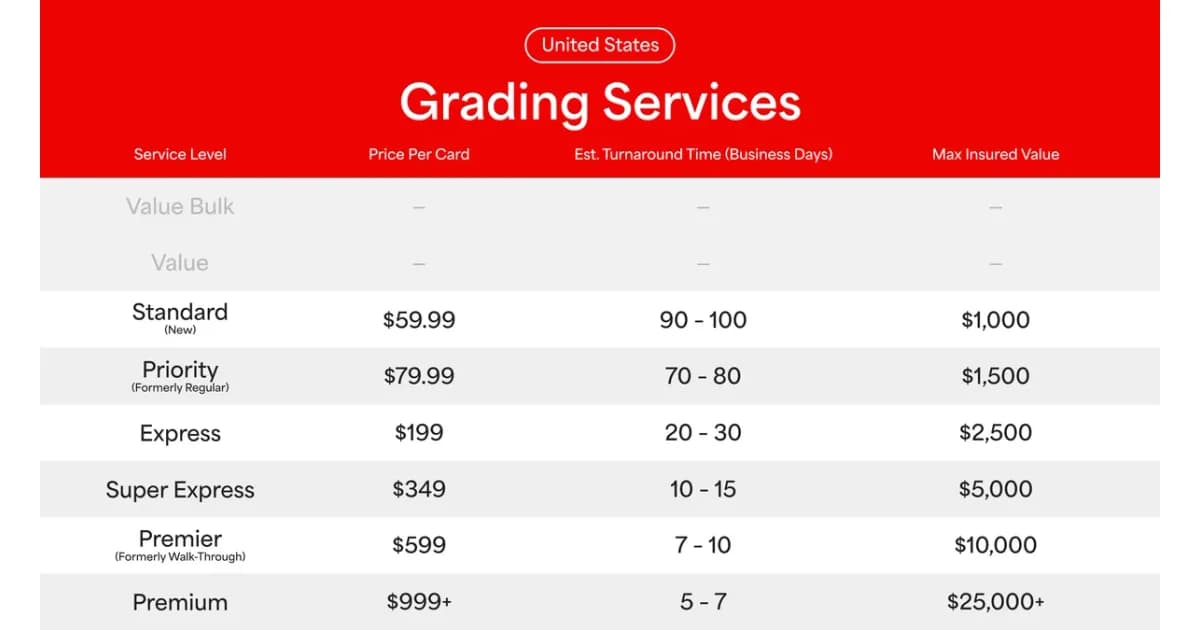
What it costs. PSA does not list a separate crossover price; its page says the grading price is charged. On October 11, 2026 PSA's grading page listed Standard at $59.99 and Express at $199 per card. The crossover page carries PSA's usual turnaround terms: "A service level's Estimated Turnaround Time begins when the order is received and scanned into the PSA facility," and the estimates "are estimates only and not guaranteed." Every PSA tier and its value cap is in our PSA grading fees guide, and the grading fee calculator totals an order by card value.
GODEEPER: What the number on a PSA label means before you pick a minimum. PSA Grading Scale Explained: What PSA 10, 9 and 8 Mean →
Analysis: CGC's same-or-higher rule and Cross at Any Grade
CGC Cards runs the same idea with a different default. "With CGC Card's CrossOver service, a card in a PSA, Beckett* or SGC holder is evaluated for CGC Cards certification." The card is cracked out "only if CGC Cards determines that the card will receive a CGC grade that is the same or higher than the grade assigned by the other grading service." So the old label is the minimum unless you change it.
To accept a lower grade, CGC's help center says: "specify CROSS AT ANY GRADE." If the card does not cross, "it will be returned in its original holder and the full grading fee will still apply."
Three CGC details matter before you send a box:
- Price. The CrossOver row on CGC's fee page reads "According to Tier." On October 11, 2026 that page listed Standard at $55 for cards up to $3,000 (10 working days) and Express at $100 up to $10,000 (5 working days). Our CGC grading fees guide lists every tier.
- Beckett BCCG. "CGC Cards treats Beckett BCCG encapsulated cards as raw cards."
- Witnessed autographs. "CGC Cards does not accept witnessed autographs for CGC's CrossOver service through CGC Signature Series."
Analysis: SGC crossovers and the minimum grade
SGC lists crossovers on its main pricing page. The heading reads "PRICING FOR RAW CARD GRADING, REHOLDERS, CROSSOVERS, AND REVIEWS," and the same page warns: "Orders will have longer turnaround times if Crossovers are submitted WITHOUT a minimum grade." On October 10, 2026 SGC's standard size table listed $50 at 40+ business days for cards up to $1,500, and "Turnaround time begins once the order has been unboxed and logged into our system." The full table is in our SGC grading fees guide.
We could not read an SGC rule for what happens to a card that misses the minimum, so we do not state one.
Analysis: crossover vs review vs reholder
These are three different jobs, and graders price them differently.
Review (PSA). "Review is a service that gives you an opportunity to have PSA review cards that you feel might be worthy of a higher grade." Cards must arrive "in their current PSA holders," and PSA says: "There's no risk of losing your original labeling and grade if your trading card does not upgrade."
Reholder (PSA). The service "removes a card from its current PSA holder and re-encapsulates it using" PSA's latest holder, and "Generally, the card's grade, authentication result, and certification number remain the same." PSA lists the wear it is meant for: "superficial scuffs and scratches, exterior plastic discoloration, edge and corner dulling, and label fading." PSA also notes that it "does conduct an inspection on all Reholder submissions." Price snapshot, October 11, 2026: Standard Reholder $12.99 per card (max insured value $2,000, 80 to 90 business days), the Standard, Tallboy and Jumbo option $29.99 (65 to 75 business days) and Expedited $74.99 (17 to 20 business days).
ReHolder (CGC). "A card in a CGC or CSG holder is encapsulated in a new CGC holder. The grade assigned to the card will not change." The card "must still be encapsulated in its original CGC or CSG holder." On October 11, 2026, CGC's fee page listed it at $10 and 20 working days, a fee it says applies "only to direct submissions to CGC by Collector members."
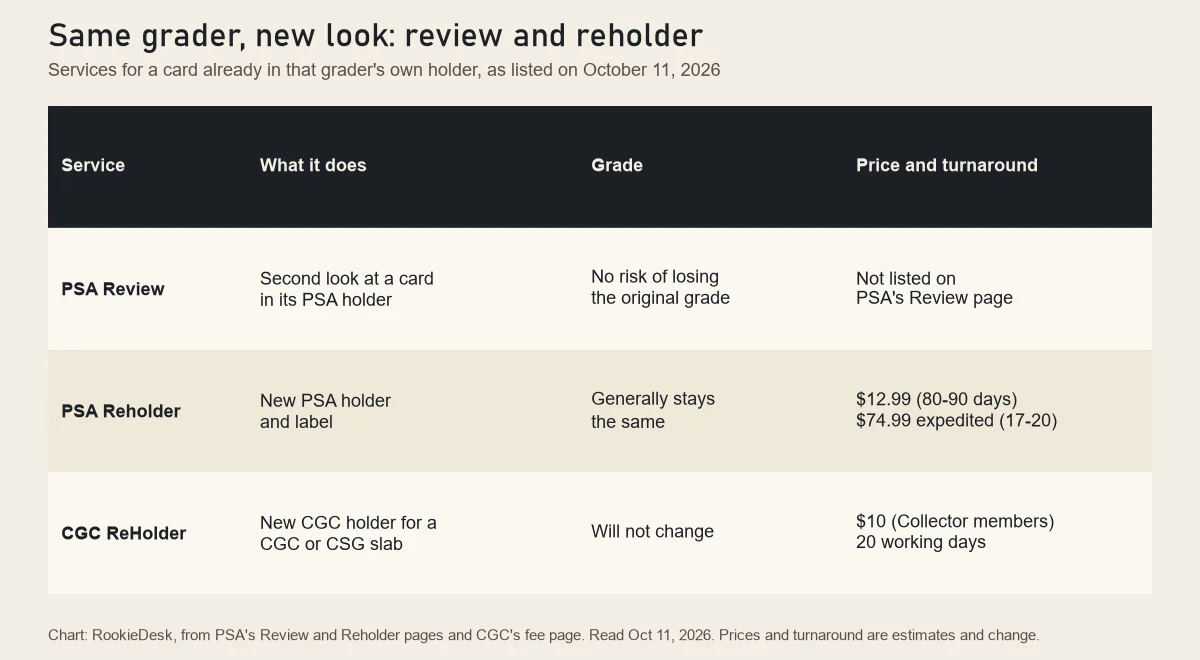 Chart: RookieDesk, from PSA's Review and Reholder pages and CGC's fee page (read October 11, 2026)
GODEEPER: How the graders count their slabs, and why crossovers can move the numbers. What Is a Pop Report? PSA, SGC and CGC Population Explained →
Video: PSA on minimum grade
PSA's crossover page links this minimum grade explainer under "Watch Video":
Community: what collectors report about crossovers
Results go both ways in r/sportscards posts. In September 2024, u/champagne780 posted after crossing KSA and SGC slabs to PSA: "I'm pleasantly surprised with this crossover. I was expecting the opposite for PSA grades." (thread). A year earlier, u/snootymagoo titled a post: "Sent this to PSA as a crossover thinking it would easily be a 10 and of course I was wrong. Now I'm SOL." (thread).
One reason given for using the service rather than cracking the slab came from u/Jcrbl78, asking about BGS 9.5s in 2024: "The cards are too expensive to crack and take the risk." (thread). These are individual posts, not success rates.
Our take
Based on the grader pages cited above: a crossover is a paid grading with a safety catch, not a free second opinion. At both PSA and CGC the fee is charged whether or not the card moves, so the minimum grade you write is the real decision. A high minimum protects the grade on the card and risks a fee for nothing; a minimum of 1 at PSA, or Cross at Any Grade at CGC, guarantees the new holder and gives up that protection. If the card is already in the slab you want and only the plastic is worn, a reholder costs a fraction of a grading. We do not say which slab is worth more; that is a market question.
Frequently Asked Questions
The six questions above cover what crossover grading is, PSA's minimum grade, PSA's crossover cost, CGC crossovers, review versus reholder, and SGC.
What is crossover grading?
Crossover grading means sending a card that is already in one company's slab to a different grader, which judges it inside the old holder and only moves it into its own holder if the result is high enough. PSA calls it a service for cards previously graded by other companies that you want in a PSA holder.
What happens if a PSA crossover does not meet the minimum grade?
PSA returns the card in its original holder and still charges the full grading fee. PSA's crossover page says the grading price is charged regardless of the result. You must write a minimum grade on the submission form, and writing 1 means you accept any PSA numerical grade.
How much does a PSA crossover cost?
PSA charges its grading price for a crossover, whatever the outcome, so the cost follows the tier you choose. On October 11, 2026, PSA's grading page listed Standard at $59.99 and Express at $199 per card. Check the tier's value cap before you pick one, because the price is a dated snapshot.
Does CGC cross over PSA and SGC slabs?
Yes. CGC's CrossOver service evaluates cards in PSA, Beckett or SGC holders and only cracks them out if the CGC grade would be the same or higher. If you want the card in a CGC holder even at a lower grade, CGC asks you to write Cross at Any Grade. A card that does not cross comes back in its holder.
What is the difference between a crossover, a review and a reholder?
A crossover moves a card from another grader's slab into a new company's holder. PSA's Review service asks PSA to look again at a card already in a PSA holder, with no risk of losing the original grade. A reholder puts a card into a new holder from the same grader, and the grade generally stays the same.
Does SGC accept crossovers?
Yes. SGC's pricing page heading covers raw card grading, reholders, crossovers and reviews, and it warns that orders take longer if crossovers are sent without a minimum grade. We could not read a separate SGC crossover fee, so we do not list one.
How we checked this
PSA's crossover page was read on October 11, 2026 with the read tool and again with curl; PSA's Review and Reholder pages and its grading price tab were read the same day. CGC's help center page on crossovers and reholders and its fee page were read on October 11. SGC's pricing page was read in a headless browser on October 11 for the crossover lines; the $50 tier comes from our October 10 read of the same page. Beckett's status is from its maintenance notice, re-read on October 11, and its October 15 update, read October 19. Reddit posts were read through the r/sportscards search feed. Prices are snapshots. The two charts are RookieDesk graphics built only from these pages. We did not submit any cards. Full source table: data/sources/what-is-crossover-grading.sources.md.
References
- PSA, crossover grading: https://www.psacard.com/services/tradingcardgrading/crossover
- PSA, Review service: https://www.psacard.com/services/tradingcardgrading/review
- PSA, Reholder service: https://www.psacard.com/services/tradingcardgrading/reholder
- PSA, trading card grading prices: https://www.psacard.com/services/tradingcardgrading
- CGC Cards, help center: other grading topics (CrossOver, ReHolder): https://www.cgccards.com/about/help-center-faqs/cgc-cards-grading/other-grading-topics/
- CGC Cards, services and fees: https://www.cgccards.com/submit/services-fees/cgc-grading/
- SGC, services and pricing: https://gosgc.com/card-grading/services-pricing
- Beckett, maintenance notice: https://maintenance.beckett.com/
- PSA Official on YouTube, What Is Minimum Grade?: https://www.youtube.com/watch?v=S9pbheuXL14
- Reddit r/sportscards, KSA and SGC crossover to PSA: https://www.reddit.com/r/sportscards/comments/1f9z3qr/ksa_sgc_crossover_to_psa/
Related Reading
- Sports Card Grading 2026: PSA vs SGC vs CGC vs Beckett: what each grader charges and what is open right now.
- How to Ship Sports Cards: Letter, eBay Envelope or Tracked: packing steps for sending slabs to a grader.
About the author

Editorial desk
The RookieDesk desk. We read the paperwork before you open the box: Topps' checklists and odds sheets, the box art, grader fee pages. Every number links to its source and carries the date we checked it.
Keep reading
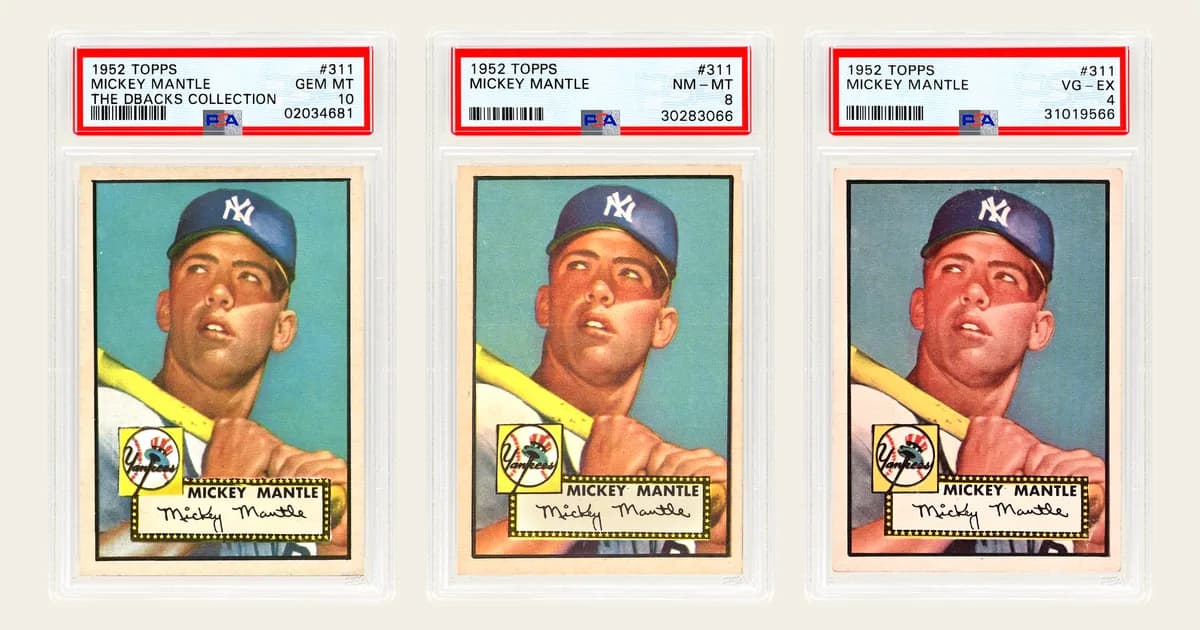
BGS vs PSA: Subgrades, Black Label and Grading Scales
Guides · 10 min
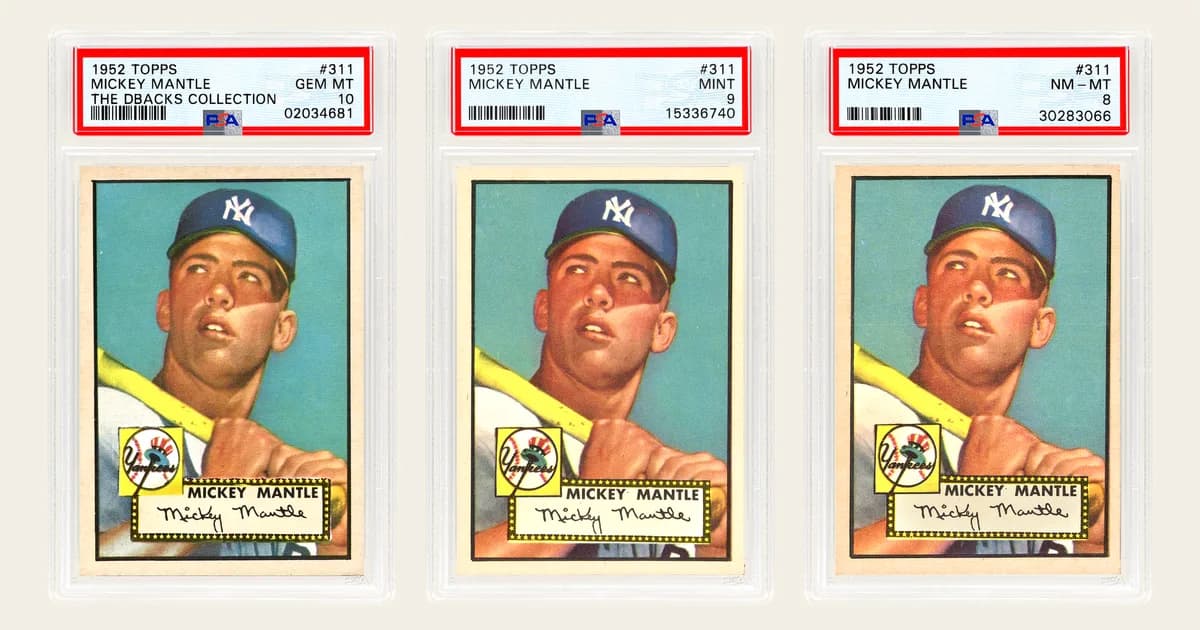
PSA Grading Scale Explained: What PSA 10, 9 and 8 Mean
Guides · 9 min
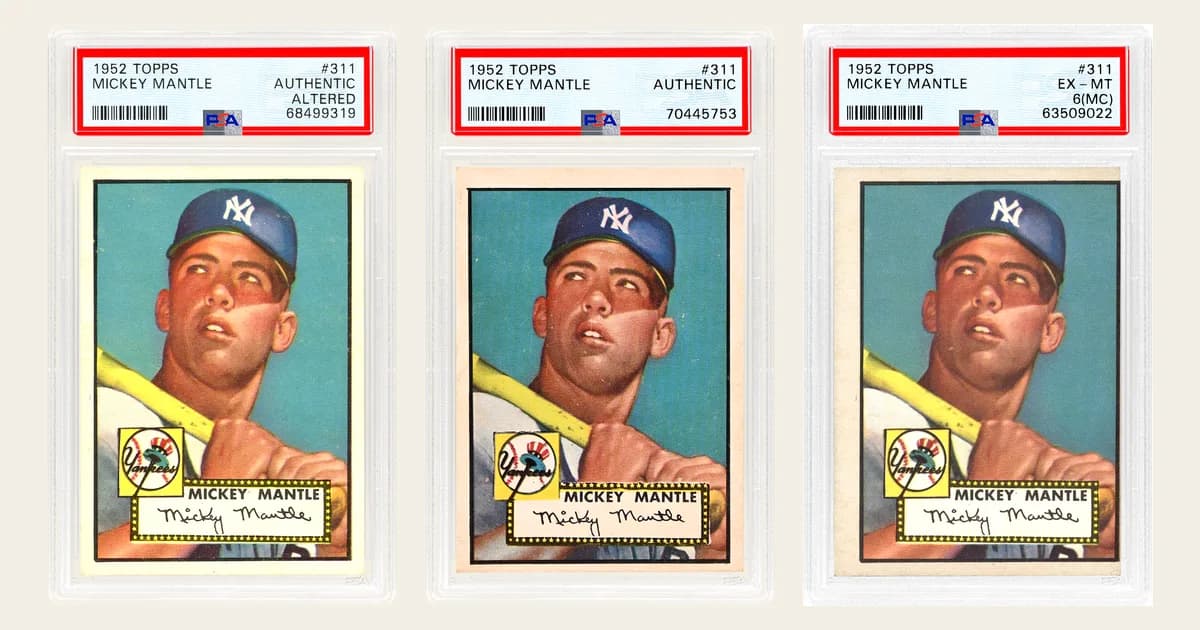
How to Spot a Trimmed Sports Card: PSA and CGC Red Flags
Guides · 8 min
What Is a Pop Report? PSA, SGC and CGC Population Explained
Guides · 8 min
CGC Grading Fees 2026: Every Tier and Price for Sports Cards
Guides · 9 min
SGC Grading Fees 2026: Every Tier After the September Change
Guides · 8 min
Sports Card Grading 2026: PSA vs SGC vs CGC vs Beckett
Guides · 14 min
PSA Grading Fees 2026: Every Tier, Price and Turnaround
Guides · 8 min
Disclaimer
RookieDesk publishes data, not investment or financial advice. Odds are the manufacturer's published odds, not a promise of what any one box contains. Checklists, release dates, grading fees and prices change after publication; each one here carries the date we checked it. Confirm critical details with the manufacturer, grader or seller before you buy or submit. RookieDesk is independent and not affiliated with any card manufacturer, league or players association, and carries no affiliate links, ads or sponsored posts; see our independence note. Articles are researched and written with AI tools, and every fact is checked against its cited source before publishing; see how we use AI.