Guides
PSA Grading Scale Explained: What PSA 10, 9 and 8 Mean
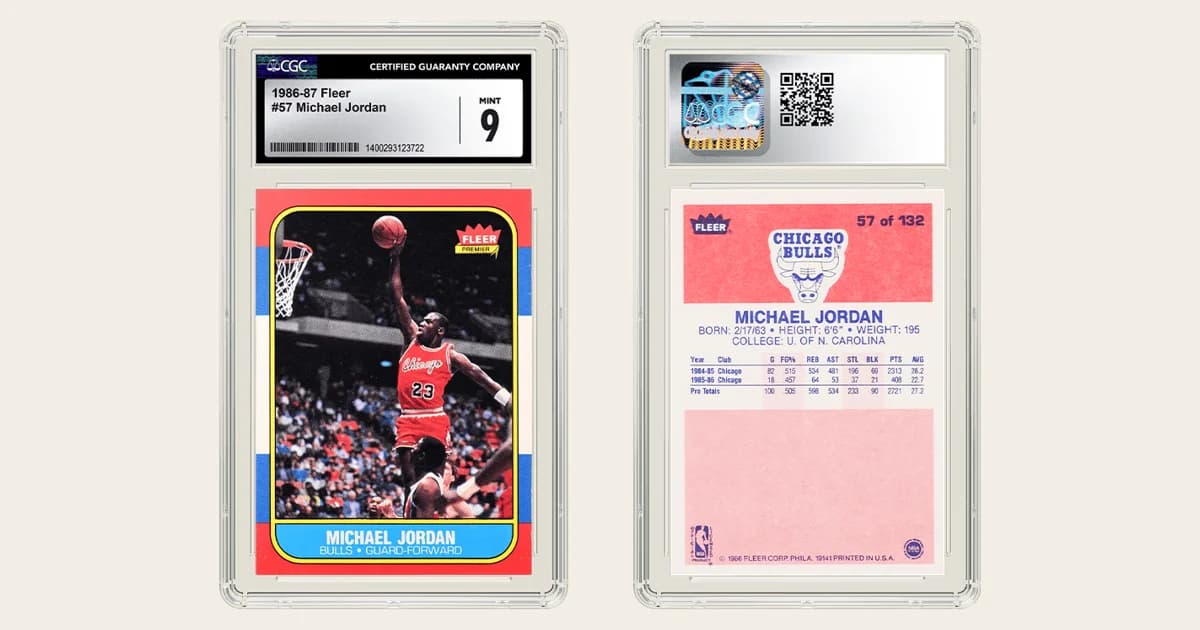
The PSA grading scale explained: PSA's own wording for every grade from Gem Mint 10 to Poor 1, half grades, qualifiers like OC and MK, and CGC's scale.
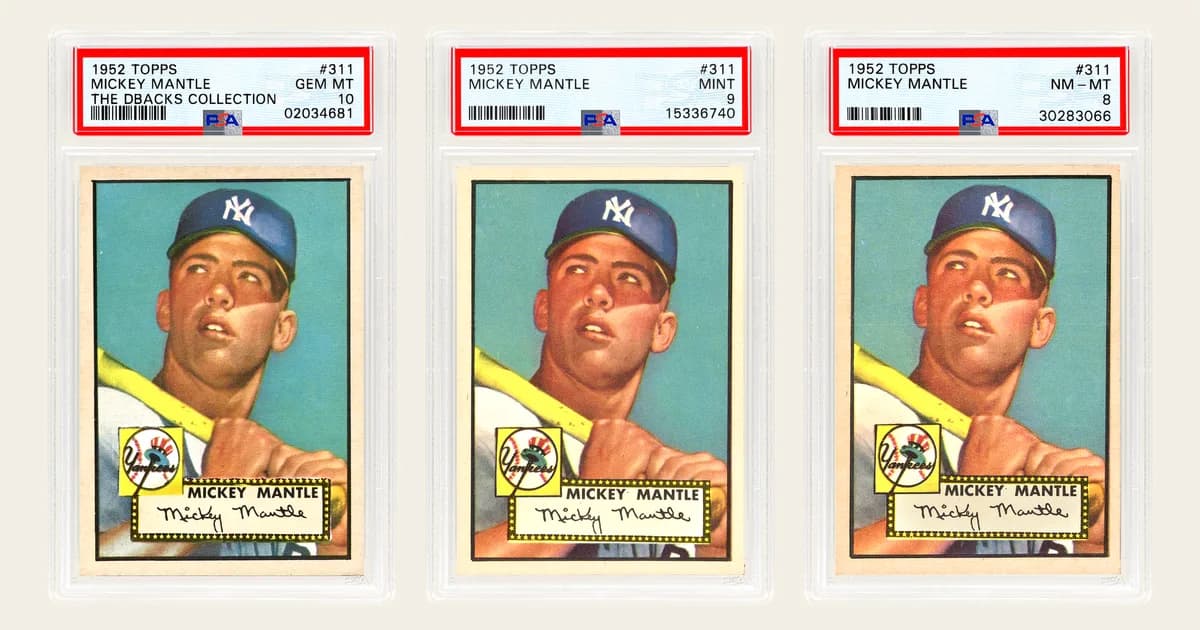
The PSA grading scale runs from Gem Mint 10 down to Poor 1, with half grades in between and a few letters that change what a number means. This guide puts PSA's own wording for each grade in one place, read on October 11, 2026, and sets it next to CGC's scale.
TL;DR: A PSA 10 (GEM MT 10) is "a virtually perfect card," centered within about 55/45 on the front and 75/25 on the back. A PSA 9 is "nearly perfect with only one minor flaw." Half grades exist (PSA shows 8.5 and 1.5 examples). Qualifiers like OC or MK mean a card met a grade "but fails the standard in one area." PSA says about 90% of ultra-modern sports cards have graded 8 or higher. CGC uses a different scale with two 10s (Pristine and Gem Mint) and a Mint+ 9.5.
PSA grading scale (quick answer)
PSA grades cards from 1 to 10 after first deciding they are genuine; "Grading can only take place after a trading card has been deemed authentic." The top grade is Gem Mint 10, the bottom is Poor 1, and the label prints a short name next to the number, such as "GEM MT 10," "MINT 9" or "NM-MT 8." Cards that cannot get a number come back as "Authentic," "Authentic Altered" or ungraded with a no-grade code.
Key Takeaways
- PSA 10: "virtually perfect"; about 55/45 centering front, 75/25 back.
- PSA 9: "nearly perfect with only one minor flaw."
- PSA 8: "may look like a PSA 9 at first glance" with "the slightest fraying on one or two corners."
- Half grades: PSA's page shows 8.5 and 1.5 examples; reported range 1.5 to 8.5, no 9.5.
- Qualifiers: OC, ST, PD, OF and MK; MK and MC still applied "when warranted."
- PSA's own stats: about 90% of ultra-modern sports cards have graded 8 or higher.
- CGC is different: two 10s, Pristine 10 (50/50) and Gem Mint 10 (about 55/45), plus a Mint+ 9.5.
Overview: PSA's grade definitions from 10 to 1
PSA publishes two sets of wording: the full Gem Mint 10 standard on its grading standards page and a short description of every grade on its get-started page. The table below quotes the get-started wording; the label names come from PSA's example slabs.
| Grade | Label | PSA's description (get-started page) |
|---|---|---|
| 10 | GEM MT 10 | "essentially a perfect card" |
| 9 | MINT 9 | "nearly perfect with only one minor flaw" |
| 8 | NM-MT 8 | "may show the slightest fraying on one or two corners" |
| 7 | NM 7 | "minor fraying or a small printing blemish and might be off-centered" |
| 6 | EX-MT 6 | "more visible surface wear or a printing defect that doesn't detract from the overall appeal" |
| 5 | "minor rounding of the corners, more visible surface wear or printing defects" | |
| 4 | "more visible surface wear, or several light scratches" | |
| 3 | "some apparent surface wear and rounding of corners" | |
| 2 | "more obvious surface wear, accelerated rounding on the corners" | |
| 1 | "major creasing, missing pieces, extreme discoloration, and noticeable warping" |
The full PSA 10 standard is stricter than the summary: "Attributes include four perfectly sharp corners, sharp focus and full original gloss." It "must be free of staining of any kind, but an allowance may be made for a slight printing imperfection, if it doesn't impair the overall appeal of the card," and the image must be centered "within a tolerance not to exceed approximately 55/45 percent on the front, and 75/25 percent on the reverse."
Analysis: PSA 10 vs 9 vs 8, the grades most people chase
For modern cards the decision usually sits between these three. PSA's get-started page describes a 10 as "extremely well-centered, pristine corners, and no surface damage, blemishes, or imperfections." A 9 has "only one minor flaw, such as a minor printing imperfection or very slight off-centering." An 8 "may look like a PSA 9 at first glance and is in excellent condition," with "the slightest fraying on one or two corners."
PSA also publishes how often cards reach those grades. Its figures, which it calls approximate:
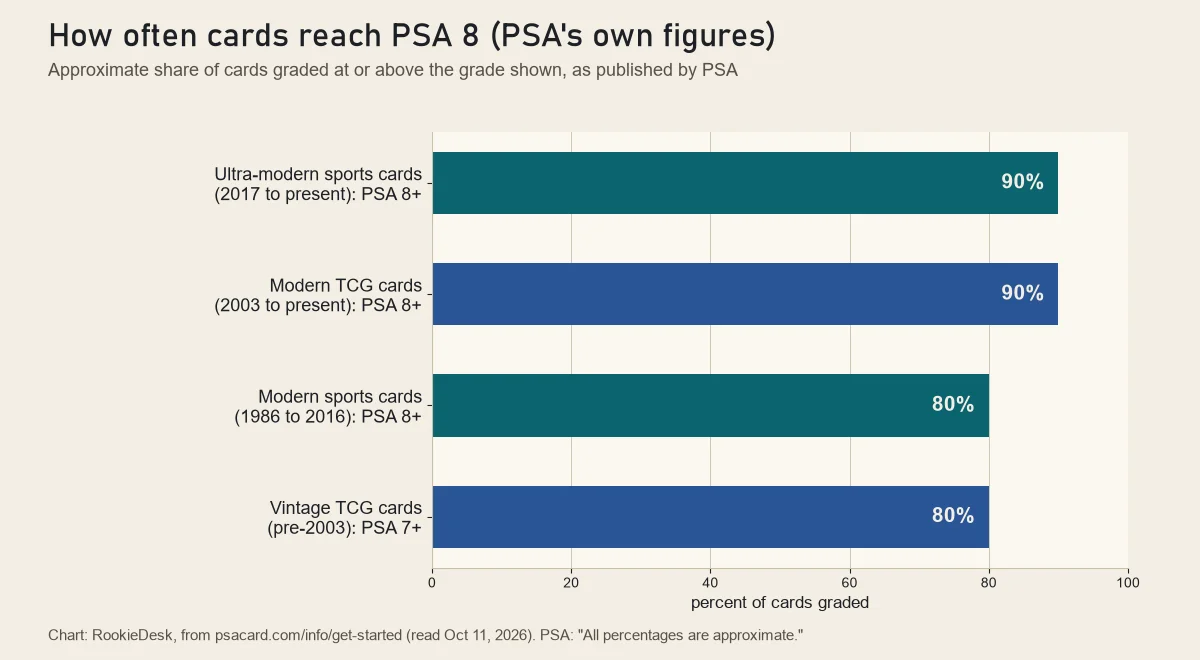 Chart: RookieDesk, from PSA's get-started page (read October 11, 2026)
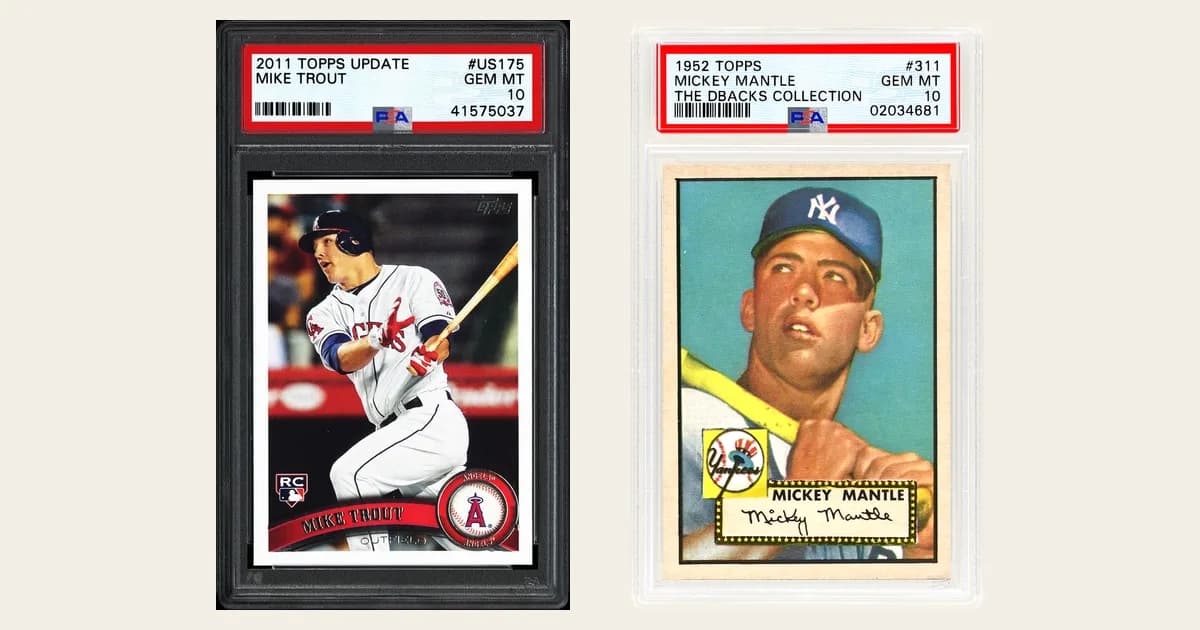
PSA adds: "All percentages are approximate. PSA grades each card individually, without regard to these stats or other population-level results." What those counts look like for a single card is in our pop report explainer, and what each grade costs to get is in the PSA grading fees guide.
Analysis: half grades such as 8.5
PSA's grading standards page shows example slabs at 8.5 and 1.5 among its grade images. Sports Collectors Digest reported in January 2008 that "The familiar 1 through 10 PSA grading scale will now also include a half-point grade from 1.5 through 8.5," and that PSA would add a half grade within each number "with the exception of a 9.5 grade." Half grades apply to cards: PSA's own page says "pins and coins will not receive half-point grades."
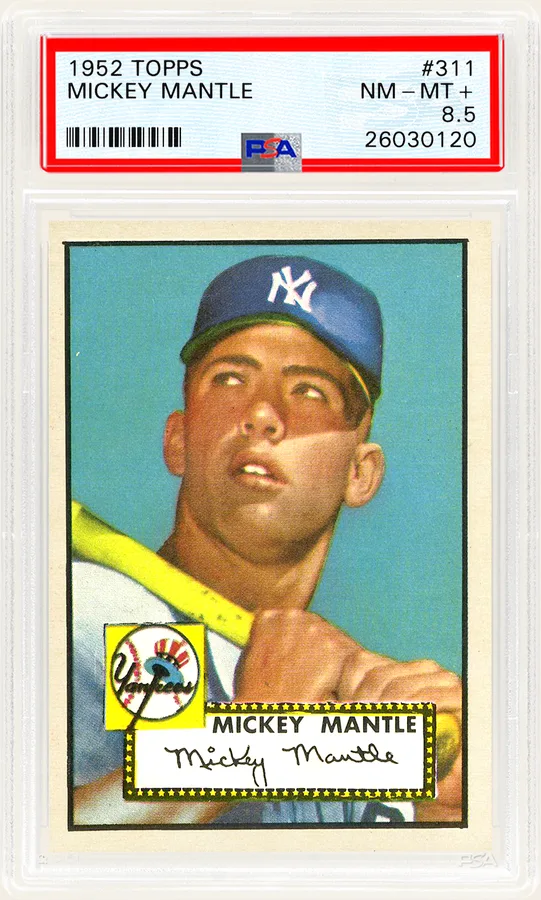 Image: PSA
How common are they? A Collectors Universe member who counted one sample in 2022 wrote: "Only 454 out of 11578 cards (under 4 %) in the PSA 8 range received a half point bump." That is one collector's count, not a PSA statistic.
Analysis: qualifiers (OC, ST, PD, OF, MK, MC)
A qualifier is a letter code after the number. PSA's glossary: "A "qualified" card is a card that meets all the criteria for a particular grade, but fails the standard in one area." The codes are "OC (Off-center), ST (stain), PD (Print Defect), OF (Out of Focus), and MK (Marks)," written on the label as, for example, "NM-MT 8oc."
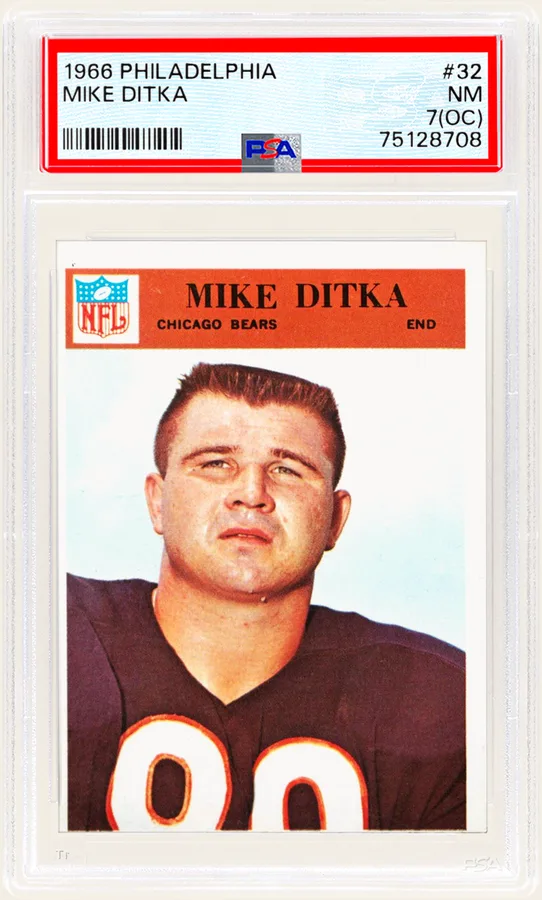 Image: PSA
PSA changed how it uses them in June 2021: "PSA no longer requires card submitters to decide on qualifiers." The OC, ST, PD and OF codes "will be assigned at the grader's discretion, and most typically will impact the numerical grade rather than carrying a qualifier," while "the Marks (MK) and Miscut (MC) qualifiers will continue to be applied when warranted." The marks rule is broad: "Any and all cards with writing, ink marks, pencil marks, etc. or evidence of the impression left from the act of writing will be designated "MK.""
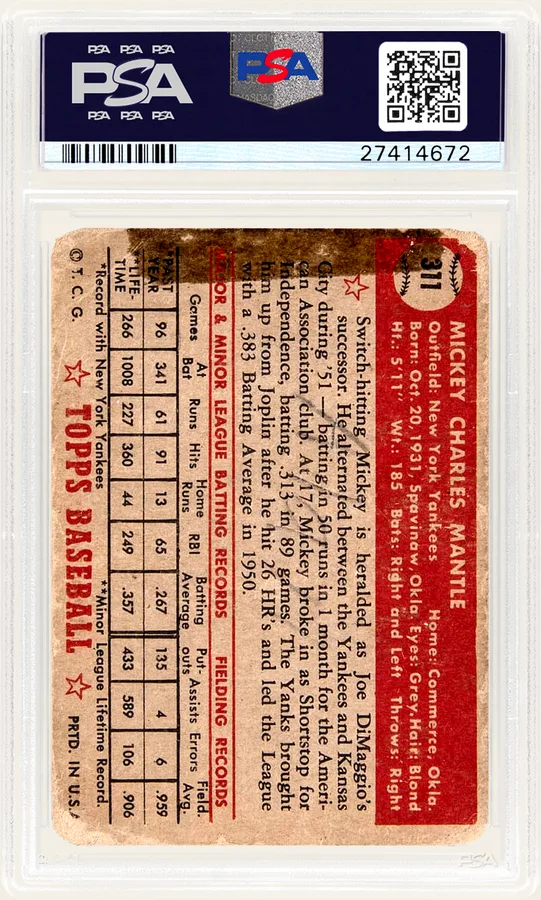 Image: PSA
Analysis: Authentic, Authentic Altered and no-grade codes
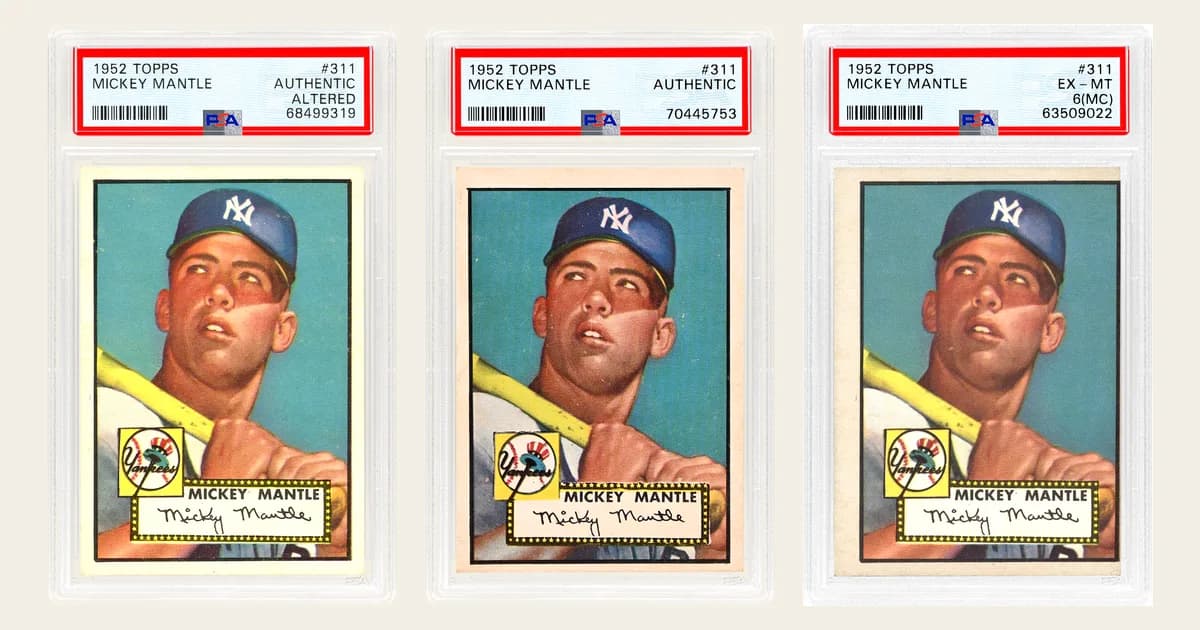
Some cards get no number at all. PSA's rule: "PSA will not grade cards that bear evidence of trimming, re-coloring, restoration, or any other forms of tampering, or are of questionable authenticity." PSA's glossary says "Questionable Authenticity: This is another term for counterfeit." Depending on the problem, a card may be slabbed as "Authentic" or "Authentic Altered," or returned with a code. The edge signs PSA looks for on trimmed cards, and what each code costs you, are in our guide to spotting a trimmed sports card.
PSA also leaves room for judgment. Its graders "reserve the right, based on the strength or weakness of the eye appeal, to make a judgment call on the grade of a particular card," and on centering "a small variance may be permitted on occasion based on the card's overall eye appeal."
GODEEPER: PSA, SGC and CGC side by side on price and turnaround. Sports Card Grading 2026: PSA vs SGC vs CGC vs Beckett →
Analysis: how CGC's scale compares
CGC Cards "uses a highly accurate 10-point grading scale," but it splits the top and publishes centering for lower grades:
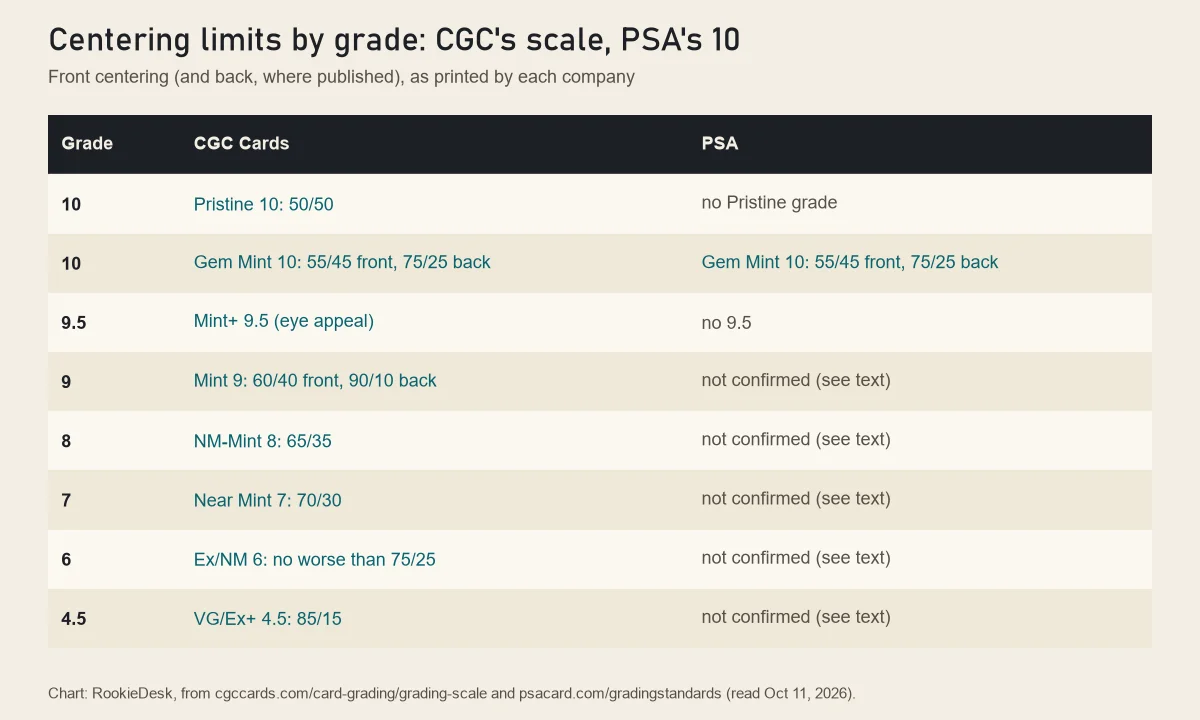 Chart: RookieDesk, from CGC's grading scale and PSA's grading standards (read October 11, 2026)
- Pristine 10: "The centering is 50/50, and the card has flawless color and registration."
- Gem Mint 10: "Centering is not to exceed approximately 55/45, and reverse centering is not to exceed 75/25," the same numbers PSA uses for its 10.
- Mint+ 9.5: "a card that displays premium eye appeal for a Mint card." PSA has no 9.5.
- Mint 9: "centering must be 60/40 or better for the front of the card, and 90/10 for the back."
- NM-Mint 8: "centering must be 65/35 or better."
The text of PSA's grading standards page that we could read shows centering numbers only for the 10; the definitions for lower grades sit in a slider our tools could not open, so we do not quote PSA centering for 9 and below. More on CGC's prices is in our CGC grading fees guide.
Video: PSA explains its standards
PSA's official YouTube channel walks through its grading standards for cards:
Community: are half grades worth the fuss?
An August 2022 Collectors Universe thread on PSA half grades split collectors. JoeBanzai: "My first thoughts were there should be a 9.5." brad31: "I personally believe they are closer to the next grade up than the next grade down." DBesse27, on the low end of the scale: "The 1.5 is very much a thing." (thread)
Our take
Based on PSA's and CGC's published wording cited above: the PSA scale is clearest at the top, where PSA prints exact centering limits for a 10, and loosest in the middle, where the descriptions use words like "minor" and "slight." Read a label in three parts: the number, any letters after it, and whether it says Authentic or Authentic Altered instead. And do not read a PSA 9 and a CGC 9 as the same thing; the two companies publish different definitions.
Frequently Asked Questions
The six questions above cover what a PSA 10 means, 9 versus 10, half grades, qualifiers, how many cards grade 8 or higher, and how CGC's scale differs.
What does PSA 10 mean?
PSA 10 is Gem Mint, which PSA defines as a virtually perfect card: four perfectly sharp corners, sharp focus, full original gloss and no staining. The image must be centered within about 55/45 on the front and 75/25 on the reverse. PSA allows a slight printing imperfection if it does not impair the card's overall appeal.
What is the difference between a PSA 9 and a PSA 10?
PSA describes a PSA 9 as nearly perfect with only one minor flaw, such as a minor printing imperfection or very slight off-centering. A PSA 10 is essentially perfect: extremely well centered, pristine corners and no surface damage. On the label, a 10 reads GEM MT 10 and a 9 reads MINT 9.
Does PSA give half grades?
Yes, for cards. PSA's grading standards page shows example slabs graded 8.5 (NM-MT+) and 1.5. Sports Collectors Digest reported in 2008 that PSA added half-point grades from 1.5 through 8.5, with no 9.5. PSA says pins and coins do not receive half-point grades.
What do OC, ST, PD, OF and MK mean on a PSA label?
They are qualifiers: Off-center, Stain, Print Defect, Out of Focus and Marks. PSA defines a qualified card as one that meets all the criteria for a grade but fails the standard in one area. Since a June 2021 update, OC, ST, PD and OF are at the grader's discretion and usually lower the number instead, while MK and MC (Miscut) are still applied when warranted.
What percentage of cards get a PSA 8 or higher?
PSA's get-started page says about 90% of ultra-modern sports cards (2017 to present) and modern trading card games have graded PSA 8 or higher, and about 80% of modern sports cards (1986 to 2016). PSA says the figures are approximate and that each card is graded individually.
Is the CGC grading scale the same as PSA's?
No. Both use 10 points, but CGC has two 10s: Pristine 10 with 50/50 centering and Gem Mint 10 with about 55/45. CGC also gives a Mint+ 9.5 and publishes centering for lower grades, such as 60/40 for Mint 9 and 65/35 for NM-Mint 8.
How we checked this
PSA's grading standards page, its get-started page, its glossary entry for "Q" and its June 7, 2021 customer update were read on October 11, 2026. The label names come from the example slab images on PSA's grading standards page. CGC's grading scale was read the same day. The 2008 half-grade history comes from Sports Collectors Digest. Forum quotes were read on Collectors Universe on October 11. The video was confirmed as PSA's own through YouTube's oEmbed record. Charts are RookieDesk graphics built only from PSA's and CGC's published figures. SGC's grading scale page did not load, so it is not compared here. We did not grade any card for this guide. Full source table: data/sources/psa-grading-scale-explained.sources.md.
References
- PSA, grading standards: https://www.psacard.com/gradingstandards
- PSA, get started (grade descriptions and statistics): https://www.psacard.com/info/get-started
- PSA, glossary "Q" (qualifiers): https://www.psacard.com/resources/lingo/q
- PSA, customer update (June 7, 2021): https://www.psacard.com/articles/articleview/10428/psa-customer-update-june-2021
- CGC Cards, grading scale: https://www.cgccards.com/card-grading/grading-scale/
- Sports Collectors Digest, PSA half grades (Jan 17, 2008): https://sportscollectorsdigest.com/cards/psa-half-grades
- Collectors Universe forums, "PSA half grades, an open discussion" (August 2022): https://forums.collectors.com/discussion/1080264/psa-half-grades-an-open-discussion-aka-what-are-they-really
- PSA Official on YouTube, "What are the PSA Grading Standards for Cards?": https://www.youtube.com/watch?v=E9do7O74zM0
Related Reading
- SGC Grading Fees 2026: Every Tier After the September Change: SGC's prices, for comparison with PSA.
- How to Store Sports Cards: Sleeves, Toploaders and Humidity: protecting corners and surfaces before a card is submitted.
- Numbered Cards Explained: What /99, /25 and 1/1 Mean: the scarce parallels collectors most often send in.
About the author

Editorial desk
The RookieDesk desk. We read the paperwork before you open the box: Topps' checklists and odds sheets, the box art, grader fee pages. Every number links to its source and carries the date we checked it.
Keep reading
How to Spot a Trimmed Sports Card: PSA and CGC Red Flags
Guides · 8 min
What Is a Pop Report? PSA, SGC and CGC Population Explained
Guides · 8 min
CGC Grading Fees 2026: Every Tier and Price for Sports Cards
Guides · 9 min
SGC Grading Fees 2026: Every Tier After the September Change
Guides · 8 min
Sports Card Grading 2026: PSA vs SGC vs CGC vs Beckett
Guides · 14 min
PSA Grading Fees 2026: Every Tier, Price and Turnaround
Guides · 8 min
eBay Authenticity Guarantee for Sports Cards: How It Works
Guides · 8 min
How to Store Sports Cards: Sleeves, Toploaders and Humidity
Guides · 9 min
Disclaimer
RookieDesk publishes data, not investment or financial advice. Odds are the manufacturer's published odds, not a promise of what any one box contains. Checklists, release dates, grading fees and prices change after publication; each one here carries the date we checked it. Confirm critical details with the manufacturer, grader or seller before you buy or submit. RookieDesk is independent and not affiliated with any card manufacturer, league or players association, and carries no affiliate links, ads or sponsored posts; see our independence note. Articles are researched and written with AI tools, and every fact is checked against its cited source before publishing; see how we use AI.