Guides
How to Submit Cards to PSA: Step-by-Step Guide for 2026
How to submit cards to PSA in 2026: the online form, max insured value, packing to PSA's guide, the prepaid FedEx label, Order Prep and paying for grades.
TL;DR: Create the order in PSA's Online Submission Center (no membership needed), pick a service level by each card's max insured value, pack sleeves and semi-rigid holders in form order, ship with the emailed FedEx label (valid 30 days) and insure the trip in yourself. PSA's clock starts at "Order Prep." You pay when grading is done, then choose ship back, PSA Vault or eBay for each card.
Updated Oct 30, 20268 min readBy RookieDesk Editorial
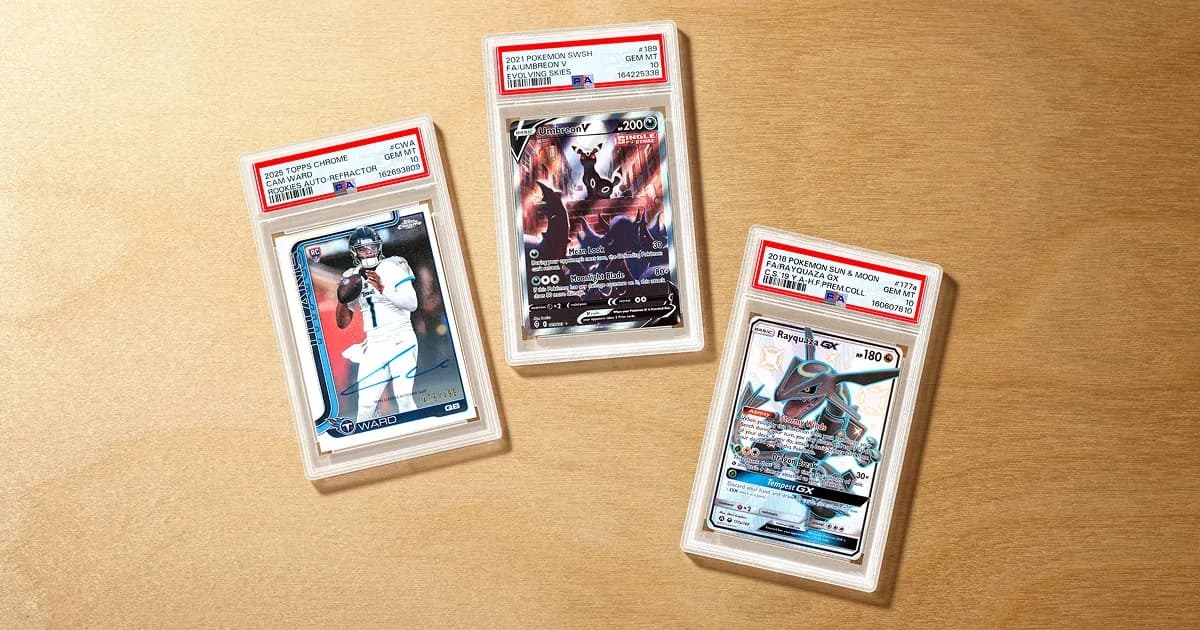
How to submit cards to PSA comes down to five things: an online submission form, the right max insured value, packing to PSA's guide, the prepaid FedEx label, and paying when grades are ready. This guide walks through each step in PSA's own words, with the service levels open as of October 30, 2026.
How to submit cards to PSA (quick answer)
PSA's FAQ sums up the start: "you will need to fill out a submission form via the Online Submission Center." You do not need a club membership: "You are not required to join the Collectors Club in order to submit your items." From there it is packing, shipping, and waiting for the order to move through PSA's stages.
Key Takeaways
- No membership required to submit, per PSA's FAQ.
- One form per service level, holder size and submission type.
- Max insured value sets the level and price; $1,000 or more adds a Premium Item charge.
- Lowest open level on October 30: Value, $39.99 per card, $500 cap, 90 to 100 business days (estimate).
- You insure the trip in. PSA's liability and turnaround clock start at "Order Prep."
- If PSA loses a card: the payout is capped at the lower of fair market value or the tier's Max Insured Value.
- Pay at the end: payment is requested when grading is completed.
Step-by-Step: submitting cards to PSA
1. Check the cards first. Grading is charged even if a card does not pass: PSA's FAQ says "if your item fails to pass our process, you will still be responsible for the charges." Our card condition guide covers centering, corners, edges and surface, and what PSA calls altered explains why cleaning a card can backfire.
2. Choose a service level by max insured value. PSA's FAQ says the max insured value you enter "establishes" the "Service Level and Service Level price," and "any item with a Max Insured Value of $1,000 or more is subject to a Premium Item charge in addition to the authentication price." PSA's coverage page puts it the other way round: there, no input is needed, because the max insured value is set by default by the service level you choose. The chart below shows the levels listed on October 31, after PSA reopened Value and shortened two estimates (next section). Our PSA grading fees guide has the full history of the fall changes, and the grading fee calculator totals an order.
3. Create the submission online, one form per type. "Each Service Level, Holder Size and Type of Submission will need to be submitted separately, with their own submission form and charges." PSA's app can also do this: "The app allows you to submit trading cards for grading," and "Submission drafts will transfer from the PSA app to the PSA website." Review, crossover and reholder orders go through the website.
4. Pack to PSA's guide. Sleeve each card, put it in a semi-rigid holder, stack the cards in form order and secure the stack with two or three rubber bands, then box it with bubble wrap. The chart below shortens PSA's steps.
5. Print the label and ship with FedEx. After checkout, PSA's email "contains both a shipping label QR code (for printing at FedEx) and a print-ready shipping label link (for printing at home)." The label "is valid for 30 days after submission checkout," and each label works only for its own submission. PSA's FAQ says "FedEx 2Day and FedEx Ground are the only two inbound shipping services offered by PSA at this time," within the contiguous United States, and shipping is charged "at the time FedEx scans your package."
6. Insure the trip in. PSA's coverage page says "PSA does not insure inbound packages," and the FAQ puts the responsibility on you: "Customers are responsible for insuring their packages when shipping their items to PSA."
7. Track the order, pay, and pick destinations. PSA emails "when the order is entered for processing, when label descriptions are ready for review, when grades are available and finally, when the order has shipped." You pay when grading is complete, then choose where each graded card goes.
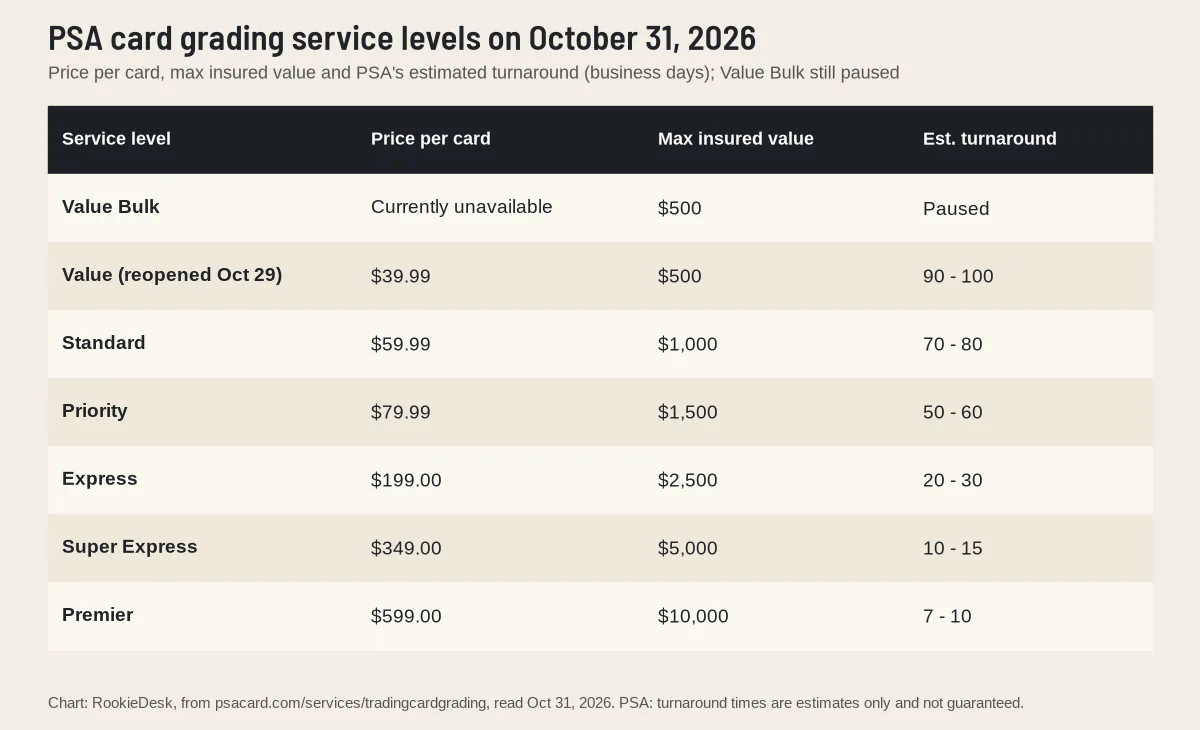 Chart: RookieDesk, from psacard.com/services/tradingcardgrading (read October 31, 2026). Prices and turnaround as listed that day.
Choosing the service level, as of October 30
PSA reopened Value on October 29: its October 28 post says "Value is priced at $39.99 in the U.S. and $500 maximum insured value," with an estimated 90 to 100 business days, and "New Value orders will be processed following orders currently at PSA." Value Bulk is still marked currently unavailable. Above Value come Standard ($59.99 per card, max insured value $1,000, 70 to 80 business days), Priority ($79.99, $1,500, 50 to 60), Express ($199.00, $2,500, 20 to 30), Super Express ($349.00, $5,000, 10 to 15) and Premier ($599.00, $10,000, 7 to 10). The Standard and Priority estimates apply to orders from October 28. Cards worth more than $10,000 go to Premium levels, starting with Premium 1 at $999.00.
The turnaround numbers carry PSA's own warning: "Estimated Turnaround Times are estimates only and not guaranteed." PSA's backlog tracker gives context: "October 20, 2026 Update Our active grading backlog is now 7.2 million units, down a million units from 8.2 million reported October 6." It adds that "existing orders will be prioritized ahead of new submissions."
Packing the box the way PSA asks
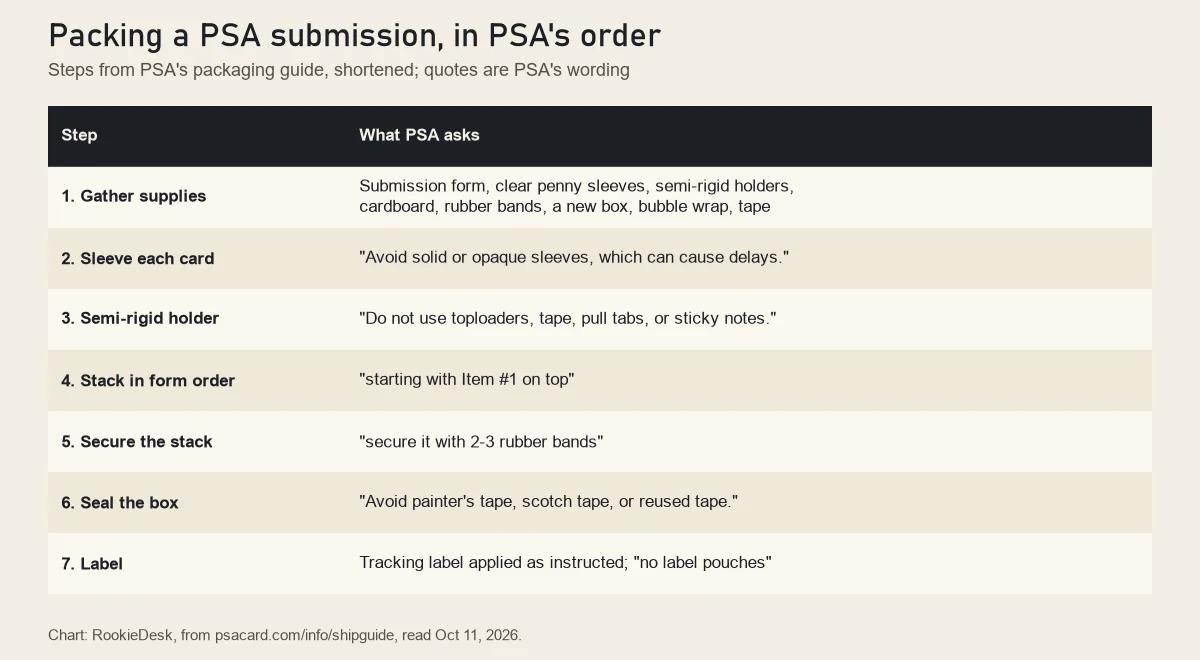 Chart: RookieDesk, from psacard.com/info/shipguide (read October 11, 2026)
PSA's packaging guide lists the supplies: "your submission form, clear penny sleeves, semi-rigid card holders, cardboard dividers, rubber bands, a new shipping box, bubble wrap, and packing tape." The details that trip people up are in its wording: "Avoid solid or opaque sleeves, which can cause delays." "Do not use toploaders, tape, pull tabs, or sticky notes." "Stack your cards in the exact sequence listed on your submission form, starting with Item #1 on top." And for the box: "Avoid painter's tape, scotch tape, or reused tape."
The label matters too. PSA warns that "If this step is skipped or the label is applied incorrectly, it may result in order entry and processing delays," and asks you to secure the label "directly onto the box" with "no label pouches." A badly packed box can be turned away: "your package may be refused" if the item "is not easily retrievable through the packaging, is poorly packed and/or is damaged in transit." Our guide to shipping sports cards covers the general packing materials.
PSA's official YouTube channel also has a packing video, "How to Package Cards for PSA Shipping":
After you ship: Order Arrived, Order Prep and grades
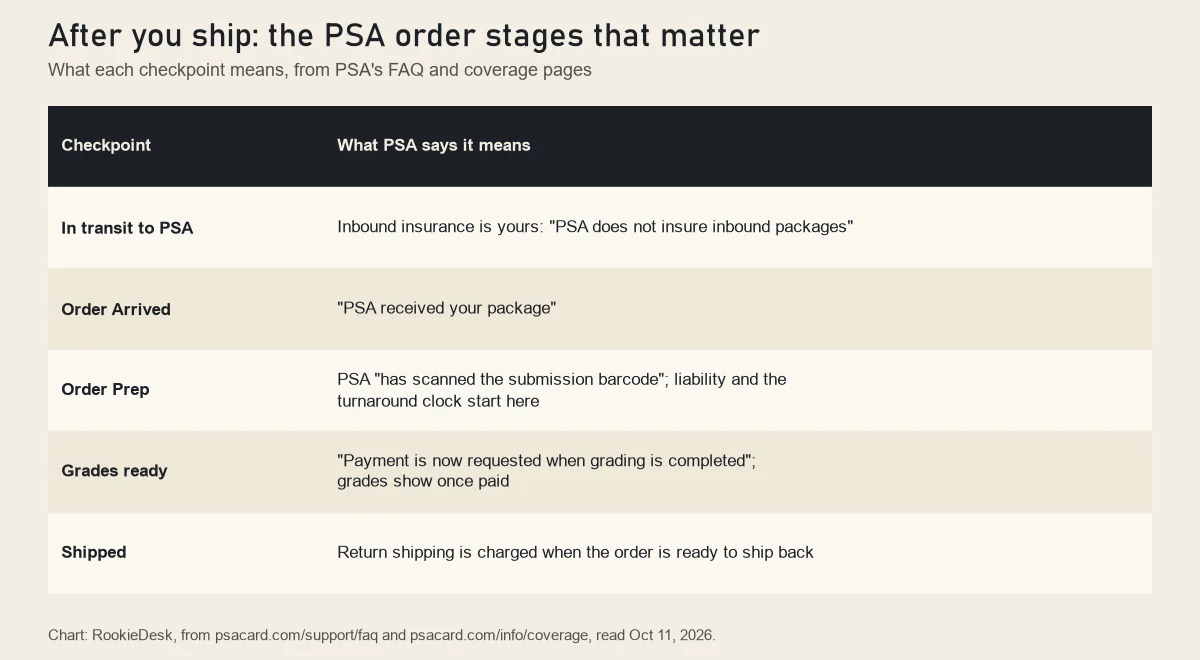 Chart: RookieDesk, from psacard.com/support/faq and psacard.com/info/coverage (read October 11, 2026)
Two early checkpoints confuse first-time submitters. PSA's FAQ: "“Order Arrived” means PSA received your package, while “Order Prep” means PSA has scanned the submission barcode." The second one is the one that counts: "PSA does not assume any liability for an item until “Order Prep,” and this checkpoint also starts the clock on estimated turnaround time." PSA's services page words the start of the clock differently in two places, "when the order is received and scanned into the PSA facility" and "until the order has been entered into the grading system," so read the FAQ's Order Prep rule as the practical marker.
Inside the grading room, PSA says "every card entering the PSA grading room is examined by at least two authentication and grading professionals." Then: "Payment is now requested when grading is completed, and grade reveals are available once payment is received." Once the card is covered, PSA's protection is "up to the lesser of its fair market value or the applicable Max Insured Value."
Paying, destinations and return shipping
Card by card, PSA offers three destinations: "Ship Back: for the favorites wanted back in hand," "Send to the PSA Vault," or "Sell on eBay." Selections "can be managed from the moment grades are ready until the order moves to Complete." After "QA Checks (formerly QA2) assesses the condition of the holder," the order moves to Complete "and cards are prepared for shipping."
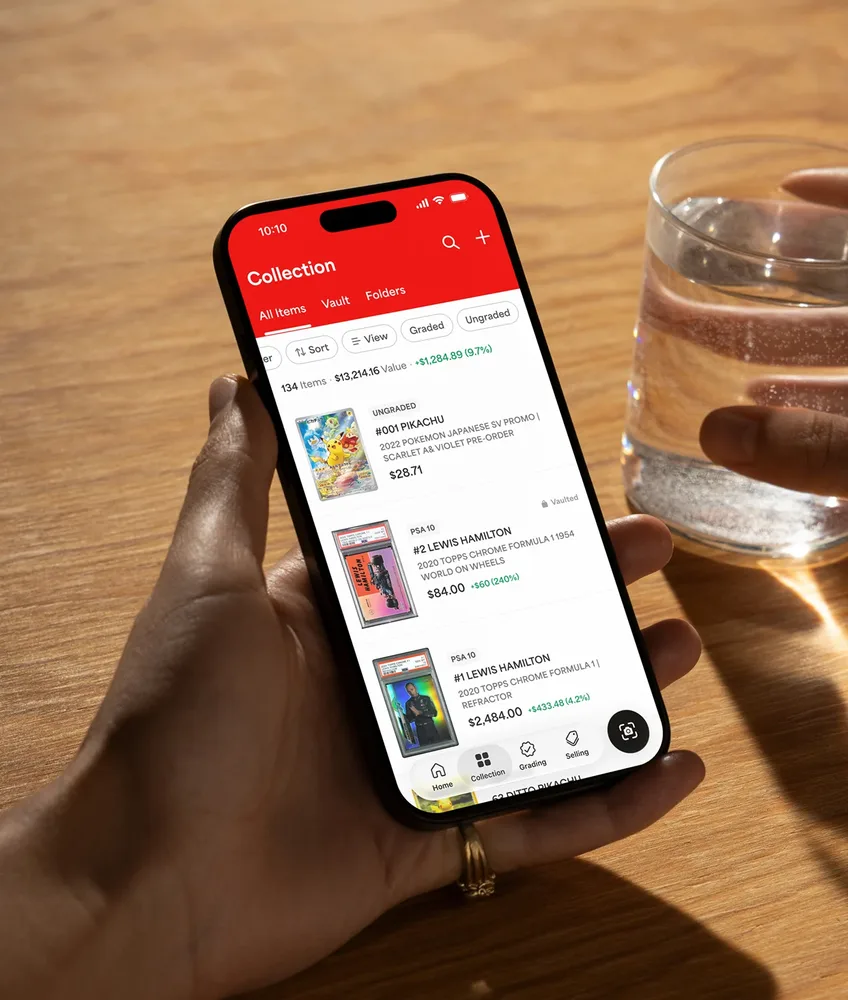 Image: PSA
Return shipping is on you as well: "You will be responsible for shipping both ways," and "You will be charged once your submission is complete & ready to be shipped back to you." To read the label that comes back, see our guide to the PSA grading scale.
If PSA loses your cards: coverage and the October FedEx theft
PSA's coverage page draws its line at arrival: "Once PSA confirms it has received an item, it is covered for loss or damage up to the lesser of its fair market value or the applicable Max Insured Value." The cover runs one way out, too: "This coverage extends until your item reaches its next destination (e.g., the PSA Vault, back to you, etc.)." The trip in is yours: "Unless you arrange inbound shipping insurance from Cabrella or another third-party provider, your item will not be covered while in transit to PSA." The support FAQ quoted above ties liability to Order Prep instead, so two PSA pages name two different starting points.
The tier is the ceiling. PSA says the payout "is based on the degree of damage or loss, and is limited to the lower of the item's fair market value or the Max Insured Value for your selected service level." On the services page read October 30, that cap was $500 a card at Value, $1,000 at Standard, $2,500 at Express and $10,000 at Premier. A card worth more than its tier's cap is covered only to the cap. PSA's coverage FAQ, under "What if I underestimate my item's value?", says it "will upgrade the service level for that item (not your entire order)," and the higher cap applies once those fees are paid.
That return leg is where October's theft happened. Santa Ana police told CBS Los Angeles that a FedEx truck was broken into on October 13 near PSA's facility, with an estimated $963,000 in cards taken; the exact value "could not be determined until the remaining boxes were scanned." The Los Angeles Times reported that the cards "had been graded and were set to be returned to their owners." PSA's statement, as quoted by CBS: "We have deactivated the certificates for the stolen items and notified marketplace partners," and its customer service team "is arranging compensation based on fair market value." In an update on October 23, quoted by SI Collectibles, PSA said the Santa Ana police and the FBI are investigating and that it is publishing the list of all 6,451 stolen items with their certification numbers. For orders on PSA's return label, PSA said it pays "based on the fair market value of each item, up to its declared Maximum Insured Value (MIV)," and that grading fees are refunded separately. The last police statement we found, to NBC News on October 20, reported no arrests and no recovered cards.
What PSA pays each owner is not public. Collectors quoted in the press describe low offers; those are their accounts, not PSA figures. For anyone buying a PSA slab in the next few months, the deactivated certificates are the part that matters: run the cert number before paying, as our guide to spotting fake sports cards describes.
Community: first-timer questions
The small details are what first-time submitters ask about. u/ichiruto70 posted on r/psagrading on September 21, 2026, about where the barcode goes: "The barcode is on the box in the courier bag, wondering if it also should be on this sealed bag?" (post) On cost and wait, u/RepulsiveUse3372 wrote in the thread on PSA's September reopening: "i think ill hold off, $60 per card is lowkey insane when you have to wait 100 business days" (comment). Both are personal views.
Our take
From PSA's own pages: two parts of the process sit with you. Before "Order Prep," the cards are your responsibility, so pack exactly to PSA's guide and insure the box; PSA can refuse a badly packed one. Per PSA's FAQ, the max insured value you enter sets the service level and the price. That makes it an estimate worth doing card by card. Since October 29, Value at $39.99 and an estimated 90 to 100 business days is the lowest price per card PSA offers, for cards up to $500; above that, Standard at $59.99 now quotes 70 to 80 business days.
Frequently Asked Questions
The six questions below cover membership, shipping, Order Prep, payment timing, the cheapest open level and inbound insurance.
Do I need a PSA membership to submit cards?
No. PSA's FAQ says: You are not required to join the Collectors Club in order to submit your items. You do fill out a submission form through PSA's Online Submission Center.
How do I ship cards to PSA?
After checkout PSA emails a shipping label QR code for printing at FedEx and a print-ready label link. PSA lists FedEx 2Day and FedEx Ground as its only inbound services, within the contiguous United States. The label is valid for 30 days.
What does Order Prep mean on a PSA order?
PSA's FAQ says Order Arrived means PSA received your package, while Order Prep means PSA has scanned the submission barcode. PSA takes on liability at Order Prep, and that checkpoint also starts the turnaround clock.
When do I pay for PSA grading?
PSA's FAQ says payment is now requested when grading is completed, and grade reveals are available once payment is received. Return shipping is charged once the submission is ready to ship back.
What is the cheapest PSA service level right now?
Value, since October 29, 2026: $39.99 per card with a $500 max insured value and an estimated 90 to 100 business days, per PSA's October 28 post and its services page read October 30. Value Bulk is still listed as currently unavailable. Standard ($59.99, $1,000) now quotes 70 to 80 business days.
Does PSA insure my cards on the way in?
No. PSA's coverage page says PSA does not insure inbound packages. Once PSA confirms it has received an item, it is covered up to the lesser of its fair market value or the service level's max insured value.
How we checked this
Every step comes from psacard.com pages read on October 11, 2026: the support FAQ, the trading card grading services page, the packaging guide, the coverage page and the backlog tracker. The coverage page and the services page were read again on October 21 for the section on lost cards, and the backlog tracker on October 24; the October theft comes from CBS Los Angeles (October 19), AP and the Los Angeles Times (October 20), all read on October 21. On October 25 we read the support FAQ, the services page, the coverage page and the backlog tracker again, plus NBC News (October 20) and PSA's October 23 update as published by SI Collectibles for the theft. PSA's submission screens sit behind a sign-in, so we describe the flow as PSA's FAQ and guides describe it, not from a submission of our own. The video is PSA's own. Reddit posts are personal views, read on their RSS feed on October 11 or in our October 10 research, and again through Arctic Shift on October 25.
PATCH: Updated Oct 30, 2026: PSA reopened Value on October 29 at $39.99 ($500 cap, 90 to 100 business days) and cut Standard to 70 to 80 and Priority to 50 to 60 business days for orders from October 28, so the cheapest open level is now Value, not Standard.
References
- PSA support FAQ: https://www.psacard.com/support/faq
- PSA trading card grading services: https://www.psacard.com/services/tradingcardgrading
- PSA, Value reopens (October 28, 2026): https://www.psacard.com/articles/articleview/15779/psa-reopens-value-service-level
- PSA packaging guide: https://www.psacard.com/info/shipguide
- PSA coverage: https://www.psacard.com/info/coverage
- PSA backlog tracker: https://www.psacard.com/info/backlog-tracker
- CBS Los Angeles, FedEx truck theft near PSA (Oct 19, 2026): https://www.cbsnews.com/losangeles/news/santa-ana-fedex-truck-theft-sports-pokemon-trading-cards-psa-grading-orange-county/
- AP via ABC News, $963K in trading cards stolen from FedEx truck (Oct 20, 2026): https://abcnews.com/Business/wireStory/963k-trading-cards-stolen-fedex-truck-california-137419718
- Los Angeles Times, trading cards stolen from FedEx truck in Santa Ana (Oct 20, 2026): https://www.latimes.com/sports/story/2026-10-20/1-million-dollars-sports-pokemon-trading-cards-stolen-fedex-santa-ana
- NBC News, police: no arrests, no recovered cards (Oct 20, 2026): https://www.nbcnews.com/news/us-news/sports-pokemon-cards-stolen-fedex-truck-california-rcna604482
- SI Collectibles via Yahoo, PSA's October 23 update with the 6,451-item list (Oct 24, 2026): https://www.yahoo.com/news/us/articles/psa-issues-full-list-6-131314865.html
- PSA Official, How to Package Cards for PSA Shipping (YouTube): https://www.youtube.com/watch?v=WlnN7kmxJtk
- Reddit r/psagrading, first submission barcode question: https://www.reddit.com/r/psagrading/comments/1wmhwoh/doing_first_submission_does_the_barcode_need_to/
Related Reading
- Sports Card Grading 2026: PSA vs SGC vs CGC vs Beckett: the grading pillar, with every grader's tiers.
- Crossover Grading: How PSA, CGC and SGC Handle Other Slabs: sending a card that is already slabbed.
- What Is a Pop Report? PSA, SGC and CGC Population Explained: what happens to the count after your card is graded.
About the author

Editorial desk
The RookieDesk desk. We read the paperwork before you open the box: Topps' checklists and odds sheets, the box art, grader fee pages. Every number links to its source and carries the date we checked it.
Keep reading
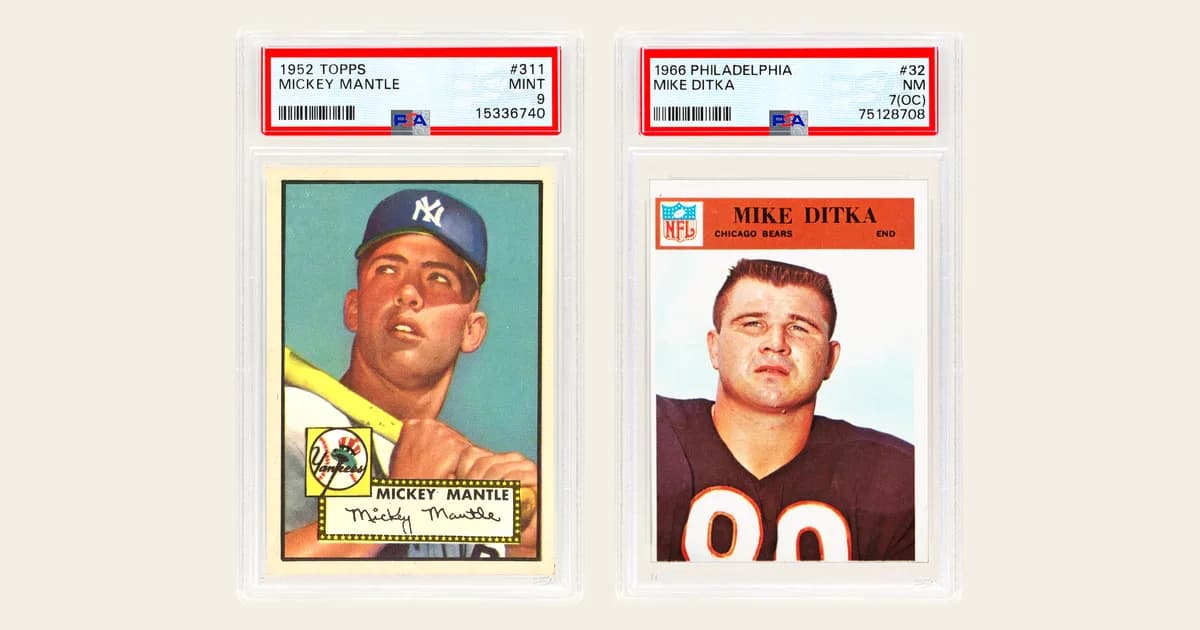
Card Condition Guide: Centering, Corners, Edges and Surface
Guides · 9 min
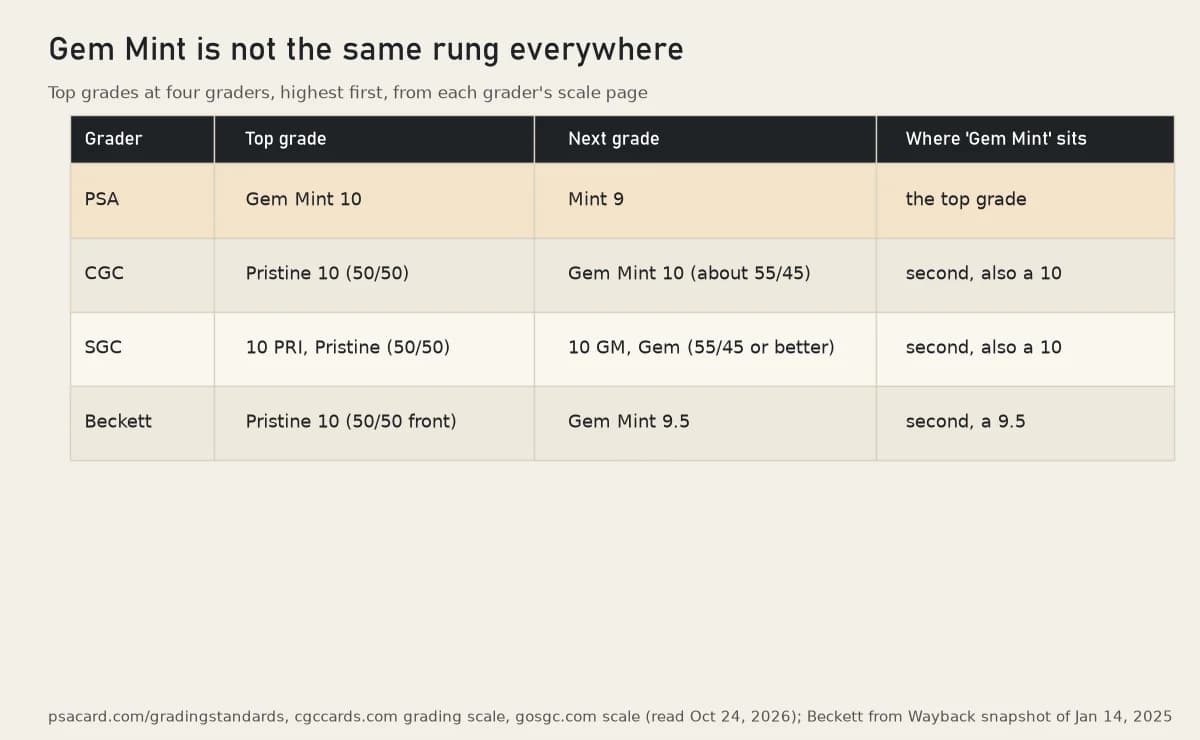
What Does Gem Mint Mean? A 10 at PSA, a 9.5 at Beckett
Guides · 7 min
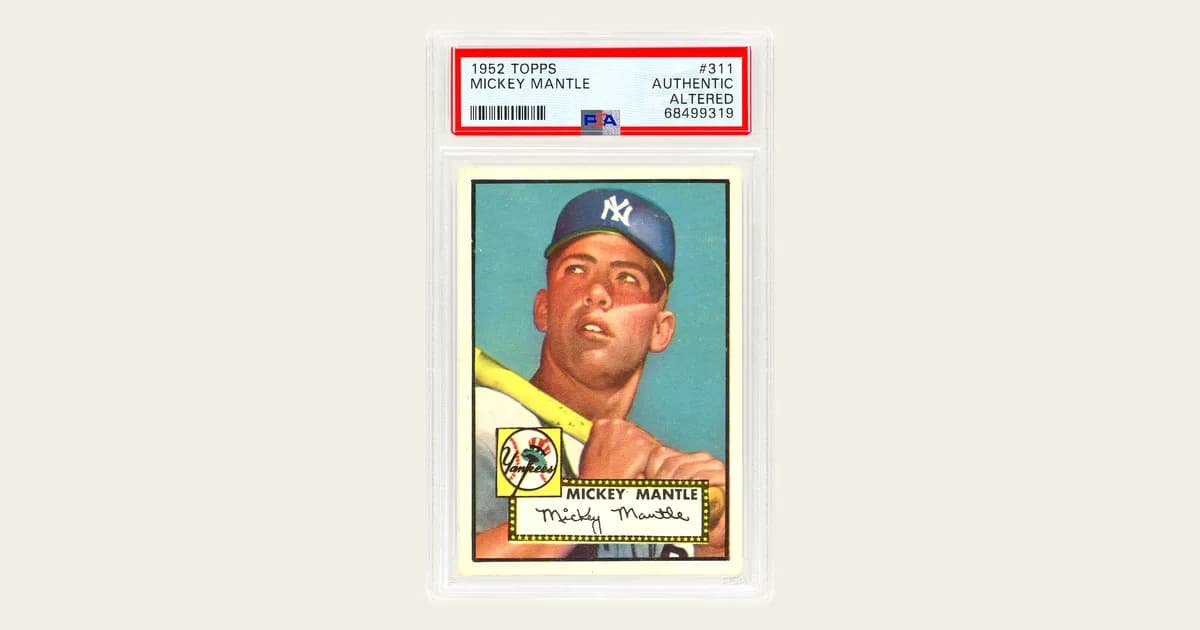
How to Clean Sports Cards: What PSA and CGC Call Altered
Guides · 8 min
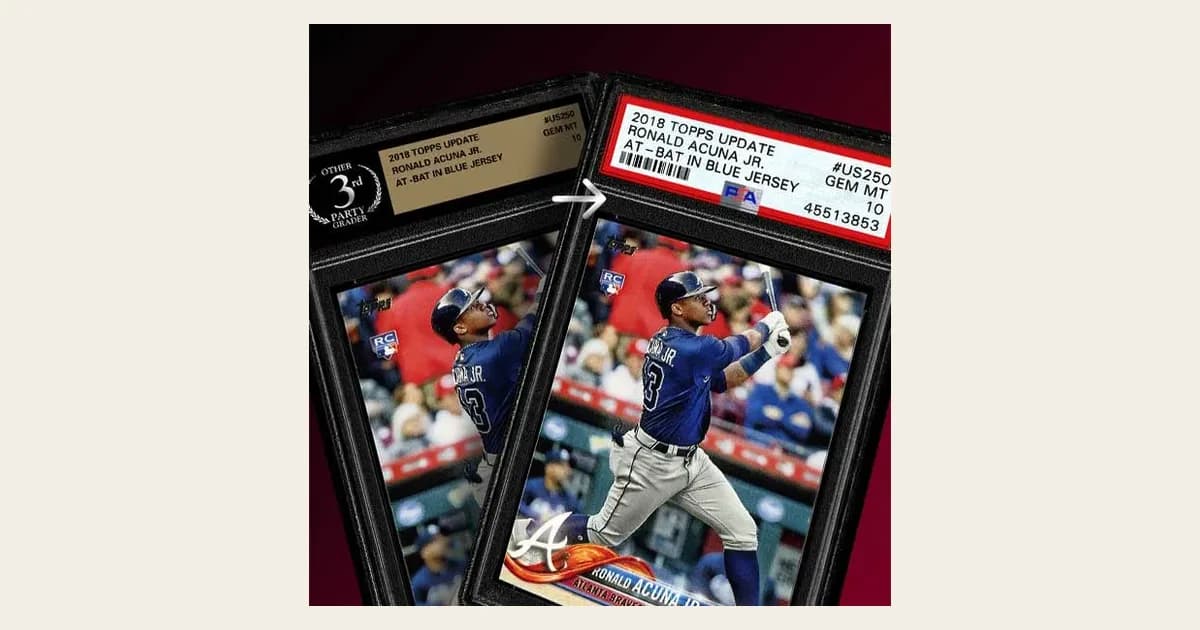
Crossover Grading: How PSA, CGC and SGC Handle Other Slabs
Guides · 9 min
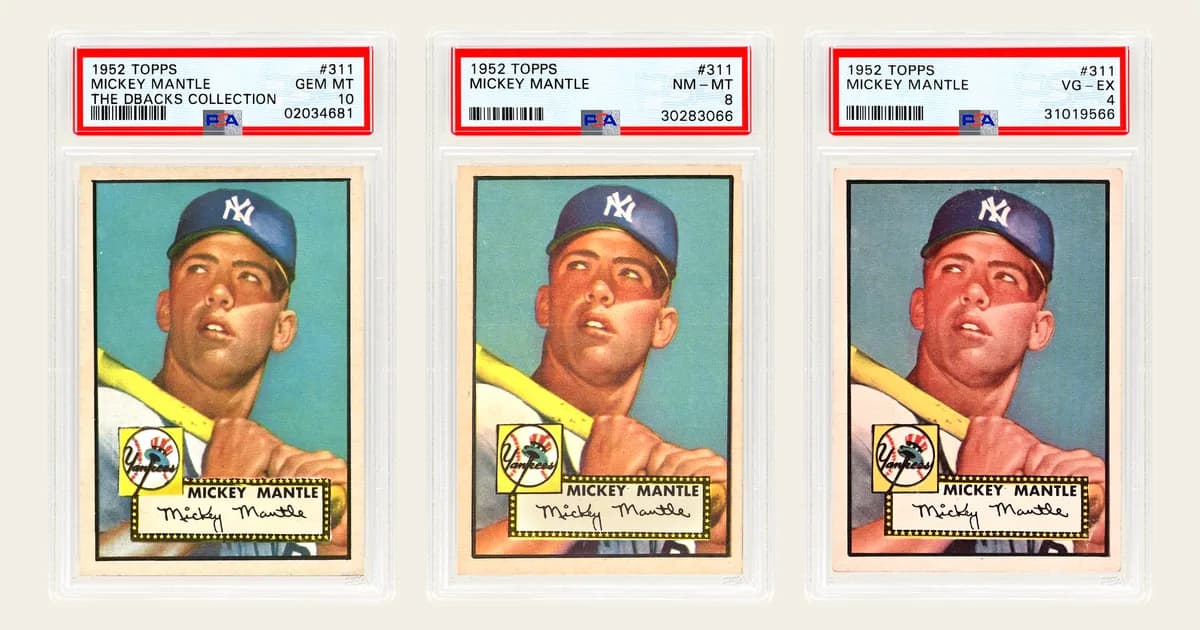
BGS vs PSA: Subgrades, Black Label and Grading Scales
Guides · 10 min
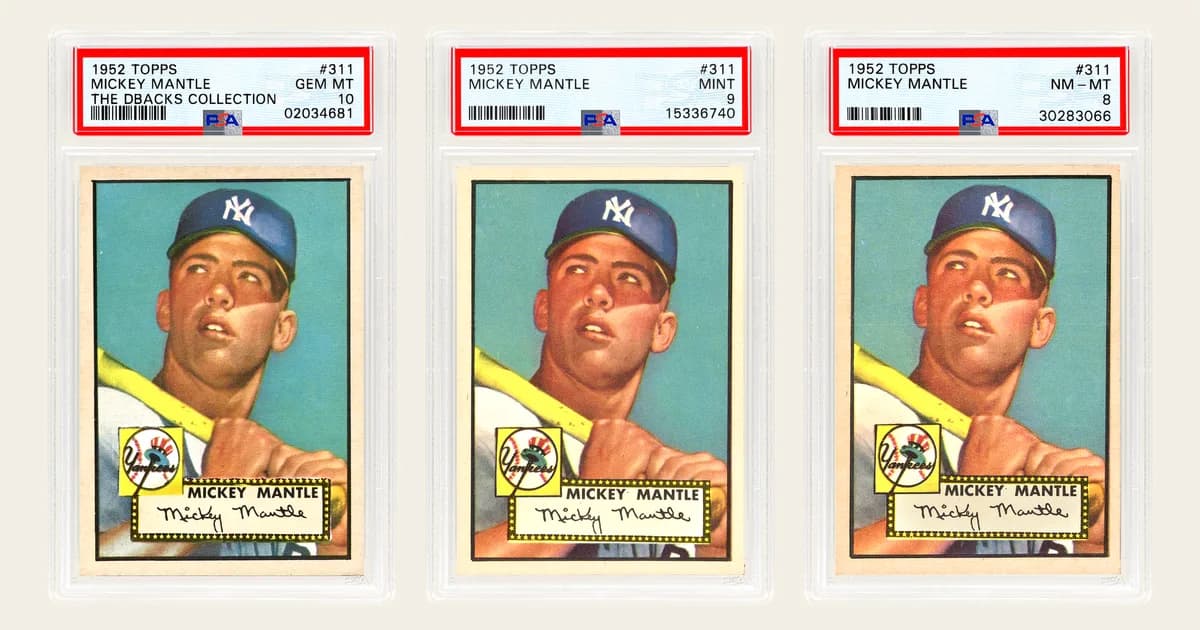
PSA Grading Scale Explained: What PSA 10, 9 and 8 Mean
Guides · 9 min
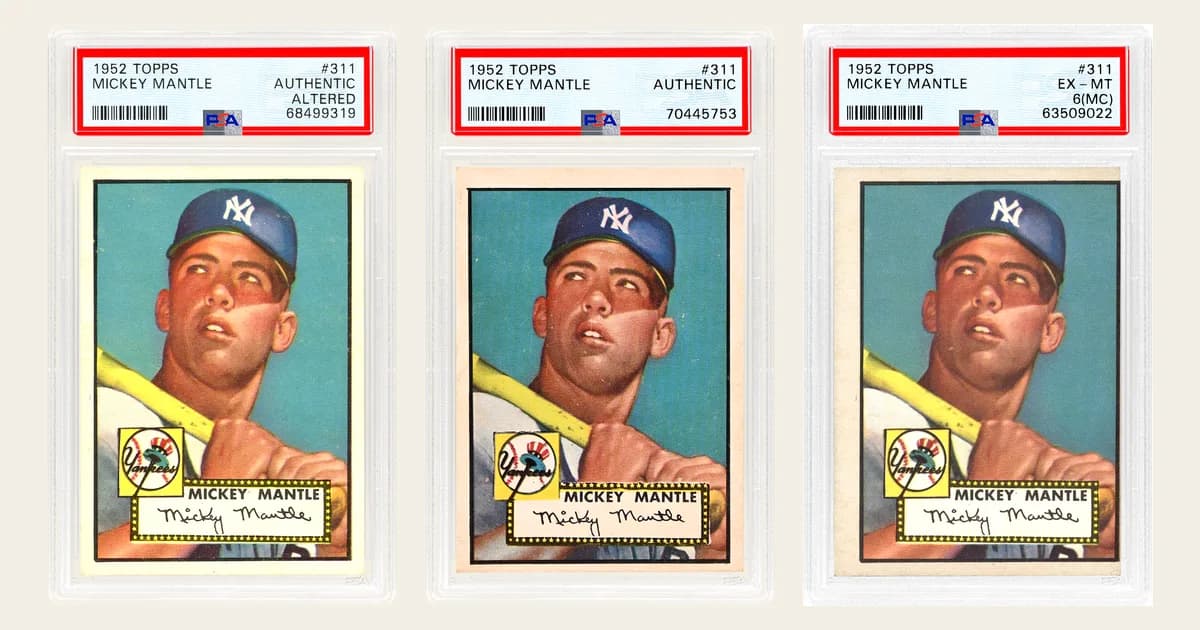
How to Spot a Trimmed Sports Card: PSA and CGC Red Flags
Guides · 8 min
What Is a Pop Report? PSA, SGC and CGC Population Explained
Guides · 8 min
Disclaimer
RookieDesk publishes data, not investment or financial advice. Odds are the manufacturer's published odds, not a promise of what any one box contains. Checklists, release dates, grading fees and prices change after publication; each one here carries the date we checked it. Confirm critical details with the manufacturer, grader or seller before you buy or submit. RookieDesk is independent and not affiliated with any card manufacturer, league or players association, and carries no affiliate links, ads or sponsored posts; see our independence note. Articles are researched and written with AI tools, and every fact is checked against its cited source before publishing; see how we use AI.