Guides
How to Clean Sports Cards: What PSA and CGC Call Altered
How to clean sports cards before grading without a no-grade: PSA's N5 and N7 codes, CGC's alteration list, and archive rules for handling and loose dust.
TL;DR: PSA's N7 "Evidence of Cleaning" covers border whiteners, solutions for wax, gum or tobacco stains, and any cleaning spray or wax on the surface; N5 "Altered Stock" covers pressing, scratch removal and enhanced gloss. CGC returns cleaned, pressed or stain-removed cards without a grade. Both charge the fee. Neither describes a safe cleaning method on the pages we read. Handle cards by the edges with clean hands, and for loose dust use an air blower, the Library of Congress method for photographs.
8 min readBy RookieDesk Editorial
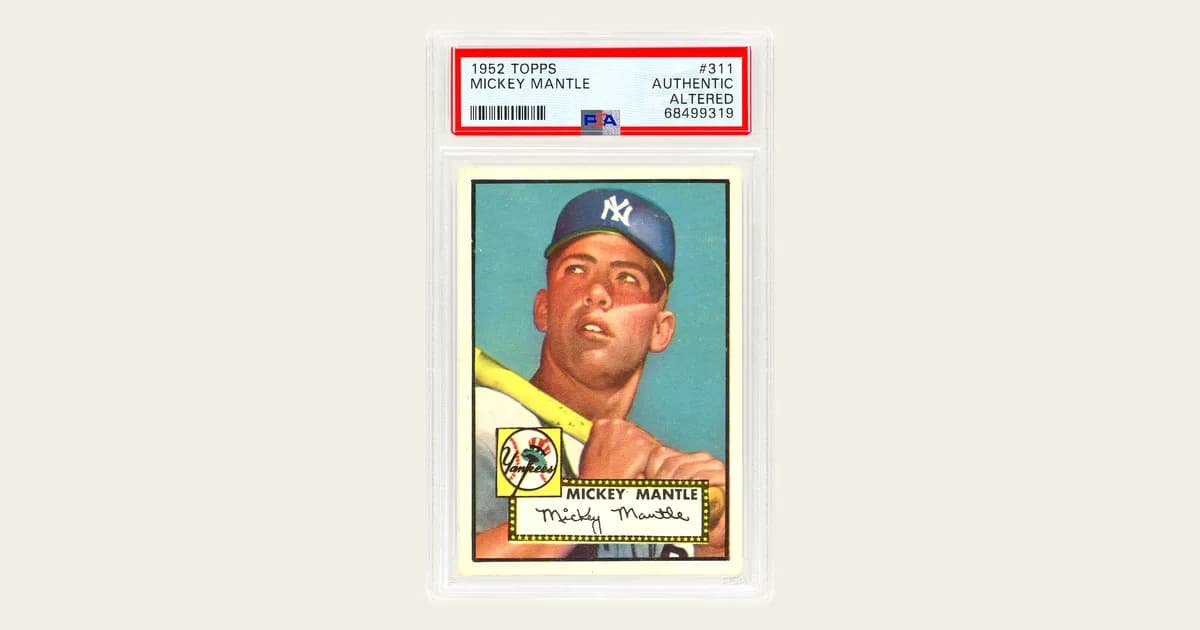
How to clean sports cards before grading has a short official answer: the graders do not tell you how, and they do tell you what gets a card rejected. PSA and CGC both list cleaning and pressing as alterations, and both charge the fee when they find them. This guide sets out their exact wording, read on October 11, 2026, and the handling rules archives use for paper and photographs.
How to clean sports cards (quick answer)
Do not use liquids, sprays, whiteners or pressing on a card you plan to grade; PSA and CGC both treat those as alteration. Neither grader's pages that we read describe an approved cleaning method. What archives do publish is handling: clean hands, hold by the edges, and blow loose dust off rather than brushing it. Anything beyond that is a risk you take on your own.
Key Takeaways
- PSA N7: "When a whitener is used to whiten borders or a solution is used to remove wax, candy, gum or tobacco stains," or when "cleaning spray or wax" is applied.
- PSA N5: "crease/wrinkle pressing, scratch removal, or enhanced gloss."
- CGC: "cleaned or restored" cards "will not receive a numeric grade," and alteration evidence includes "chemical cleaning, pressing and stain removal."
- Fees: PSA charges "the full grading price" on a rejected card; CGC says "The submitter is charged the grading fee."
- Handling (Library of Congress, for photographs): clean hands or nitrile gloves, hold by the edges, air bulb for dust, "not canned air."
Overview: how to clean sports cards without an alteration code
The table lines up what each grader names. If a step appears here, a grader has written it down as a reason not to grade.
| Practice | PSA | CGC Cards |
|---|---|---|
| Whitening borders | N7 Evidence of Cleaning | Not named; the closest term is "chemical cleaning" |
| Stain removal with a solution (wax, gum, tobacco) | N7 | "stain removal" |
| Cleaning spray or wax on the surface | N5 and N7 both name it | "cleaned" |
| Pressing out a crease or wrinkle | N5 Altered Stock | "pressing" |
| Scratch removal, enhanced gloss | N5 | Not named on the pages we read |
| Color added | N3 recoloration (PSA FAQ) | "Evidence of Color Added" |
| Fee if rejected | "full grading price is still charged" | "The submitter is charged the grading fee." |
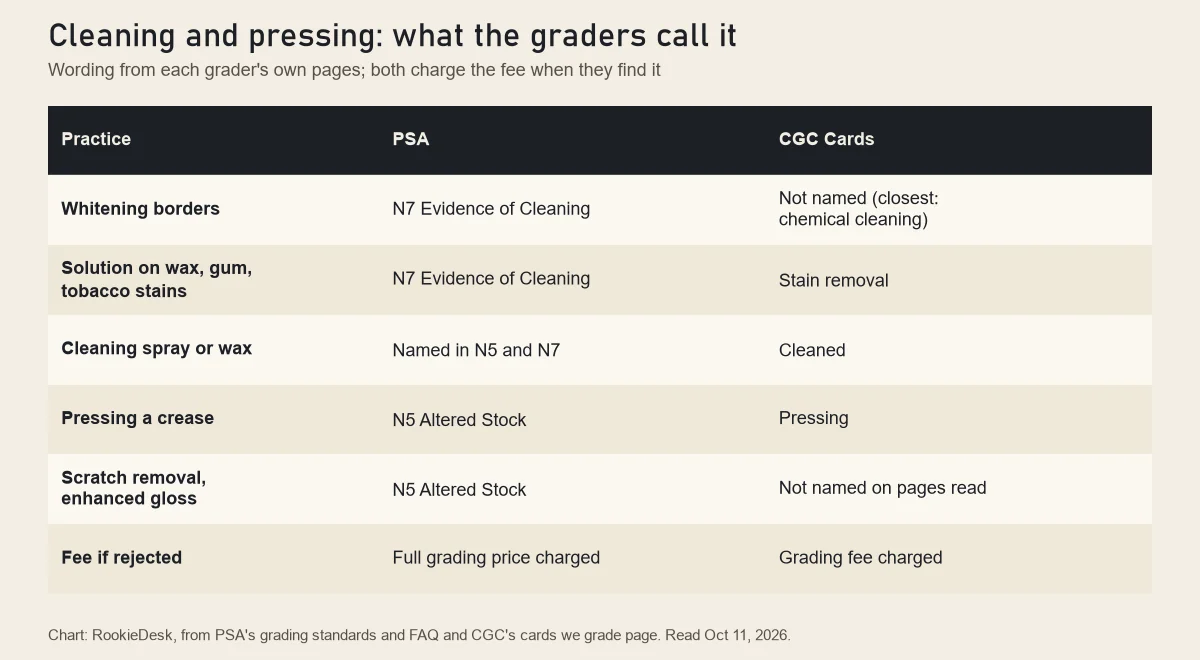 Chart: RookieDesk, from PSA's grading standards and FAQ and CGC's cards we grade page (read October 11, 2026)
Analysis: PSA's N5 and N7 codes
PSA's grading standards open the section on ungradable cards with one rule: "PSA will not grade cards that bear evidence of trimming, re-coloring, restoration, or any other forms of tampering, or are of questionable authenticity." Two codes cover what most people mean by cleaning.
N7 Evidence of Cleaning. "When a whitener is used to whiten borders or a solution is used to remove wax, candy, gum or tobacco stains. Additionally, when any foreign substance is applied to the surface of a card such as cleaning spray or wax."
N5 Altered Stock. It includes "some form of alteration such as paper restoration, crease/wrinkle pressing, scratch removal, or enhanced gloss," and repeats the line about "cleaning spray or wax."
For both codes PSA adds: "Note that this designation can qualify for encapsulation as "Authentic Altered" at the grader's discretion and if "AA" is listed on the submission form as the desired minimum grade," and "You will be charged the applicable grading fee in either case." PSA's FAQ puts the cost plainly: a card rejected for altered stock or cleaning "will be returned not encapsulated, however the full grading price is still charged."
The top grade explains the stakes. A PSA Gem Mint 10 needs "full original gloss" and "must be free of staining of any kind." In our reading the word "original" matters, since N5 names "enhanced gloss."
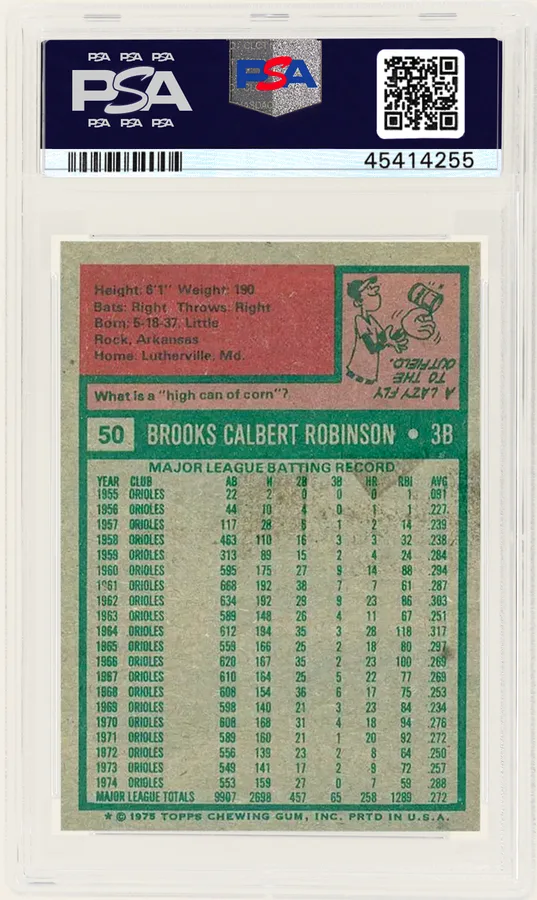 Image: PSA
GODEEPER: The other alteration PSA rejects most often, and how to spot it. How to Spot a Trimmed Sports Card: PSA and CGC Red Flags →
Analysis: CGC's alteration list
CGC Cards states the rule more broadly: "Any card that CGC Cards graders determine to be altered in any form (including artist alterations), counterfeit, replica, cleaned or restored will not receive a numeric grade and will not be encapsulated in a CGC Cards holder."
Its list of tampering evidence names chemical cleaning, pressing and stain removal: "Evidence or appearance of alterations include but are not limited to: trimming, restoration, power erasing, chemical cleaning, pressing and stain removal. The submitter is charged the grading fee." Color is separate: "When a card's color has been artificially improved, it will be returned as "Evidence of Color Added.""
CGC also says how it looks: its "forensic devices using UV light and infrared light reveal alterations and hidden details through ultra-microscopic inspections." For a card that is genuine but altered, "CGC Cards will print Authentic Altered in the grade box." Our PSA grading scale guide explains how those labels sit next to numeric grades.
Analysis: handling cards without damaging them
The graders tell you what not to do; archives tell you how to handle paper. The Library of Congress writes for photographs and works on paper, not trading cards, so treat its guidance as the closest official handling advice we found:
- Hands. "Handle photographs with clean hands or while wearing clean nitrile gloves." It adds that "gloves can limit dexterity and become soiled."
- Edges. "Avoid touching the image area of a photograph. Whenever possible handle the photograph by its edges or its housing materials."
- Dust. "Be cautious when removing dust from the surface of a photograph. Even soft brushes can scratch or otherwise damage photographs." Instead: "Use a blower, such as an air bulb, (not canned air) to remove loose dust and debris."
- Workspace. "Have a clean, dry, organized work area free of food and drink."
- No fasteners or adhesives. "Do not use paper clips, rubber bands, or other mechanical fasteners," and "Do not use self-adhesive tape, sticky notes, glue, or other adhesives on photographs."
- Real damage. The Library's works-on-paper page adds that for problems beyond these steps, "conservation treatment by a paper conservator may be necessary."
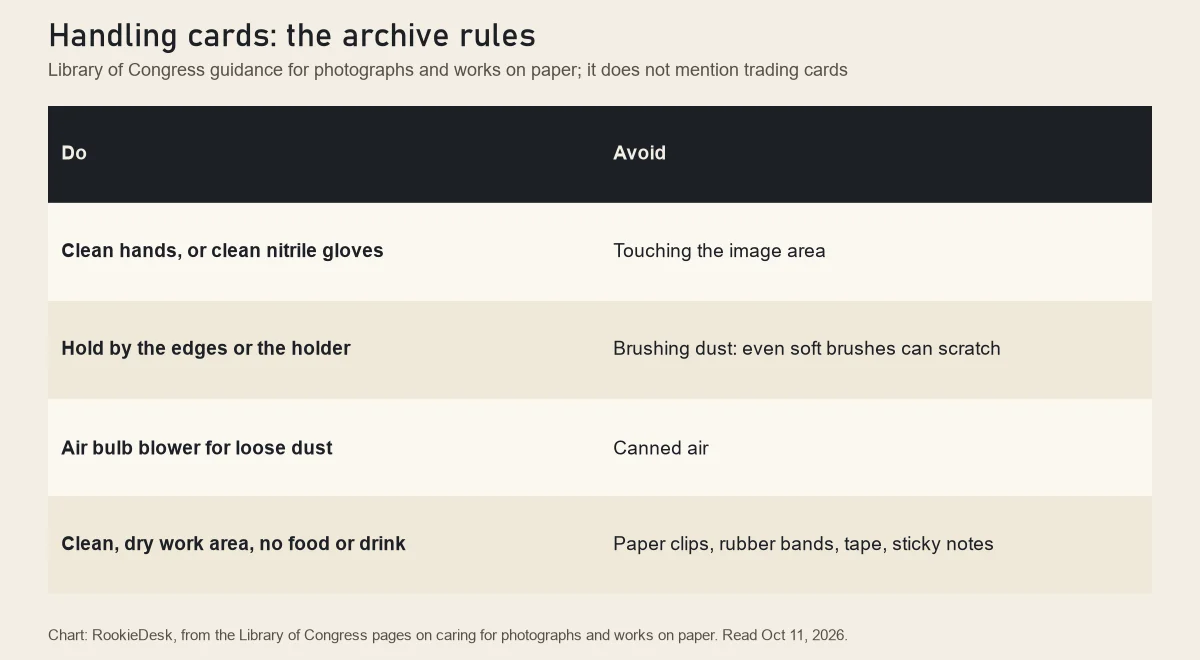 Chart: RookieDesk, from the Library of Congress pages on caring for photographs and works on paper (read October 11, 2026)
The gray zone. A dry wipe with a cloth is not named in PSA's or CGC's codes, which list solutions, whiteners, sprays, wax and pressing. That is silence, not permission. A 2017 forum post on Elite Fourum reported a PSA email saying "buffing out fingerprint or dirt marks is not considered alteration," but no email was shown and we could not confirm it on a PSA page. A Cardhound Vintage author put his own line this way: "Personally, I would never put any unknown chemical in contact with my cards." Our card condition guide covers how graders judge the surface you would be wiping.
GODEEPER: Sleeves and holders keep cards clean in the first place. How to Store Sports Cards: Sleeves, Toploaders and Humidity →
Video: PSA on its grading standards
PSA's official channel has a video on its grading standards:
Community: what collectors ask about cleaning
Cleaning before grading comes up on r/sportscards. In 2023, u/believabletruths wrote after a Beckett submission: "Looks like they got dinged for surfaces. Anyone have a good way to clean cards before sending them in? I had used a microfiber cloth." (thread). In January 2025, u/No_Routine_6823 asked: "I've read about Kurt's card care but I've also read psa is now refusing to grade cards that have been cleaned." (thread). A third collector, asking about tape tricks seen on video, summed up the worry: "I just don't wanna ruin any cards especially older ones." (thread). These are questions and individual accounts, not grader rulings.
Our take
Based on PSA's and CGC's wording cited above: the safest way to clean a card you want graded is not to. Every liquid, spray, whitener, wax or press the graders mention is a reason to return the card without a number, and both still charge you. What remains is handling: clean hands, edges only, loose dust blown off, a sleeve as soon as possible. Our view is that if a card needs more than that, it needs a decision about grading, not a cleaning product.
Frequently Asked Questions
The six questions above cover cleaning before grading, PSA's N7 code, pressing, microfiber cloths, gloves and what happens to a cleaned card at PSA.
Can you clean sports cards before grading?
Not with anything that changes the card. PSA's N7 code, Evidence of Cleaning, covers whitening borders, solutions for wax, gum or tobacco stains, and any cleaning spray or wax on the surface. CGC says cleaned or restored cards get no numeric grade. Neither grader's pages we read describe an approved cleaning method.
What does PSA N7 mean?
N7 is PSA's Evidence of Cleaning code. PSA applies it when a whitener is used on the borders or a solution removes wax, candy, gum or tobacco stains, or when a foreign substance such as cleaning spray or wax is applied. The card is not given a number, and PSA still charges the grading fee.
Is pressing a card considered altering it?
Yes, by both graders' wording. PSA's N5 Altered Stock code includes crease or wrinkle pressing, scratch removal and enhanced gloss. CGC lists pressing, chemical cleaning and stain removal among the signs of alteration that send a card back without a grade, and the submitter is still charged.
Can I wipe a card with a microfiber cloth?
PSA and CGC do not say either way on the pages we read. Their codes name solutions, whiteners, sprays, wax and pressing, not a dry wipe. For loose dust, the Library of Congress suggests an air bulb blower for photographs and warns that even soft brushes can scratch, so in our view a blower is the cautious choice.
Should I wear gloves to handle cards?
The Library of Congress says to handle photographs with clean hands or clean nitrile gloves, and notes gloves can limit dexterity and become soiled. It also says to avoid touching the image area and hold items by their edges. It writes this for photographs; graders do not publish a glove rule for cards.
What happens if PSA finds a card was cleaned?
PSA's FAQ says an item rejected for cleaning or altered stock is returned not encapsulated, and the full grading price is still charged. An N5 or N7 card can be holdered as Authentic Altered at the grader's discretion if AA is written as the minimum grade on the form.
How we checked this
PSA's grading standards page and FAQ, CGC's cards we grade page, grading scale and about page, and the Library of Congress pages on caring for photographs and works on paper were read on October 11, 2026. Community posts come from the r/sportscards search feed and an Elite Fourum thread; the Cardhound Vintage article (April 2024) is a secondary source. SGC's grading standards page did not load readable text, so SGC is not covered. We did not clean or submit any cards. Full source table: data/sources/how-to-clean-sports-cards.sources.md.
References
- PSA, grading standards: https://www.psacard.com/gradingstandards
- PSA, FAQ: https://www.psacard.com/support/faq
- CGC Cards, cards we grade: https://www.cgccards.com/card-grading/cards-we-grade/
- CGC Cards, grading scale: https://www.cgccards.com/card-grading/grading-scale/
- CGC Cards, about CGC: https://www.cgccards.com/card-grading/about-cgc/
- Library of Congress, care of photographs: https://www.loc.gov/preservation/care/photo.html
- Library of Congress, care of works on paper: https://www.loc.gov/preservation/care/paper.html
- Cardhound Vintage, Altered States (secondary): https://cardhoundvintage.com/altered-states-psa-kurts-card-care-and-the-gray-areas/
Related Reading
- Sports Card Grading 2026: PSA vs SGC vs CGC vs Beckett: what each grader charges, including on a card it will not grade.
- How to Spot Fake Sports Cards and Fake PSA Slabs in 2026: the other side of alteration, fake cards and fake slabs.
- How to Ship Sports Cards: Letter, eBay Envelope or Tracked: packing a clean card so it arrives that way.
About the author

Editorial desk
The RookieDesk desk. We read the paperwork before you open the box: Topps' checklists and odds sheets, the box art, grader fee pages. Every number links to its source and carries the date we checked it.
Keep reading
Crossover Grading: How PSA, CGC and SGC Handle Other Slabs
Guides · 9 min
BGS vs PSA: Subgrades, Black Label and Grading Scales
Guides · 10 min
PSA Grading Scale Explained: What PSA 10, 9 and 8 Mean
Guides · 9 min
How to Spot a Trimmed Sports Card: PSA and CGC Red Flags
Guides · 8 min
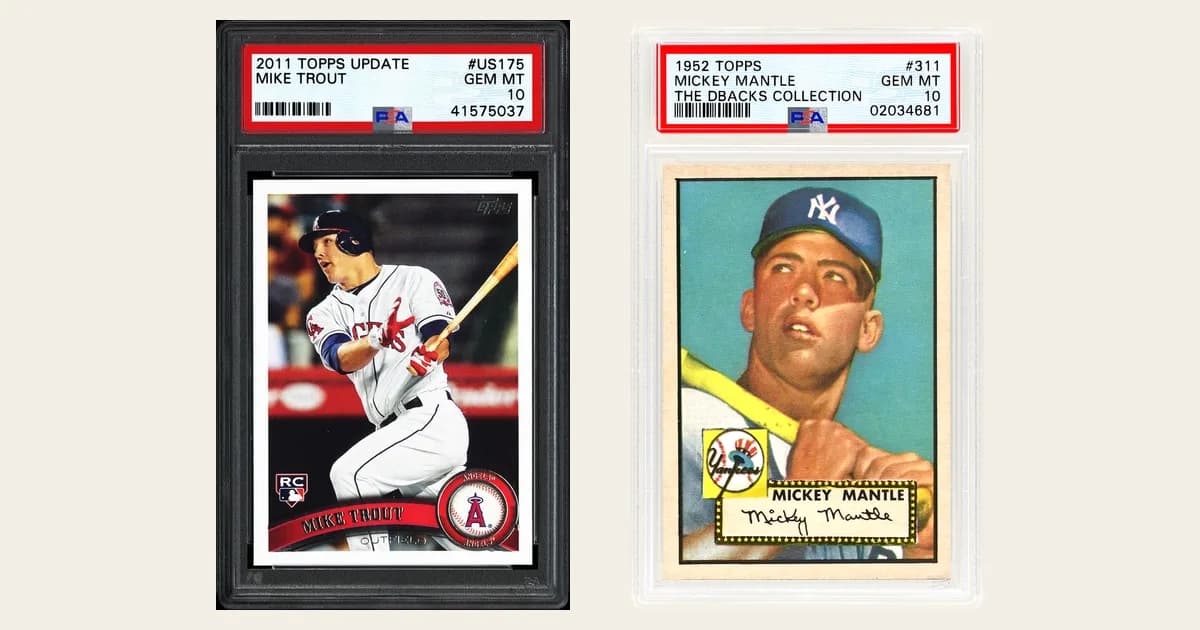
What Is a Pop Report? PSA, SGC and CGC Population Explained
Guides · 8 min
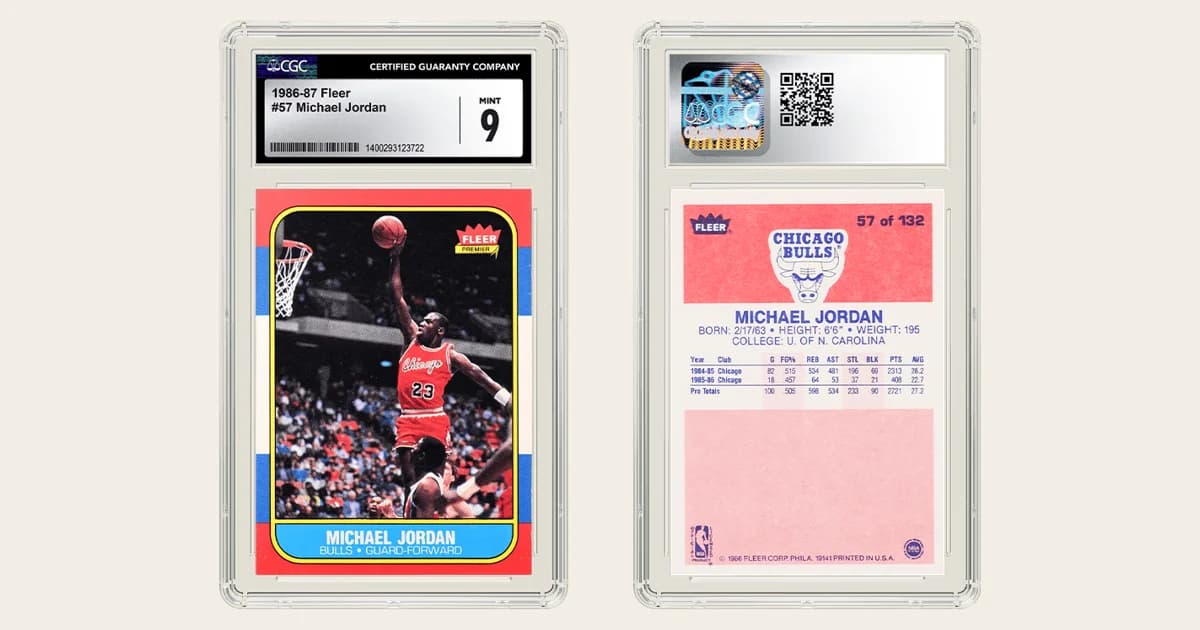
CGC Grading Fees 2026: Every Tier and Price for Sports Cards
Guides · 9 min
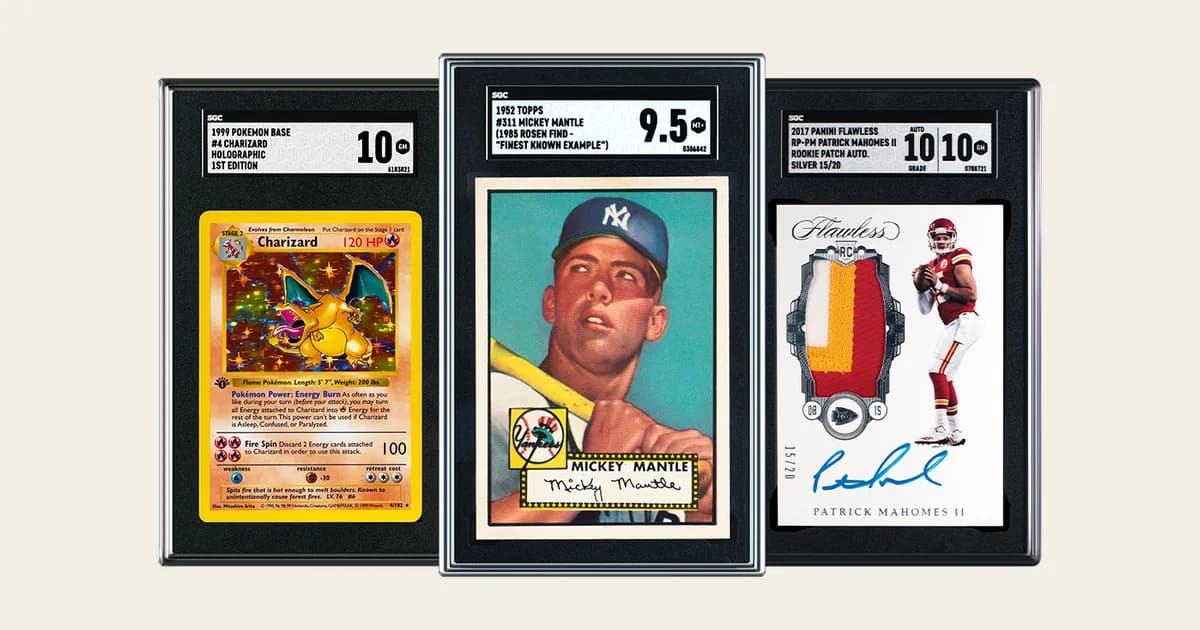
SGC Grading Fees 2026: Every Tier After the September Change
Guides · 8 min
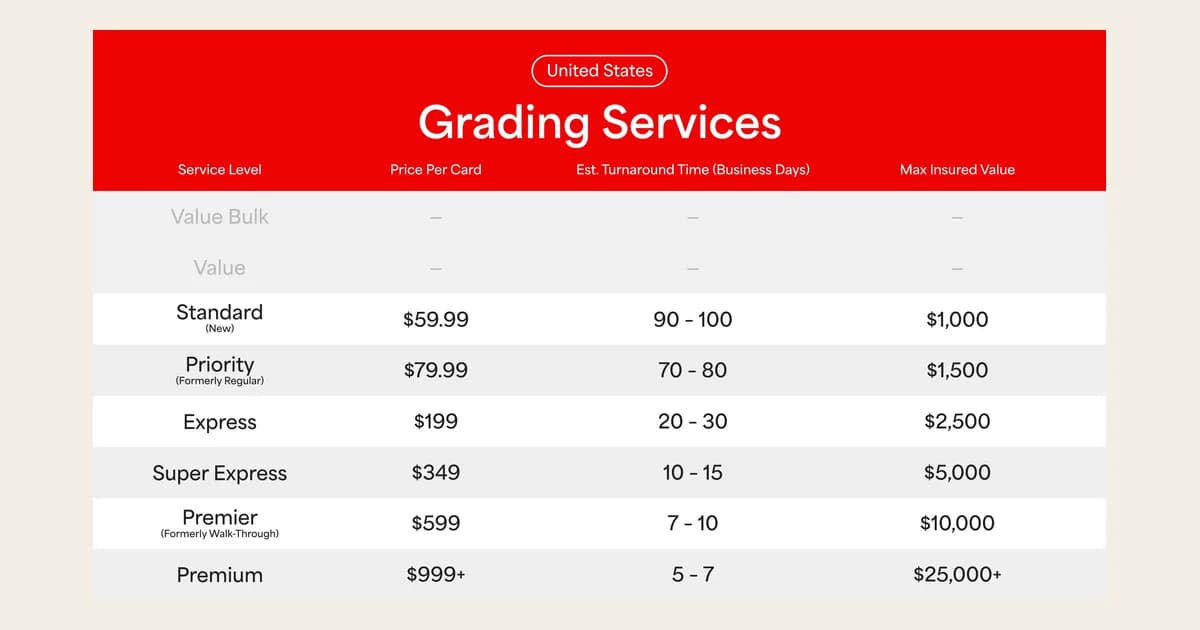
Sports Card Grading 2026: PSA vs SGC vs CGC vs Beckett
Guides · 14 min
Disclaimer
RookieDesk publishes data, not investment or financial advice. Odds are the manufacturer's published odds, not a promise of what any one box contains. Checklists, release dates, grading fees and prices change after publication; each one here carries the date we checked it. Confirm critical details with the manufacturer, grader or seller before you buy or submit. RookieDesk is independent and not affiliated with any card manufacturer, league or players association, and carries no affiliate links, ads or sponsored posts; see our independence note. Articles are researched and written with AI tools, and every fact is checked against its cited source before publishing; see how we use AI.