Guides
Card Condition Guide: Centering, Corners, Edges and Surface
Card condition explained from PSA, CGC and Beckett standards: how graders judge centering, corners, edges and surface, and how to check a card at home.
TL;DR: Check centering by measuring borders and using the worst side, as PSA graders do; PSA's 10 allows about 55/45 on the front and 75/25 on the back. Look at all four corners for wear, dings and bend lines; a bent corner usually keeps a card below a PSA 8. Look along the edges for chipping and roughness. Tilt the surface under light for scratches, print spots, print lines and stains, front and back. A home check finds most problems, but not trimming or every surface flaw a grader sees under magnification.
9 min readBy RookieDesk Editorial
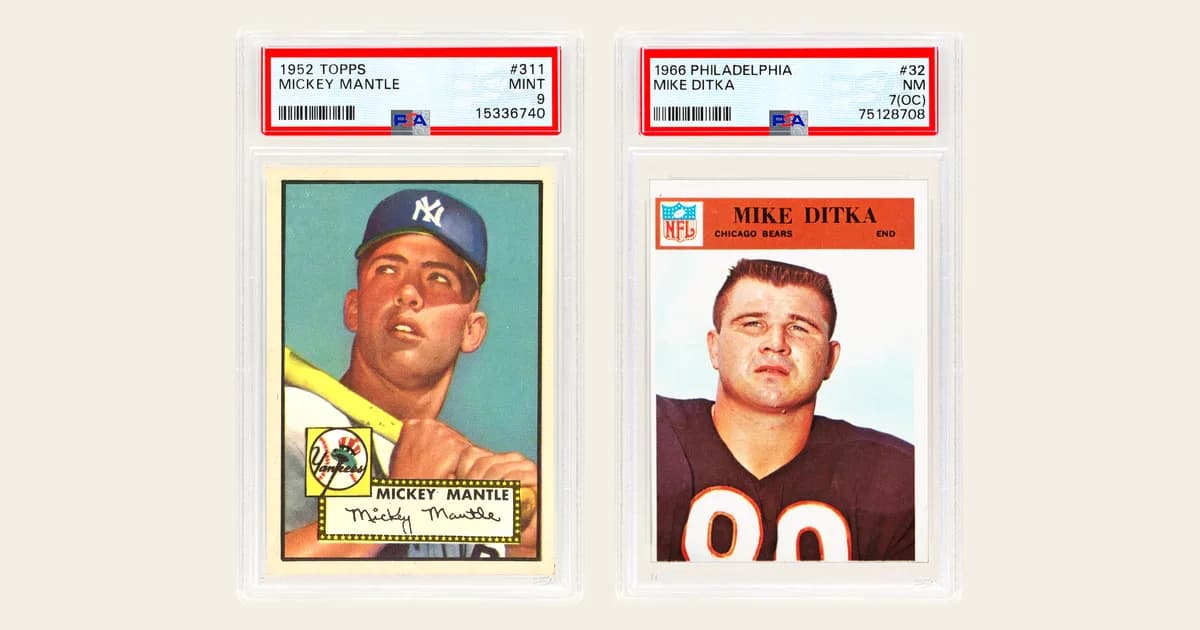
Card condition is what a grader turns into a number, and every major grader looks at the same four things: centering, corners, edges and surface. This guide puts PSA's, CGC's and Beckett's own wording for each one side by side, all read on October 11, 2026, and shows how to check a card at home before you pay a grading fee.
Card condition in four areas (quick answer)
Beckett describes "the four key categories that make up the total grade: centering, corners, edges and surface," and prints a subgrade for each. PSA gives one number, but its Grader Notes sort defects into "primary categories (like corners, edges, surface, and centering)." CGC's scale describes its grades in those terms. Check all four, front and back; in our reading, one weak area is enough to hold a card back, as the corner and wrinkle examples below show.
Key Takeaways
- Four areas: centering, corners, edges, surface, on both sides of the card.
- Centering at the top: PSA 10 and CGC Gem Mint 10 allow about 55/45 front and 75/25 back; CGC Pristine 10 and Beckett Pristine ask for 50/50 on the front.
- Measure the worst point: "PSA graders measure from the worst point" (PSA, 2005).
- Corners: a corner bend "will prevent a card from reaching the magic PSA NM-MT 8 grade or better" in "99 out of 100 cases" (PSA, 2005).
- Surface: print defects, ink smears, scratches, stains and print lines all count against the card.
- Judgment still applies: PSA graders can make "a judgment call" on eye appeal.
- Limits of a home check: trimming and fine surface flaws need closer inspection; CGC's top label means "flawless under 10-times magnification."
Overview: how graders turn card condition into a grade
PSA describes grading as part measurement, part judgment. "While it's true that a large part of grading is objective (locating print defects, staining, surface wrinkles, measuring centering, etc.)," "the other component of grading is somewhat subjective," and "the graders reserve the right, based on the strength or weakness of the eye appeal, to make a judgment call on the grade of a particular card."
The three graders present the result differently:
| Grader | What the label shows | How the four areas appear |
|---|---|---|
| PSA | One number, 1 to 10 | Grader Notes list defects by corners, edges, surface and centering (Express and higher) |
| Beckett (BGS) | Overall grade plus four subgrades | "4 category subgrades appear on the front of the label" (archived Feb 2026 page) |
| CGC Cards | One number with half grades | Each grade's definition names corners, edges, surface and centering |
Beckett adds that it "reviews both the front and back of all cards in these four categories." That is the habit to copy at home. Note that Beckett's live site redirected to a maintenance page on October 11, 2026, saying it had "temporarily paused Base and Standard card grading submissions" while Express remained open through a temporary form, so its standards here come from archived copies of its own pages. What each PSA number means on the label is in our PSA grading scale explainer.
Analysis: centering and how to measure it
Beckett's definition: "Centering refers to the alignment of the card within its borders. A card with perfect centering has even borders on all sides." The graders publish limits for their top grades:
- PSA Gem Mint 10: "centered on the card within a tolerance not to exceed approximately 55/45 percent on the front, and 75/25 percent on the reverse."
- CGC Pristine 10: "The centering is 50/50."
- CGC Gem Mint 10: "Centering is not to exceed approximately 55/45, and reverse centering is not to exceed 75/25."
- CGC Mint 9: "centering must be 60/40 or better for the front of the card, and 90/10 for the back."
- CGC NM/Mint 8: "centering must be 65/35 or better."
- Beckett Pristine (archived January 2025): "50/50 all around on front. 55/45 or better on back."
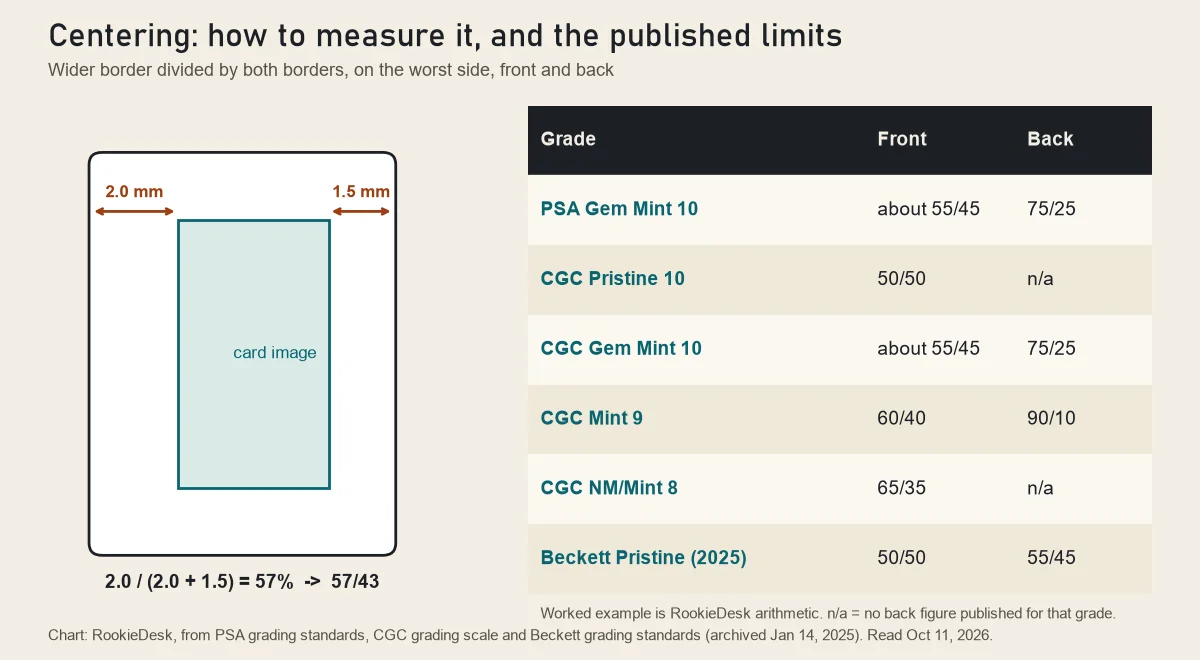 Chart: RookieDesk, from PSA's grading standards, CGC's grading scale and Beckett's archived grading standards (read October 11, 2026)
How to measure. Measure the border on each side, then divide the wider one by the two added together. A card with a 2.0 mm left border and a 1.5 mm right border is 2.0 divided by 3.5, about 57/43 left to right; that worked example is our arithmetic, not a grader figure. Repeat top to bottom, then on the back. Use the worst result. PSA Editor In Chief Joe Orlando wrote in 2005 that "PSA graders measure from the worst point," and that on tilted vintage images "the graders will measure from the worst point of that tilt."
Borderline cards. In the same article: "when the centering borders on two grades, the grader must make a judgment call based on eye appeal and market acceptability." PSA's current standards say much the same: "At the grader's sole discretion, a small variance may be permitted on occasion based on the card's overall eye appeal."
GODEEPER: What PSA, SGC, CGC and Beckett charge and what each has open now. Sports Card Grading 2026: PSA vs SGC vs CGC vs Beckett →
Analysis: corners
Beckett calls corners "one of the most critical factors in determining the card's grade," adding that "The card should be free of dings, creases, bends, or discoloration." CGC's scale shows how corner wear moves the number:
- Gem Mint 10: "Corners will appear perfect to the naked eye and Mint+ under 10x magnification."
- Mint 9: "four sharp corners with only minor wear visible."
- NM/Mint 8: "corners are sharp to the naked eye but reveal slight imperfections under magnification" is one of the few flaws allowed.
- Near Mint 7: "a touch of wear on three or more corners."
- Ex/NM 6: "no more than one "dinged" corner is allowed."
- Excellent 5: "the corners may exhibit "fuzzyness" and very minor rounding."
The defect to look for first is a bend. PSA's 2005 tips describe it: "the corner is bent or flipped (upward or downward), leaving a line through a portion of the corner." The consequence: "In 99 out of 100 cases, no matter how nice the rest of the card is, this defect will prevent a card from reaching the magic PSA NM-MT 8 grade or better." Tilt the card under a light so the line shows.
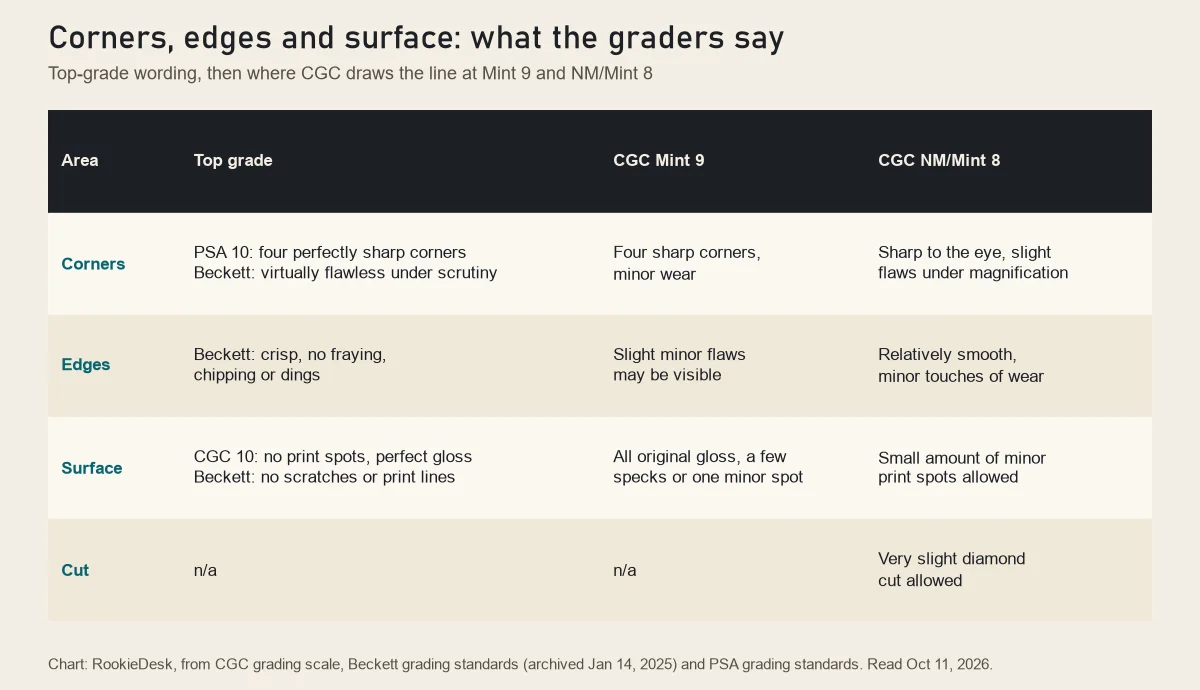 Chart: RookieDesk, from CGC's grading scale, Beckett's archived grading standards and PSA's grading standards (read October 11, 2026)
Analysis: edges
Beckett's standard: "The edges should be crisp and free of any fraying, chipping, and dings." At Pristine, edges must be "Perfect to the naked eye and virtually flawless under intense scrutiny." CGC's wording gets looser down the scale: at Mint 9 "Slight minor flaws on the edges may be visible"; an 8.5 "has relatively smooth edges with only minor touches of wear"; a 7 may have "slightly rough edges"; at 5 "There may also be chipping on the edges."
CGC also mentions the diamond cut, where the card is cut at a slight angle: "A very slight diamond cut is allowed" at NM/Mint 8. Check edges in good light along their full length, and look at colored borders, where chipping shows most.
Edges are also where a trimmed card gives itself away. A home check cannot prove a card is unaltered; our guide to spotting a trimmed sports card covers PSA's red flags. PSA's rule is plain: "PSA will not grade cards that bear evidence of trimming, re-coloring, restoration, or any other forms of tampering, or are of questionable authenticity."
Analysis: surface
Beckett: "The surface of the trading card refers to the front and back of the card. The surface should be free of stains, smudges, and scratches." It is strict about factory flaws too: "Any surface damage, including manufacturer print defects or ink smears, will result in a lower grade." Its Pristine surface has "No print spots. Flawless color, devoid of registration or focus imperfections. Devoid of scratches and metallic print lines."
CGC's Gem Mint 10 surface "is free of print spots and should also display perfect gloss, devoid of any surface flaws." At Mint 9, "The surface must have all original gloss; however, a small number of specks or one minor spot or surface defect is allowed." By VG/Ex 4, "Noticeable surface flaws may include scuffing, scratches and one or more light creases."
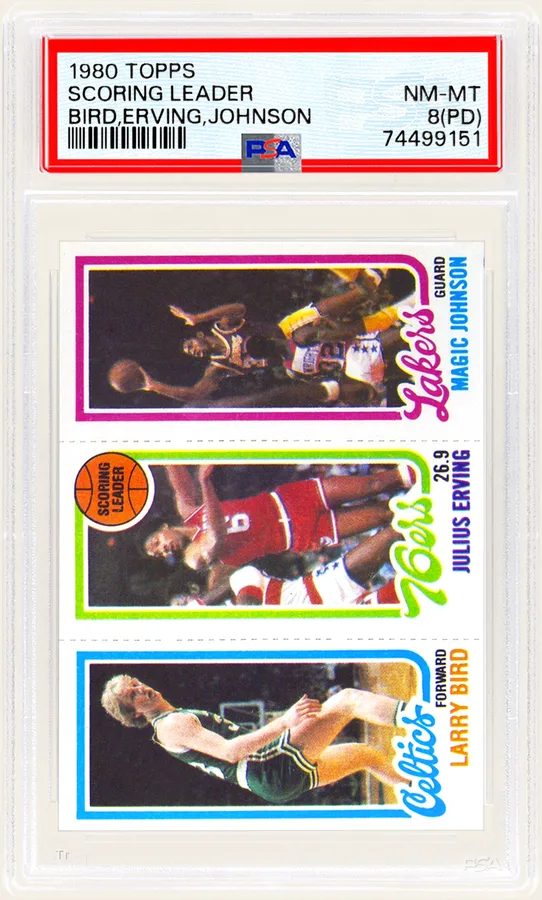 Image: PSA
A wrinkle is easy to miss: PSA's 2005 article calls it a "hard-to-detect condition obstacle" and "a wrinkle in the top layer of paper that failed to flatten during production," and says a card that would otherwise be Near Mint "would drop to a PSA EX-MT 6 if the wrinkle is found on the reverse or PSA EX 5 if found on the front."
PSA used to flag some surface problems with letters after the number, such as PD for print defect or ST for staining. Since June 2021, those codes "will be assigned at the grader's discretion, and most typically will impact the numerical grade rather than carrying a qualifier," while "the Marks (MK) and Miscut (MC) qualifiers will continue to be applied when warranted."
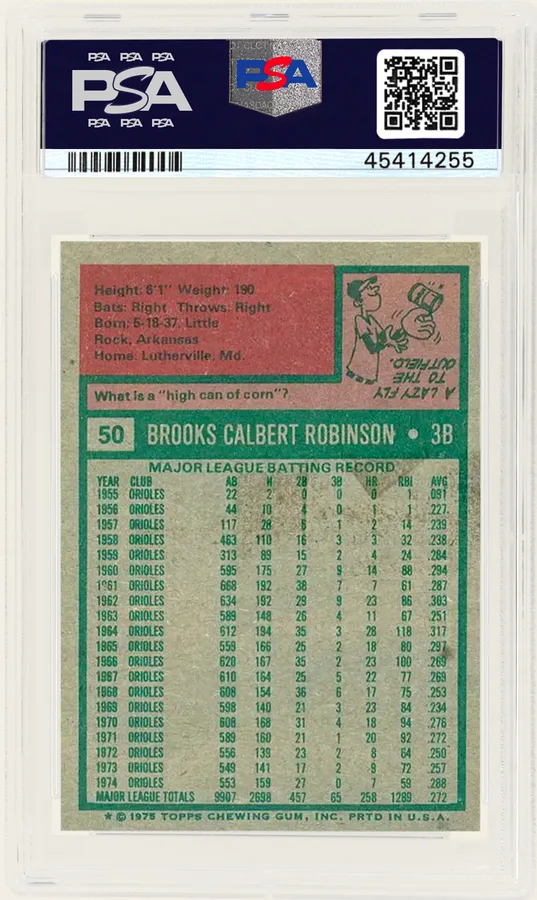 Image: PSA
Analysis: how to check card condition at home
Based on the standards above, a home check follows the four areas in order. The steps are ours; the criteria are the graders'.
- Centering. Measure all four borders on the front and back and take the worst ratio. Compare it with the limits above.
- Corners. Look at each corner straight on, then tilt the card to catch bend lines.
- Edges. Run your eye along each edge for chipping, fraying and roughness; check whether the cut is square.
- Surface. Tilt the front and back under a light for scratches, print lines, print spots, stains and wrinkles.
- Decide. Compare what you found with the grade wording. A card with a corner bend or obvious centering issue is unlikely to reach the top grades, which changes whether a grading fee makes sense; our grading fee calculator shows the PSA, SGC and CGC fees for a card's value.
PSA's own advice from 2005 still fits: look for these defects "under the proper grading conditions," and "these tips can hopefully save you time, money and aggravation." CGC sets the top bar under magnification, reserving its Pristine label for "cards that are flawless under 10-times magnification," so a naked-eye check will not catch everything.
GODEEPER: What each PSA tier costs, including Express, the level where Grader Notes start. PSA Grading Fees 2026: Every Tier, Price and Turnaround →
Video: PSA Grader Notes
After grading, PSA can tell you which of the four areas cost the card. Grader Notes launched "on June 25, 2024 for service levels starting with Express," and "are included at no additional cost." Notes read like "Bend, Top Left" for a corner or "Back, Top-to-Bottom" for centering. Express was $199 a card, with an estimate of 20 to 30 business days, on PSA's services page as of October 11, 2026. Reholder and autograph-only submissions are "Currently ineligible."
Community: collectors on centering
Collectors measure the same way. In a 2013 Collectors Universe guide to centering, dytch2220 advised: "use the worst centering value to determine the card's overall balance." (thread)
Exact numbers below the top grades are harder to pin down. In a 2016 thread, Counselor posted Beckett's reply to a question about centering guidelines: "They are different measurements for different sets and we do not publish it as it is proprietary." (thread). That is one collector's account of an email, not a Beckett statement we could check.
Our take
Based on the grader standards cited above: card condition comes down to four checks, and the graders agree more than they differ. At the top, PSA and CGC use the same 55/45 front and 75/25 back centering for a Gem Mint 10, while CGC's Pristine and Beckett's Pristine ask for 50/50. Below that, corners and surface do much of the damage: PSA wrote in 2005 that a bent corner usually keeps a card below PSA 8, and that a wrinkle can drop a Near Mint card to PSA 6 or 5. Measure centering at the worst point, check both sides, and treat a home check as a filter, not a prediction of the grade.
Frequently Asked Questions
The six questions above cover the four parts of card condition, how to measure centering, PSA 10 centering, bent corners, surface flaws and PSA Grader Notes.
What are the four parts of card condition?
Centering, corners, edges and surface. Beckett calls them the four key categories that make up the total grade and prints a subgrade for each on its label. PSA's Grader Notes sort defects into the same four categories. CGC's scale describes its grades in terms of corners, edges, surface and, for many grades, centering.
How do you measure card centering?
Measure the border on each side, then divide the wider border by the two borders added together. Borders of 2.0 mm and 1.5 mm give 2.0 divided by 3.5, about 57/43. Check left to right and top to bottom, front and back, and use the worst reading. A 2005 PSA article says PSA graders measure from the worst point.
What centering do you need for a PSA 10?
PSA's standard for Gem Mint 10 is centering within approximately 55/45 on the front and 75/25 on the reverse. CGC uses the same numbers for its Gem Mint 10 and asks for 50/50 for its Pristine 10. Beckett's Pristine standard, as archived in January 2025, was 50/50 on the front and 55/45 or better on the back.
Does a bent corner ruin a grade?
It usually caps it. In a 2005 PSA article, Joe Orlando wrote that a corner bend prevents more high-end cards from reaching PSA NM-MT 8 than any other defect, and that in 99 out of 100 cases it keeps a card below an 8 no matter how nice the rest of the card is.
Do surface scratches and print lines lower a grade?
Yes. Beckett says any surface damage, including manufacturer print defects or ink smears, results in a lower grade, and its top grade requires a surface free of scratches and metallic print lines. CGC's Gem Mint 10 needs a surface free of print spots with perfect gloss.
What are PSA Grader Notes?
A PSA feature that lists the defects a grader found, sorted by corners, edges, surface and centering, with notes such as Bend, Top Left. It launched on June 25, 2024 for Express and higher service levels at no additional cost. Express was $199 a card when we checked on October 11, 2026.
How we checked this
PSA's grading standards page, its Grader Notes announcement (2024), its services page, its June 2021 customer update and Joe Orlando's December 6, 2005 grading tips article were read on October 11, 2026. CGC's grading scale was read the same day. Beckett's live site redirected to a maintenance page that day, so its grading standards come from Internet Archive copies of beckett.com dated January 14, 2025 and February 12, 2026, labelled as archived. Forum quotes were read on Collectors Universe. The centering example is our own arithmetic, and the two charts are RookieDesk graphics built only from the pages cited. We did not grade or measure any card ourselves.
References
- PSA, grading standards: https://www.psacard.com/gradingstandards
- PSA, "Grader Notes for Greater Clarity" (2024): https://www.psacard.com/articles/articleview/11063/grader-notes-for-greater-clarity
- PSA, trading card grading services and prices: https://www.psacard.com/services/tradingcardgrading
- PSA, customer update (June 7, 2021): https://www.psacard.com/articles/articleview/10428/psa-customer-update-june-2021
- PSA, Joe Orlando, "Taking My Hacks: Crucial Grading Tips" (December 6, 2005): https://www.psacard.com/articles/articleview/4599/taking-my-hacks-crucial-grading-tips
- CGC Cards, grading scale: https://www.cgccards.com/card-grading/grading-scale/
- Beckett, grading standards (archived January 14, 2025): https://web.archive.org/web/20250114070557/https://www.beckett.com/grading-standards
- Beckett, grading page (archived February 12, 2026): https://web.archive.org/web/20260212062931/https://www.beckett.com/grading
- Beckett, status notice (October 11, 2026): https://maintenance.beckett.com/
- Collectors Universe forums, "A Guide to Centering" (2013) and "BGS centering guidelines" (2016): https://forums.collectors.com/discussion/897961/a-guide-to-centering
Related Reading
- CGC Grading Fees 2026: Every Tier and Price for Sports Cards: CGC's tiers and member prices, with a PSA and SGC comparison.
- How to Store Sports Cards: Sleeves, Toploaders and Humidity: keeping corners, edges and surfaces the way they came out of the pack.
- What Is a Pop Report? PSA, SGC and CGC Population Explained: how many copies of a card reached each grade.
About the author

Editorial desk
The RookieDesk desk. We read the paperwork before you open the box: Topps' checklists and odds sheets, the box art, grader fee pages. Every number links to its source and carries the date we checked it.
Keep reading
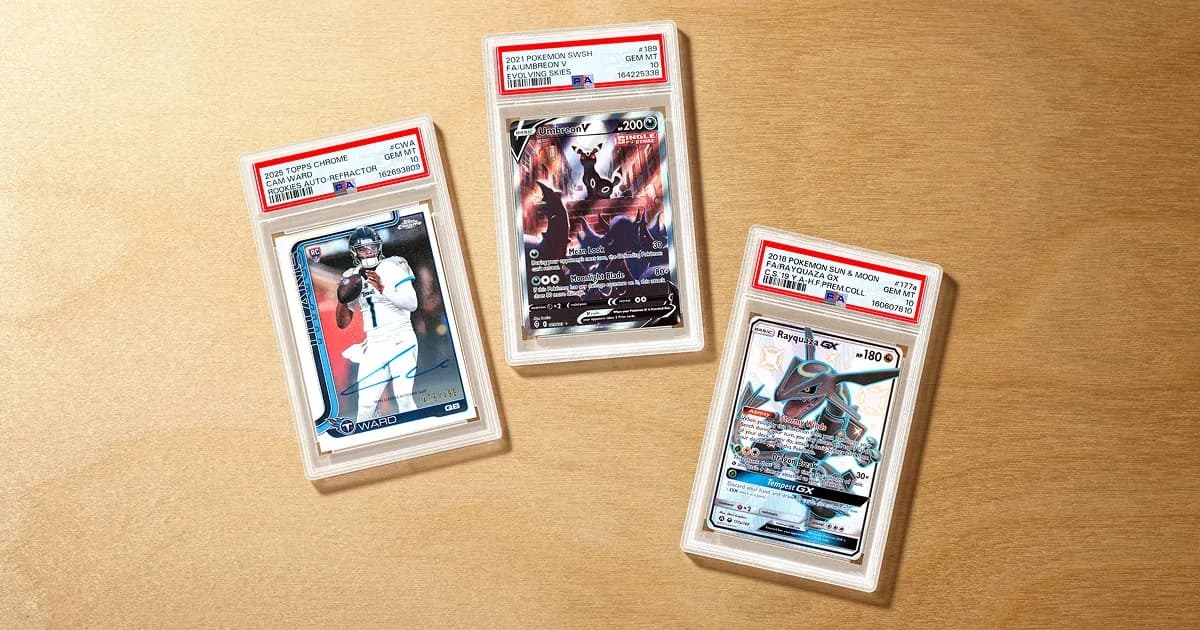
How to Submit Cards to PSA: Step-by-Step Guide for 2026
Guides · 8 min
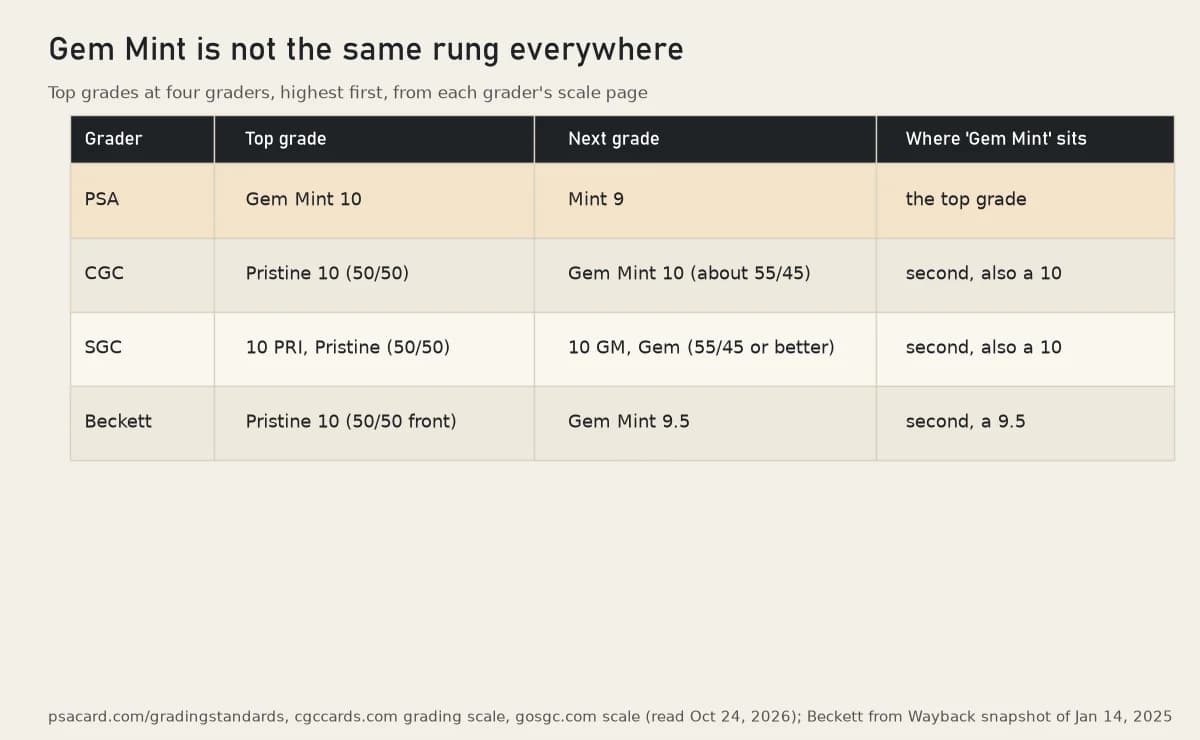
What Does Gem Mint Mean? A 10 at PSA, a 9.5 at Beckett
Guides · 7 min
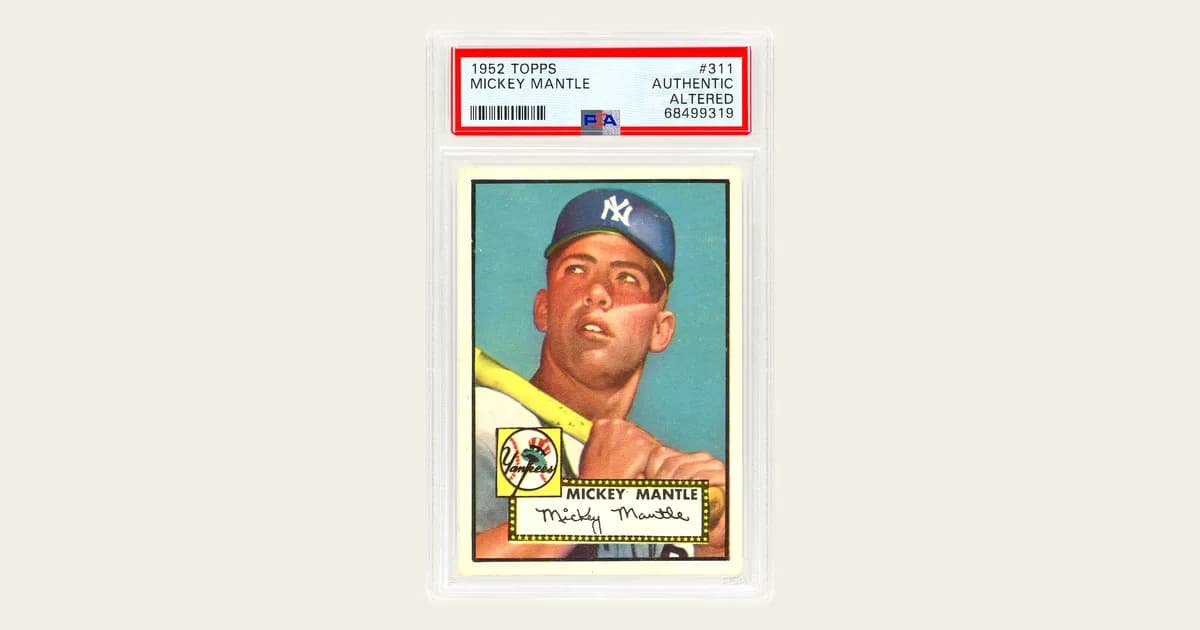
How to Clean Sports Cards: What PSA and CGC Call Altered
Guides · 8 min
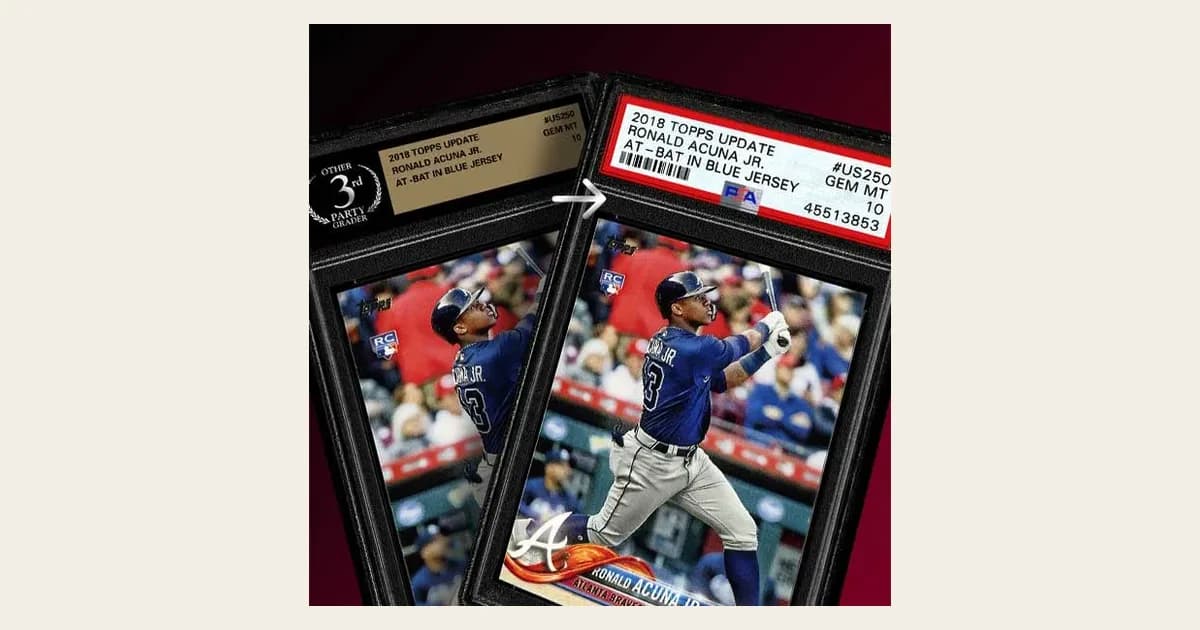
Crossover Grading: How PSA, CGC and SGC Handle Other Slabs
Guides · 9 min
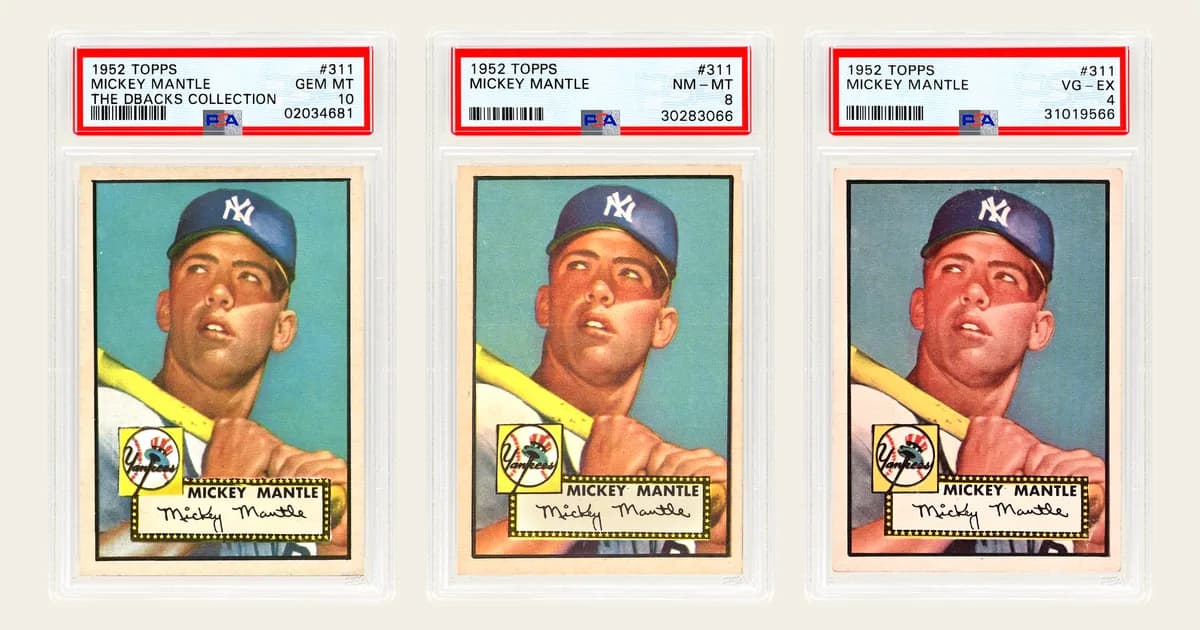
BGS vs PSA: Subgrades, Black Label and Grading Scales
Guides · 10 min
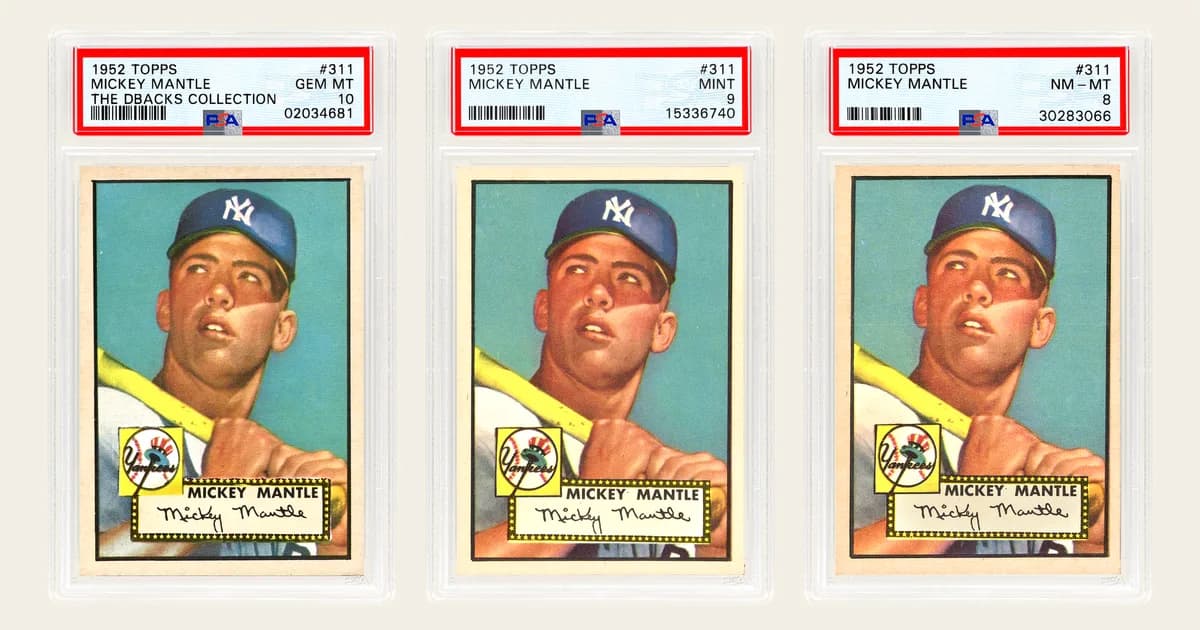
PSA Grading Scale Explained: What PSA 10, 9 and 8 Mean
Guides · 9 min
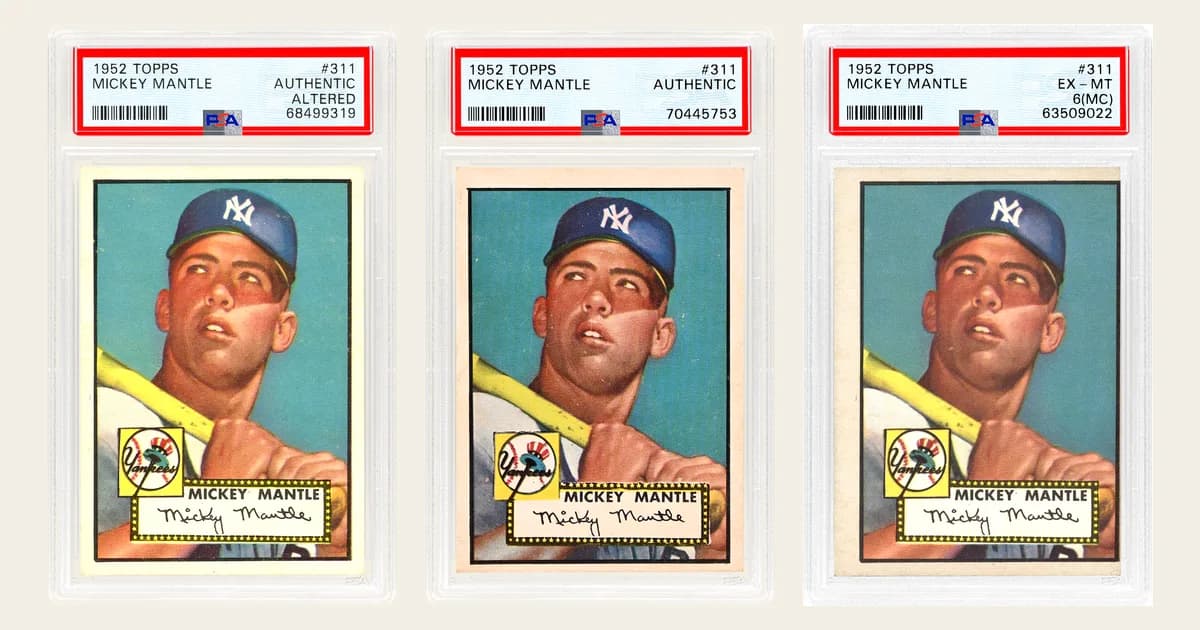
How to Spot a Trimmed Sports Card: PSA and CGC Red Flags
Guides · 8 min
What Is a Pop Report? PSA, SGC and CGC Population Explained
Guides · 8 min
Disclaimer
RookieDesk publishes data, not investment or financial advice. Odds are the manufacturer's published odds, not a promise of what any one box contains. Checklists, release dates, grading fees and prices change after publication; each one here carries the date we checked it. Confirm critical details with the manufacturer, grader or seller before you buy or submit. RookieDesk is independent and not affiliated with any card manufacturer, league or players association, and carries no affiliate links, ads or sponsored posts; see our independence note. Articles are researched and written with AI tools, and every fact is checked against its cited source before publishing; see how we use AI.