Guides
How to Display Graded Cards: Stands, Binders and UV Light
How to display graded cards with slab stands and 4-pocket pages, keep sunlight and UV off them, and what PSA and CGC reholders cost when a slab gets worn.
TL;DR: Stand a slab on a stand sized for its grader (Ultra PRO lists PSA and Beckett 10 packs at $23.99), or page it in a binder with rigid 4-pocket slab pages ($3.99 each). Keep displays out of direct sun: the Library of Congress calls light damage cumulative and usually irreversible, and PSA's reholder inspection names sun fading as a change in condition. If the plastic is scuffed, PSA sells reholders from $12.99 and CGC from $10 for its Collector members.
8 min readBy RookieDesk Editorial
How to display graded cards comes down to two choices: what holds the slab, and how much light reaches it. The holders are cheap and sized by grader; the light is the part that does lasting damage. This guide uses Ultra PRO's product pages, PSA's and CGC's holder services and Library of Congress preservation guidance, with prices dated October 11, 2026.
How to display graded cards (quick answer)
Put the slab in something made for its holder, then put that somewhere dim. A slab stand suits one card on a shelf; a binder with rigid slab pages suits a run of them. Our storage guide covers sleeves and toploaders; this one starts where the card is already graded.
Key Takeaways
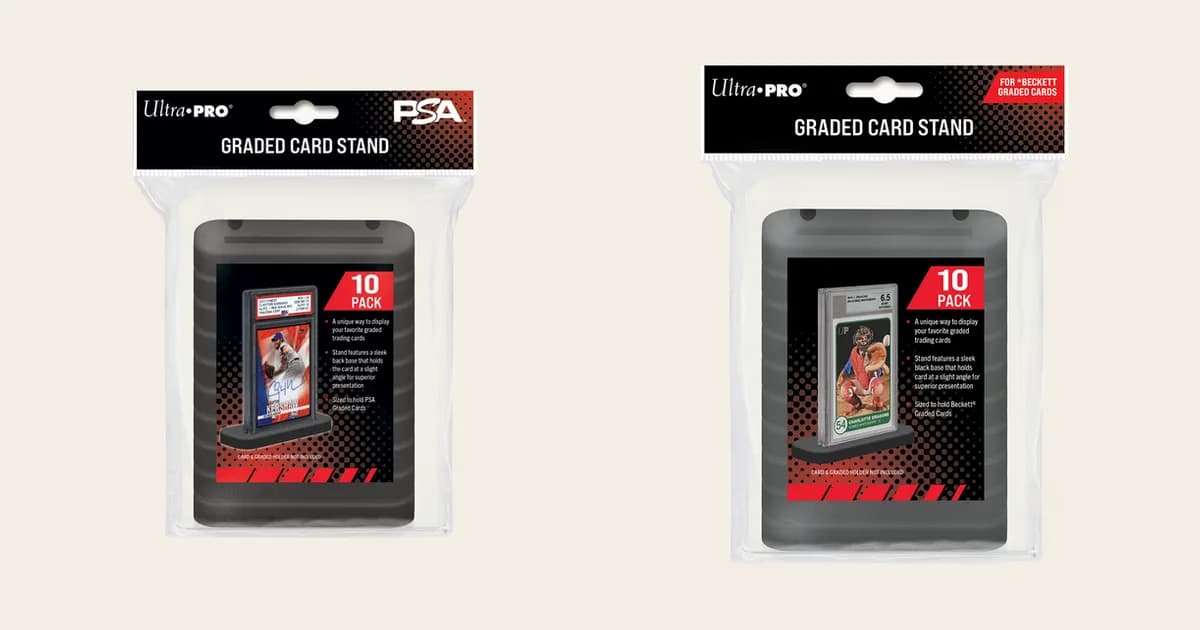
- Stands: Ultra PRO's graded card stands come 10 to a pack, hold the slab "at a slight angle," and are sized either for PSA or for Beckett slabs ($23.99 each pack, October 11, 2026).
- Binder pages: a rigid 4-pocket page holds 4 PSA slabs with lock-in tabs; "4 pages fit in a 3 in. binder" ($3.99 per page).
- Light: the Library of Congress says "Light damage is cumulative" and that "Generally, sunlight is avoided for display of light-sensitive items."
- UV glazing helps, but only partly: visible light "is still damaging" even with UV removed (Library of Congress).
- Worn slabs: PSA Reholder from $12.99 per card; CGC ReHolder $10 for Collector members (October 11, 2026). The grade generally stays the same.
Overview: ways to display graded cards
Each option trades visibility against protection. The table uses Ultra PRO's product pages, read on October 11, 2026; prices change.
| Option | What it holds | Made for | Price on October 11, 2026 | Best for |
|---|---|---|---|---|
| Graded card stand (10 pack) | One slab per stand, "at a slight angle" | PSA slabs, or a Beckett version | $23.99 per 10 pack | A shelf or desk |
| 4-pocket slab page | 4 slabs per rigid 3-hole page | PSA slabs, or a Beckett version | $3.99 per page (PSA version out of stock when read October 20; Beckett version $3.59 on October 21) | A binder you open and close |
| Showcase Vault | Up to 75 35pt slabs, foam dividers | Travel and storage | $71.99 | Carrying slabs, not showing them |
| Graded Card Case | Up to 100+ slabs, IP67 rated | Travel and storage | $95.99 (out of stock when read) | Carrying slabs, not showing them |
Ultra PRO's ONE-TOUCH wall display and Lucite screwdown holders are made for raw cards, not slabs: the wall display fits "ONE-TOUCH® holders up to 35pt," so we leave them out.
Analysis: stands for one slab on a shelf
Ultra PRO describes its stand plainly: "The all black base is designed to hold your favorite collectible card in place at a slight angle for superior presentation." The PSA version is "Sized to hold cards graded by PSA Card," the Beckett version "is compatible with Beckett graded card slabs," and each pack "contains 10 individually wrapped" stands. The card and holder are not included.
Two things follow from the product pages. First, buy the stand for your grader's holder; the two packs are sold separately and we found no CGC or SGC version on the pages we read. Second, a stand leaves the whole slab face open to the room, so where the shelf sits matters more than the stand. That is the light section below.
Analysis: binder pages for a run of slabs
For more than a few cards, a binder keeps slabs in the dark between viewings. Ultra PRO's page "is designed to hold 4 PSA graded slabs in a rigid, 3-hole punched page," and "This page features special lock-in tabs and finger notches to easily remove and reorganize slabs." Size your binder to it: "4 pages fit in a 3 in. binder (binder not included)," which is 16 slabs per binder. A Beckett version was $3.59 on October 21, marked down from $3.99.
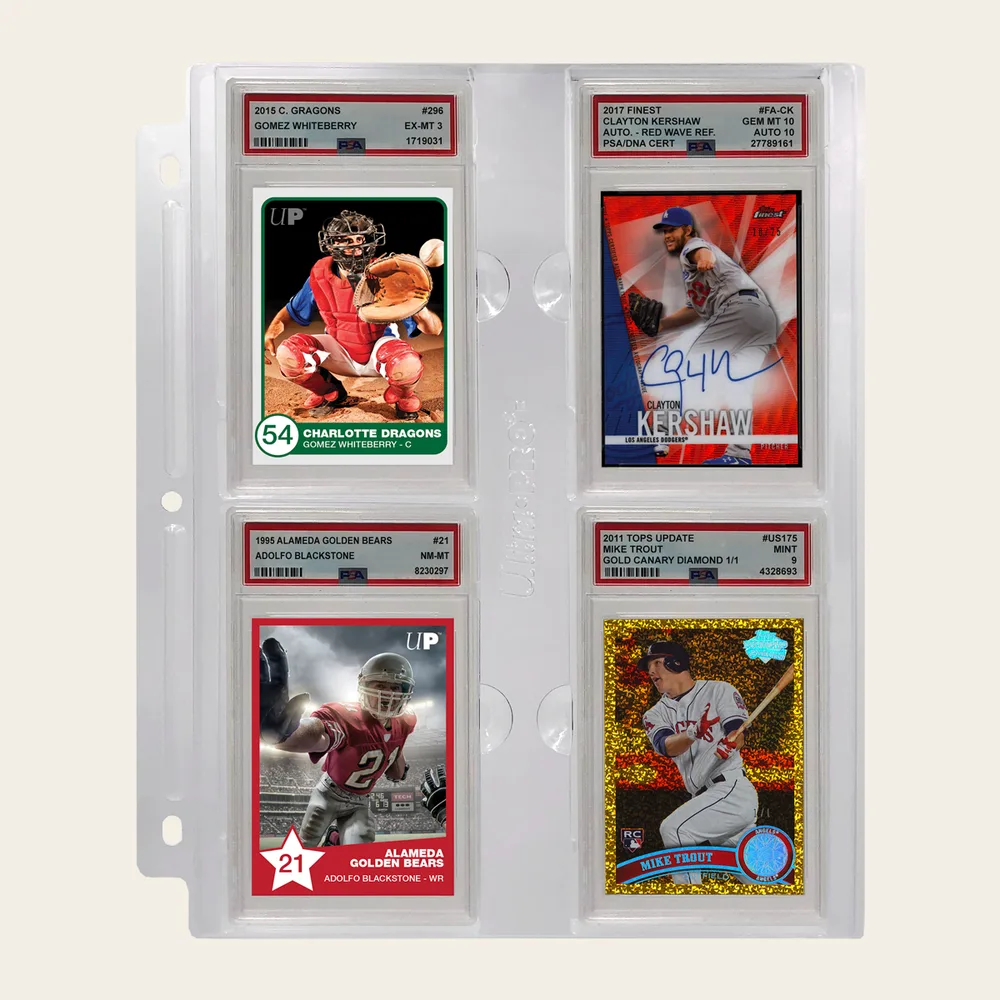 Product image: Ultra PRO
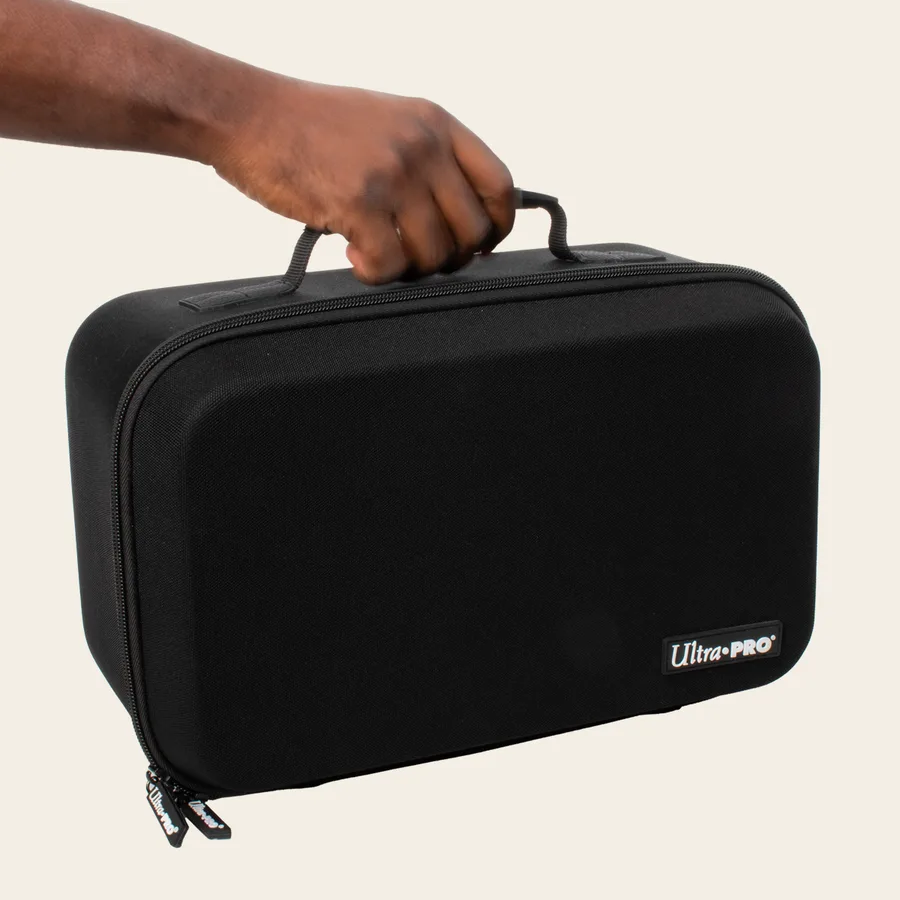
Ultra PRO also pitches the pages for travel: "These pages are a great way to show off your TCG and sportscard collection, or easily carry to conventions and signings." For carrying many slabs, its travel cases are the other route: the Showcase Vault "securely stores up to 75 35pt graded slabs with adjustable foam dividers," and the Graded Card Case "holds up to 100+ graded card slabs, and is IP67 waterproof and dustproof rated."
 Product image: Ultra PRO
GODEEPER: How to check a slab you just bought before it goes on the shelf. How to Spot Fake Sports Cards and Fake PSA Slabs in 2026 →
Analysis: light, UV and why a slab is not a shield
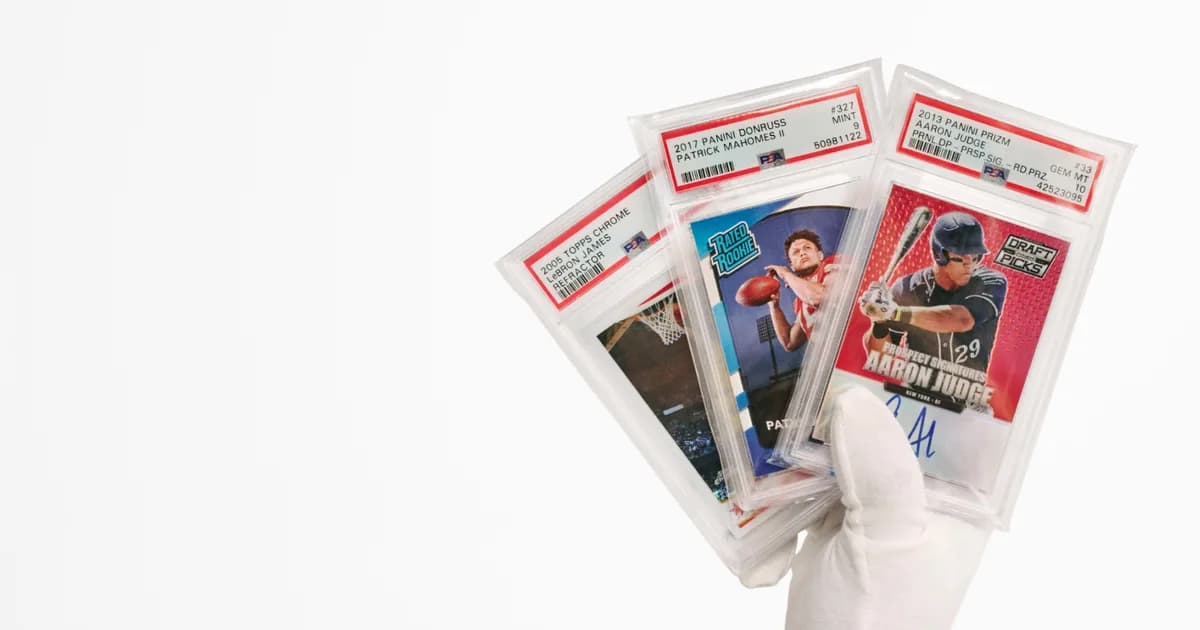
A slab protects against handling, not against light. PSA's own Reholder rules show this: before re-encapsulating, PSA checks that the grade is not an obvious error, including "a change in the item's condition since being graded (e.g., the item has suffered fading due to sunlight exposure." In other words, PSA treats sun fading inside a holder as something that can happen after grading.
The Library of Congress explains the mechanism. "Light damage is cumulative and follows the reciprocity principle," meaning "dim light over a long period of time is just as damaging as bright light over a short period of time." Damage includes "fading, yellowing, darkening, bleaching, embrittlement, and color change," and "In most cases, conservation treatment cannot reverse light damage."
The guidance is written for library and archive items, "books, documents, photographs, and art on paper," and it does not mention trading cards. Its "very light sensitive" group does include "colored papers," "any print with non-earth based colored pigments or dyes present" and "plastics." In our reading, a printed card in a plastic holder fits that description; that is our inference, not the Library's. For that group it advises "max 3 foot-candles and only when being viewed" and "max 3-5 months" on display, followed by "a minimum of 3 years of dark storage between display cycles."
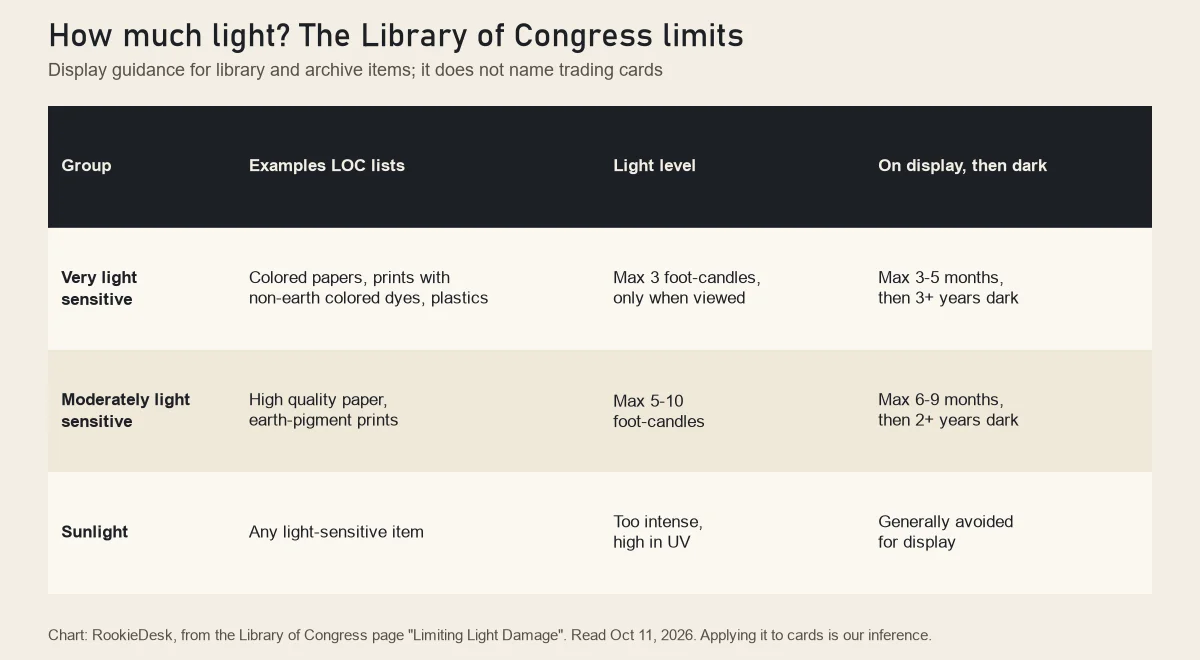 Chart: RookieDesk, from the Library of Congress page "Limiting Light Damage" (read October 11, 2026)
UV glass and acrylic. The Library says that "If UV cannot be removed from the light source, then collection items can be protected behind UV-absorbing glazing materials," but adds that "Visible light, even with all UV and IR removed, is still damaging." Ultra PRO's Lucite holders, for example, have "special additives to protect your valuables from harmful UV rays," and they are sized for raw cards, not slabs. Treat UV filtering as one layer, not a fix.
Lights inside a case. If you light a cabinet, the Library's rule is that a light source that produces heat "should be located outside of the display case with sufficient air flow to reduce heat buildup." It also says to "Monitor the temperature and relative humidity inside the display case."
Analysis: when the slab itself wears out
PSA's Reholder service "removes a card from its current PSA holder and re-encapsulates it using" PSA's latest holder and label, and "Generally, the card's grade, authentication result, and certification number remain the same." PSA says it is "typically used to replace older or slightly worn PSA holders" and lists "superficial scuffs and scratches, exterior plastic discoloration, edge and corner dulling, and label fading."
Price snapshot, October 11, 2026: PSA's Standard Reholder was $12.99 per card (max insured value $2,000, 80 to 90 business days) and Expedited $74.99 (17 to 20 business days). CGC's fee page listed its ReHolder at $10 and 20 working days, a fee it says applies "only to direct submissions to CGC by Collector members": "A card in a CGC or CSG holder is encapsulated in a new CGC holder. The grade assigned to the card will not change." Moving a card to a different grader's holder is a separate service, explained in our crossover grading guide.
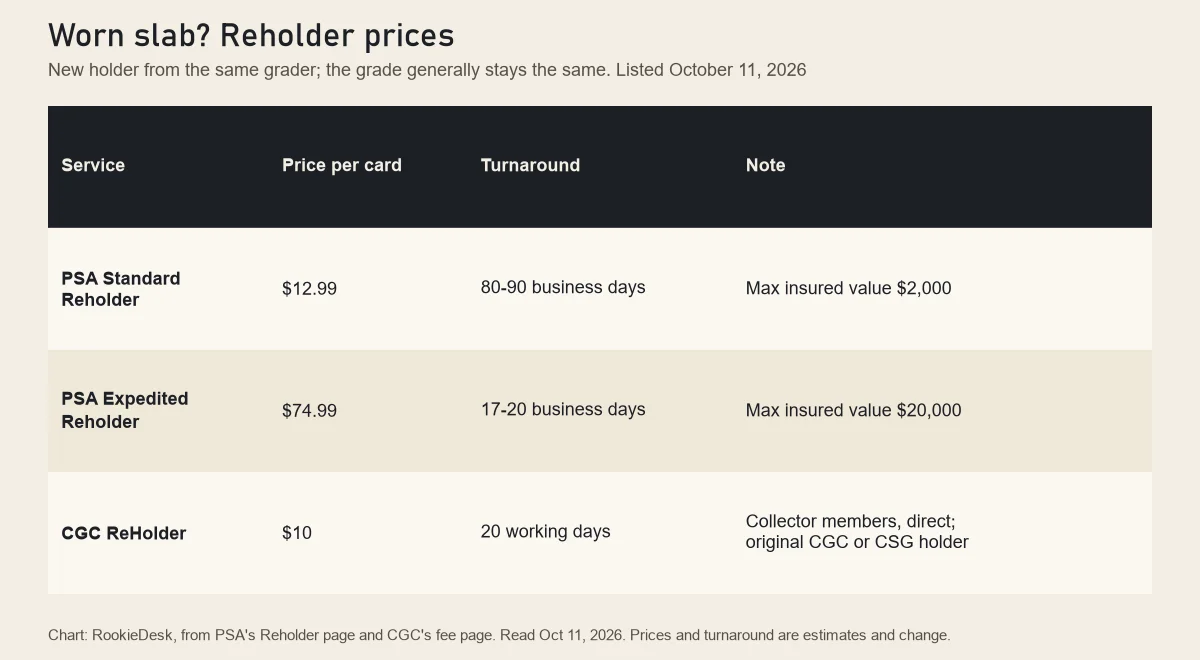 Chart: RookieDesk, from PSA's Reholder page and CGC's fee page (read October 11, 2026)
GODEEPER: What PSA charges for every other service, and how its tiers work. PSA Grading Fees 2026: Every Tier, Price and Turnaround →
Community: what collectors ask about display
Display questions come up on r/sportscards. In April 2026, u/fmlongo asked: "Does anybody have any recommendations on a tiered or step display for graded cards" (thread). In November 2025, u/accounting707, planning a case build, listed "museum grade 99% uv glass with low heat led and a dustless box with aluminum as well." (thread), and an older post from u/MattSellsSports asked the question this guide keeps returning to: "will installing an led light strip inside fade or damage the cards?" (thread). These are individual posts, not tests.
Our take
Based on the product pages, PSA's reholder rules and the Library of Congress guidance cited above: the holder you display in is the easy part, and the light is the part that cannot be undone. A stand or a slab page costs a few dollars per card. Rotating what is on show, keeping it out of direct sun and putting the rest in a binder or box costs nothing. UV glass is worth having for a lit cabinet, but the Library is clear that visible light still does damage. A scuffed PSA slab can be reholdered from $12.99; light damage, the Library says, usually cannot be reversed.
Frequently Asked Questions
The six questions above cover the best way to display slabs, sun fading, binders, UV acrylic, scratched PSA slabs and CGC reholders.
What is the best way to display graded cards?
For a shelf, a stand sized to the slab holds it upright at a slight angle; Ultra PRO sells 10 packs for PSA and for Beckett slabs. For a binder, rigid 4-pocket pages lock four slabs in place. Wherever you put them, keep them out of direct sunlight, which the Library of Congress avoids for light-sensitive items.
Do graded cards fade in sunlight?
A slab does not stop light. PSA's Reholder page lists fading due to sunlight exposure since grading as a change in condition it checks for, and the Library of Congress says light damage, including fading, is cumulative and in most cases cannot be reversed by treatment.
Can I put graded cards in a binder?
Yes, with pages made for slabs. Ultra PRO's 4-pocket page holds 4 PSA graded slabs in a rigid, 3-hole punched page with lock-in tabs, and it says 4 pages fit a 3 inch binder. It was $3.99 per page on October 11, 2026. Ultra PRO's Beckett version was $3.59 on October 21, marked down from $3.99.
Does UV-protective acrylic help?
The Library of Congress says items can be protected behind UV-absorbing glazing if UV cannot be removed from the light source, but it also says visible light with all UV removed is still damaging. UV glass or acrylic cuts one part of the risk; lower light and shorter display time cut the rest.
What can I do about a scratched PSA slab?
PSA's Reholder service moves the card into PSA's latest holder and label, and the grade and cert number generally stay the same. It names superficial scuffs and scratches and label fading as suitable wear. On October 11, 2026 the Standard Reholder was $12.99 per card with an 80 to 90 business day estimate.
How much does a CGC reholder cost?
CGC's fee page listed its ReHolder service at $10 per card and 20 working days on October 11, 2026, for direct submissions by Collector members. It moves a card in a CGC or CSG holder into a new CGC holder without changing the grade, and the card must still be in its original holder.
How we checked this
Ultra PRO's product pages for graded card stands (PSA and Beckett), 4-pocket slab pages, the Showcase Vault, the Graded Card Case, the ONE-TOUCH wall display and the Lucite holders were read on October 11, 2026. PSA's Reholder page and CGC's fee page were read the same day. Light guidance comes from the Library of Congress page "Limiting Light Damage," read October 11; it is written for library and archive materials, and applying it to cards is our inference. BCW's product pages did not load for us, so no BCW products are listed. Reddit posts were read through the r/sportscards search feed. Prices are snapshots. The two charts are RookieDesk graphics built only from these pages. We did not test any display product. Full source table: data/sources/how-to-display-graded-cards.sources.md.
References
- Ultra PRO, PSA graded card stands (10ct): https://ultrapro.com/products/psa-graded-card-stands-10ct
- Ultra PRO, Beckett graded card stands (10ct): https://ultrapro.com/products/beckett-graded-card-stands-10ct
- Ultra PRO, 4-pocket page for PSA slabs: https://ultrapro.com/products/4-pocket-page-for-graded-psa-slabs
- Ultra PRO, 4-pocket page for Beckett slabs: https://ultrapro.com/products/4-pocket-page-1ct-for-graded-beckett-slabs
- Ultra PRO, Showcase Vault: https://ultrapro.com/products/showcase-vault
- Ultra PRO, Graded Card Case: https://ultrapro.com/products/graded-card-case
- Ultra PRO, ONE-TOUCH wall display: https://ultrapro.com/products/one-touch-wall-display
- Ultra PRO, Lucite UV 1 inch screwdown: https://ultrapro.com/products/lucite-uv-1-inch-screwdown
- PSA, Reholder service: https://www.psacard.com/services/tradingcardgrading/reholder
- CGC Cards, services and fees: https://www.cgccards.com/submit/services-fees/cgc-grading/
- Library of Congress, Limiting Light Damage: https://www.loc.gov/preservation/care/light.html
Related Reading
- Sports Card Grading 2026: PSA vs SGC vs CGC vs Beckett: what each grader charges before a card ever reaches a stand.
- How to Start Collecting Sports Cards: 2026 Beginner Guide: card types, box formats and the basics of protecting cards.
- What Is a Pop Report? PSA, SGC and CGC Population Explained: how many copies of your slab exist at each grade.
About the author

Editorial desk
The RookieDesk desk. We read the paperwork before you open the box: Topps' checklists and odds sheets, the box art, grader fee pages. Every number links to its source and carries the date we checked it.
Keep reading
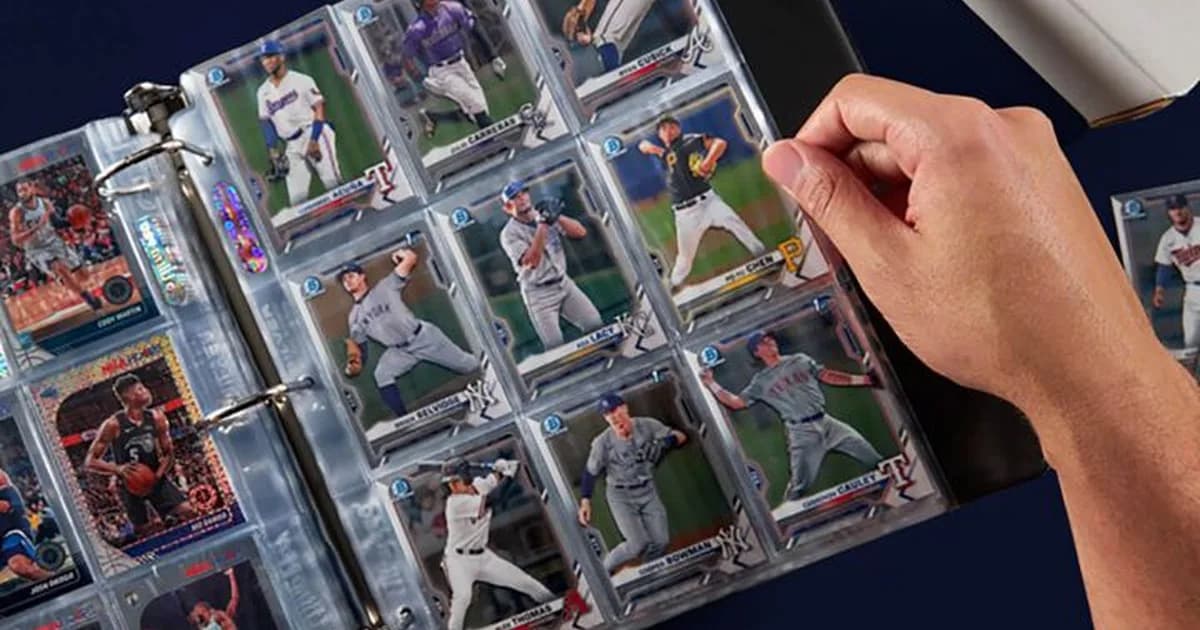
How to Sell Sports Cards on eBay: Fees, Photos and Shipping
Guides · 10 min
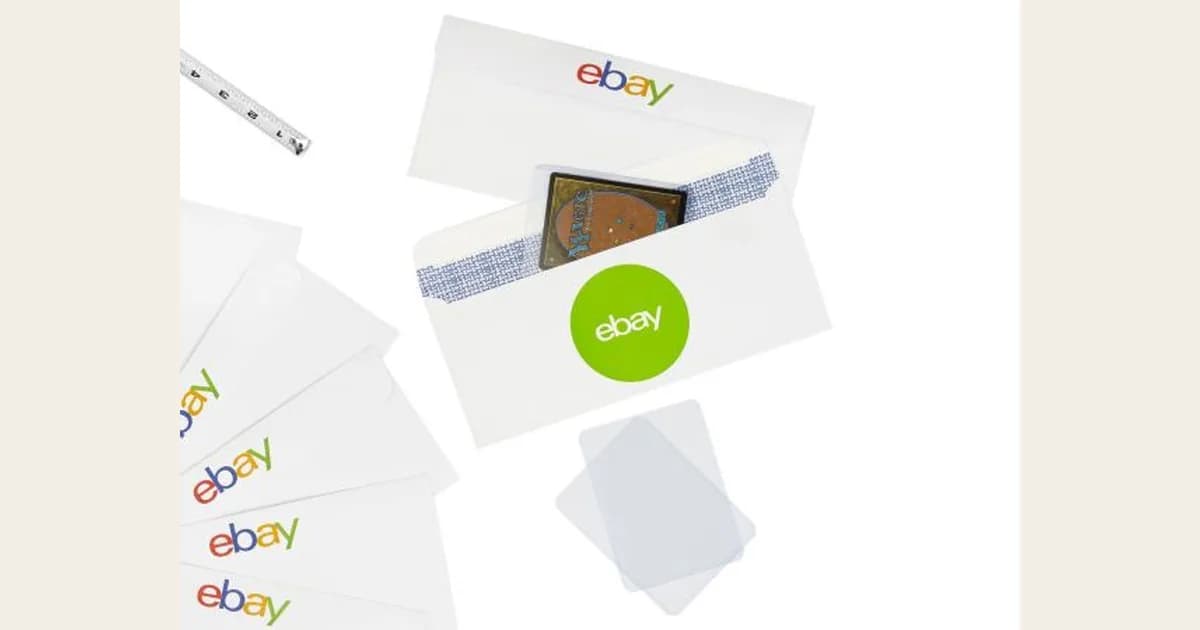
How to Ship Sports Cards: Letter, eBay Envelope or Tracked
Guides · 10 min
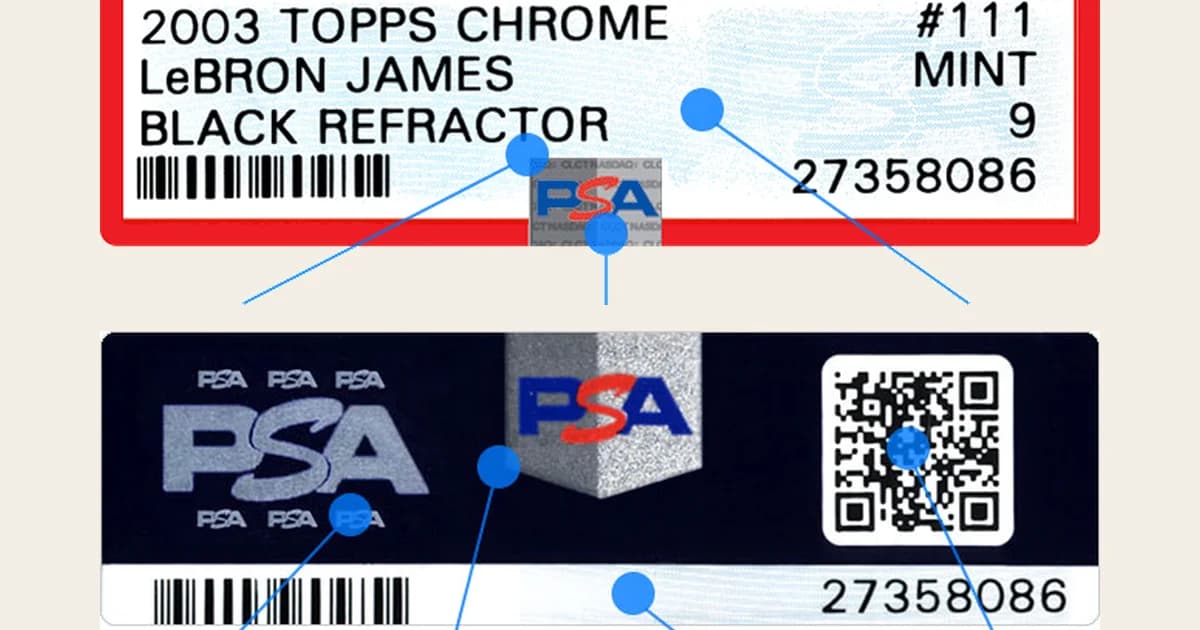
How to Spot Fake Sports Cards and Fake PSA Slabs in 2026
Guides · 9 min
eBay Authenticity Guarantee for Sports Cards: How It Works
Guides · 8 min
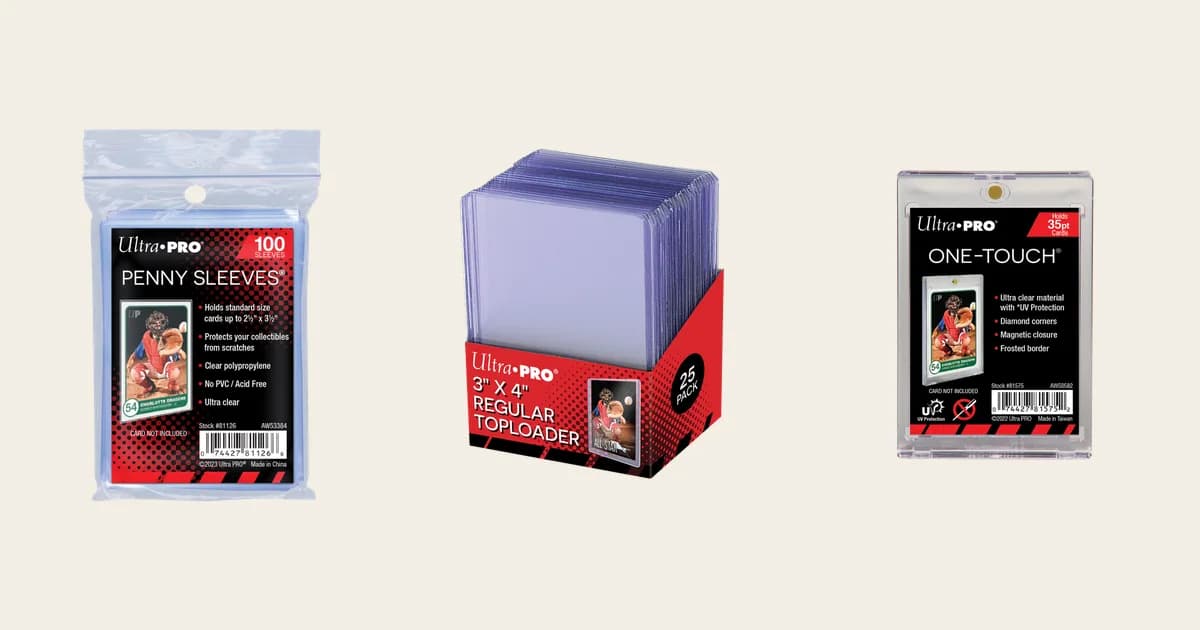
How to Store Sports Cards: Sleeves, Toploaders and Humidity
Guides · 9 min
How to Read Sports Card Odds: Topps Odds Sheets Explained
Guides · 11 min

What Is a Case Hit? Sports Card Case Hits Explained
Guides · 8 min
SP vs SSP Cards: What Short Prints and Variations Mean
Guides · 8 min
Disclaimer
RookieDesk publishes data, not investment or financial advice. Odds are the manufacturer's published odds, not a promise of what any one box contains. Checklists, release dates, grading fees and prices change after publication; each one here carries the date we checked it. Confirm critical details with the manufacturer, grader or seller before you buy or submit. RookieDesk is independent and not affiliated with any card manufacturer, league or players association, and carries no affiliate links, ads or sponsored posts; see our independence note. Articles are researched and written with AI tools, and every fact is checked against its cited source before publishing; see how we use AI.