Guides
What Is a Relic Card? Jersey, Patch and Bat Cards Explained
What is a relic card? Topps, CGC and Upper Deck definitions of jersey, patch and bat cards, what game-used and player-worn mean, and how often relics come.
TL;DR: Topps defines a relic card as "A card that contains a piece of memorabilia embedded in the card itself." The words printed on the card matter most: CGC's glossary says game-worn means worn "in an actual game," while player-worn means worn "but not in a game," usually for a photo shoot. Box guarantees and odds sheets tell you how often relics come; a 2026 Museum Collection laundry tag is 1:245 on Topps' sheet.
Updated Oct 25, 20267 min readBy RookieDesk Editorial
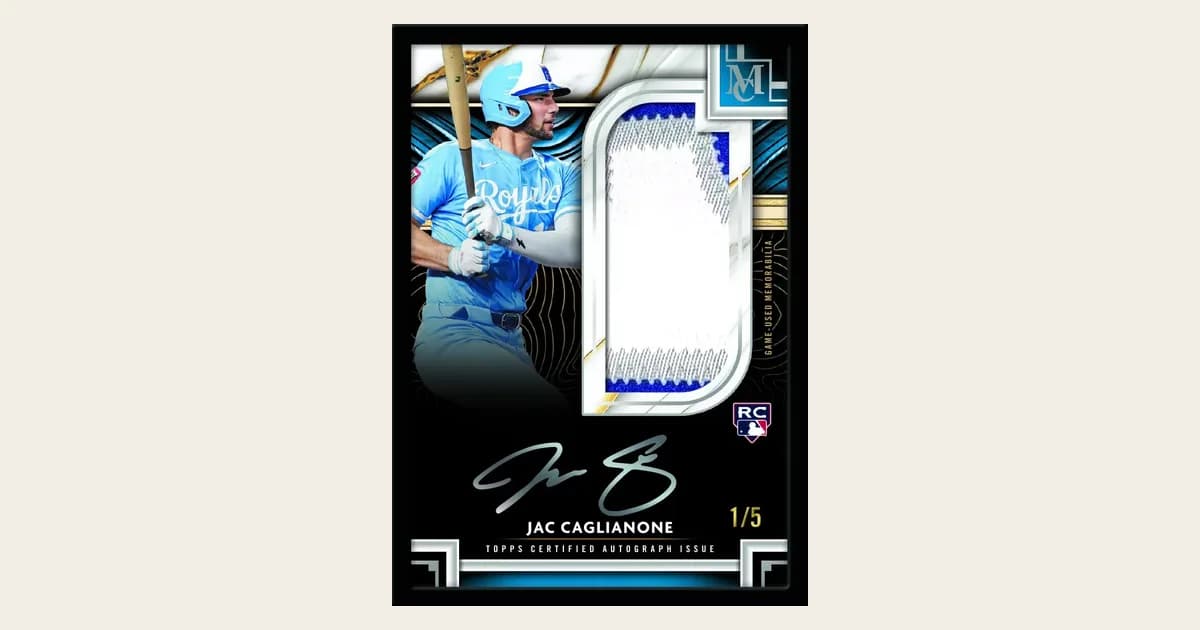
What is a relic card? It is a trading card with a piece of memorabilia, such as jersey fabric, a jersey patch or part of a bat, built into the card. This guide uses the definitions Topps, CGC, Upper Deck and PSA publish, explains what "game-used," "player-worn" and "event-worn" mean on the card, and shows how often relics turn up in 2026 Topps products.
What Is a Relic Card? (quick answer)
A relic card holds a physical piece of something connected to the player. Topps' Ripped glossary defines it as "A card that contains a piece of memorabilia embedded in the card itself," and adds that "Relic cards are typically considered chase cards and assigned more value than ordinary base cards." CGC uses the term memorabilia card for the same thing, with "See also: Relic Cards."
Key Takeaways
- Definition: a card with memorabilia embedded in it (Topps Ripped glossary).
- Jersey, patch, bat: a jersey card holds a swatch; a patch card holds a cut jersey patch; bat relics hold part of a bat, and some premium sets use the bat nameplate.
- Read the label: game-used, player-worn, event-worn and manufactured relic mean different things (CGC glossary).
- Relic or autograph relic: Topps checklists list autograph relics under their own heading.
- Frequency: box guarantees and Topps odds sheets, not guesses, tell you how often relics come.
Types of relic cards: jersey, patch, bat and more
Jersey cards. CGC defines a jersey card as "A card that contains a piece of jersey material, often referred to as a swatch embedded into the card stock." Upper Deck's glossary keeps two entries: a "Jersey Card" is simply "A card that contains a piece of embedded jersey," while a "Game-Used Jersey Card" contains "a piece of embedded jersey worn by a player during a game." The difference between those two entries is the whole story of relic wording.
Patch cards. Topps describes patch cards as "Cards that specifically feature a multi-colored jersey patch embedded in the card itself. Sometimes the jersey patches are game-used, but not always." Upper Deck splits them further: a patch card "features a cut patch from a player's jersey," a logo patch card features "a team or league logo patch from a jersey," and a letterman card "a cut letter patch from a player's jersey."
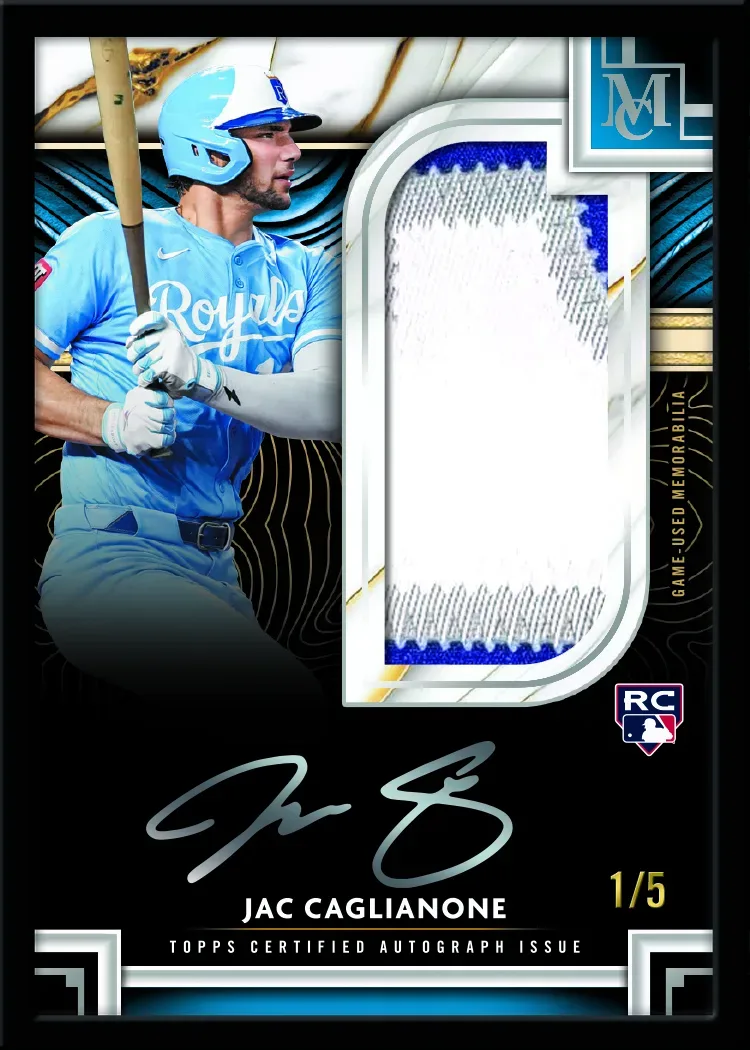 Card image: Topps (2026 Topps Museum Collection Baseball)
Bat, nameplate and tag pieces. CGC's definition of game-used memorabilia lists bats, gloves, batting gloves, bases and football pylons among the items, and premium sets go further. Topps' 2026 Museum Collection page lists Museum Memorabilia as "Jumbo relics that feature Jersey Numbers, Team Logos, MLB Silhouetted Batter logos and Laundry Tags," and Jumbo Bat Nameplate Relics as "Players nameplate from game used bats."
Manufactured relics. Not every piece came off a uniform. CGC defines a manufactured relic as "A non-game-used or player-worn item that is manufactured by the card company and included as a premium or insert in a trading card product."
Game-used, player-worn, event-worn: what the wording means
The label on the card tells you where the piece came from, and the terms are not interchangeable.
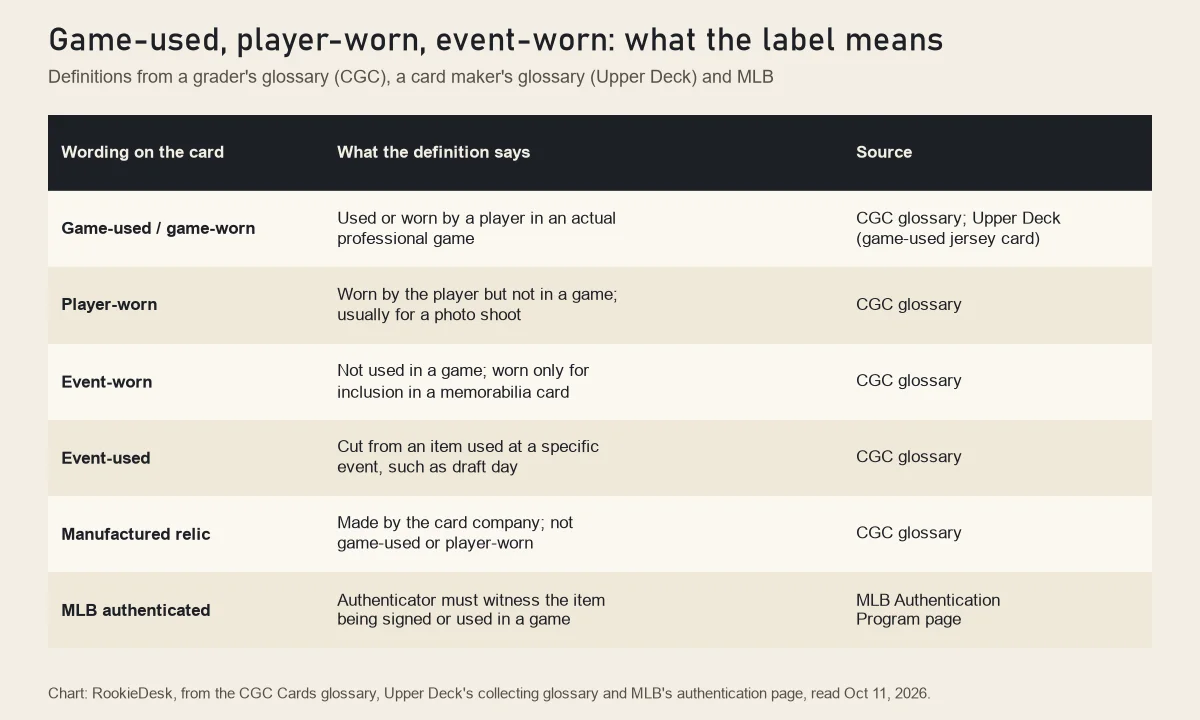 Chart: RookieDesk, from the CGC Cards glossary, Upper Deck's glossary and MLB's authentication page (read October 11, 2026)
- Game-used / game-worn. CGC: game-used is "used in a professional sporting event"; game-worn is "worn by a player in an actual game and embedded into a card by the card manufacturer."
- Player-worn. CGC: "worn by a player but not in a game. Usually, it is worn for a photo shoot."
- Event-worn. CGC: "not used in a game," and "only worn by the athlete and only for inclusion within a memorabilia card."
- Event-used. CGC: "cut or removed from a worn or used item at a specific event such as draft day or rookie debut events."
Two 2026 Topps card images show the difference. The Jac Caglianone Museum Collection patch autograph above, from a set Topps lists for November 11, is printed "GAME-USED MEMORABILIA." The Fernando Mendoza Holiday Football card below is printed "PLAYER-WORN MEMORABILIA."
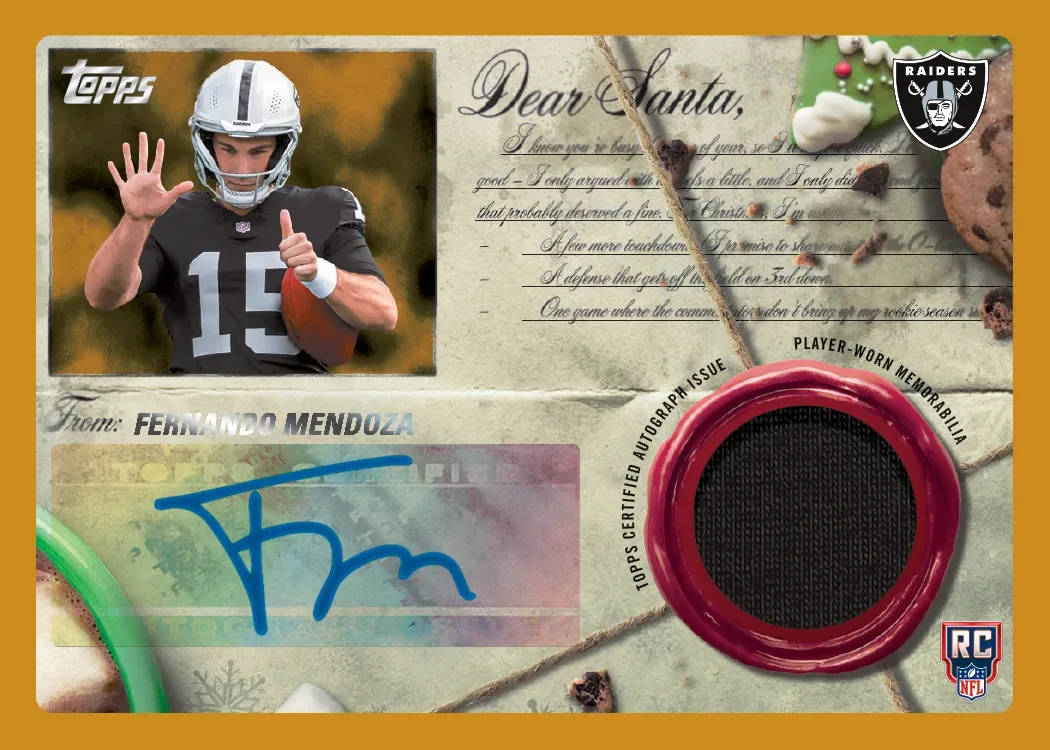 Card image: Topps (2026 Topps Holiday Football)
Some cards add a disclaimer on the back. A collector on r/baseballcards quoted one in September 2026: "the relic in this card is not from any specific game, event or season." That wording does not name a game, so the front label is the part to read.
Relic vs autograph relic
An autograph relic carries both a signature and a piece of memorabilia. Topps' 2026 Museum Collection checklist puts them under their own "AUTOGRAPH RELIC" heading, between its "AUTOGRAPH" and "RELIC" sections. Topps describes Momentous Material Jumbo Patch Autographs as a "Jumbo patch paired with an autograph" and Museum Framed Autograph Relic as "Metal framed autograph cards with an oversized relic." For 2026 Inception Football, Topps' page sells its Rookie Jumbo Relic with "Chase stunning patch autographs from the NFL's top rookies."
GODEEPER: Every autograph relic and relic list in one premium set, with Topps' odds for each. 2026 Topps Museum Collection Baseball: Checklist and Odds →
How often you get a relic card
Box guarantees. Topps states some relic guarantees in its box guides, and some boxes print them too, like the Flagship Basketball jumbo box below. Its Ripped guide for 2026-27 Flagship Basketball says each Hobby box has "20 packs of 12 cards, with one autograph or relic," and "The Hobby Jumbo Box holds 10 packs of 28 cards, with one autograph and one relic in every box." The 2026 Heritage Football Hobby box has "one autograph or relic card in every box." "Autograph or relic" means you get one of the two, not both. On Heritage's odds sheet the relic is the likely one: read per pack, the hobby hit lines add up to 1.07 a box and 0.80 of that is unsigned relics, by the desk's sum in our 2026 Topps Heritage Football odds guide.
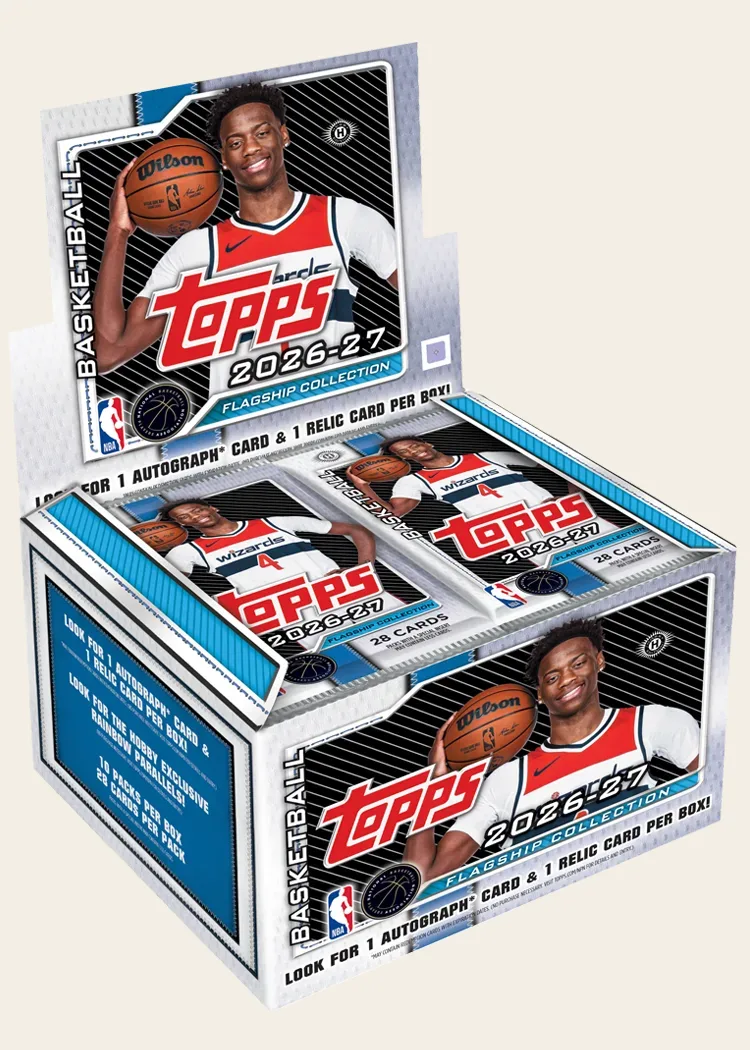 Product image: Topps (2026-27 Topps Flagship Basketball)
Odds sheets. For a single relic line, use the manufacturer's odds sheet. Topps' 2026 Museum Collection sheet gives one example of how much rarer the special pieces are than a plain swatch.
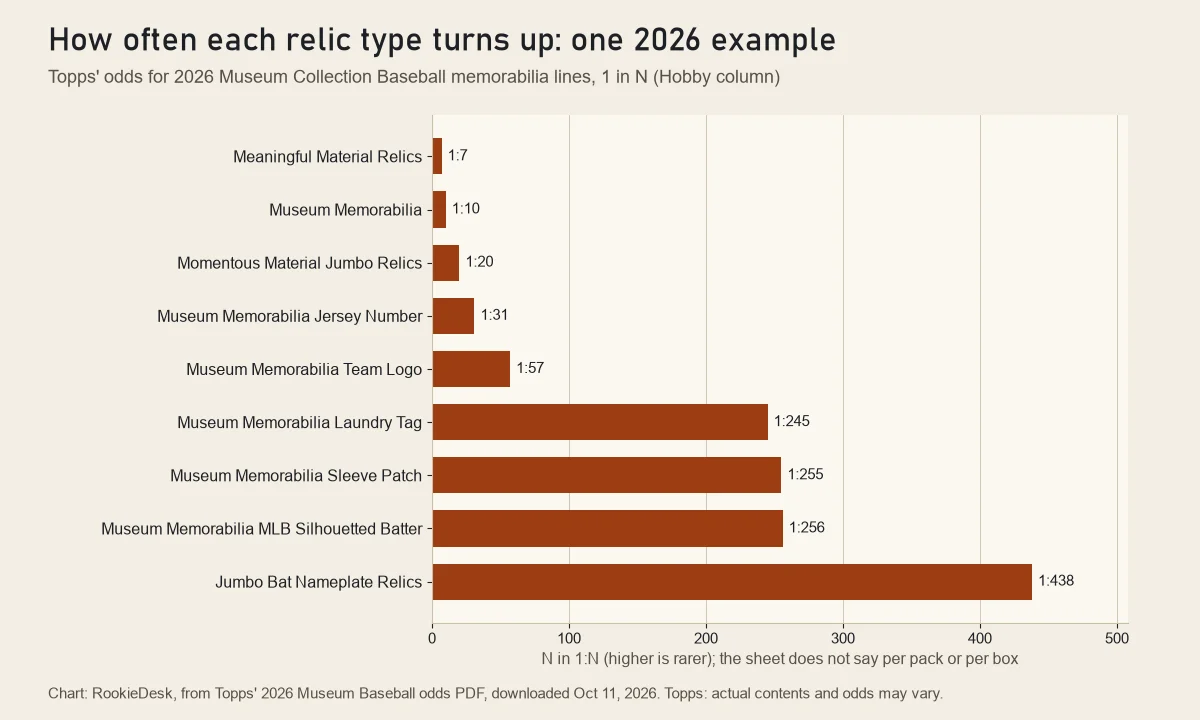 Chart: RookieDesk, from Topps' 2026 Museum Baseball odds PDF (downloaded October 11, 2026)
The plain Museum Memorabilia line is 1:10, but the Jersey Number version is 1:31, Team Logo 1:57 and Laundry Tag 1:245. Jumbo Bat Nameplate Relics are 1:438. The sheet uses one Hobby column and does not say whether the ratios are per pack or per box. Our guide to reading sports card odds explains the 1:N format, and the chance-to-pull calculator turns a ratio into a chance over several pulls.
Are relic pieces authenticated?
The card itself is the claim. PSA's glossary defines "Game Used Cards" as cards with "a piece of game used memorabilia embedded into the card," noting "These are often thicker than regular issue cards," but we found no PSA page that verifies the memorabilia inside a card. MLB's program sets a strict bar for its own authentication: "Only those items that an authenticator actually witnesses being signed or used in a game may be eligible." When a card says only "player-worn" or "event-worn," it is not claiming game use. To check the card itself, see our guide to spotting fake sports cards.
Community: why the wording confuses collectors
Collectors do ask about this wording. In September 2026, u/RIP_SHAFT, a Tony Gwynn collector new to cards, posted on r/baseballcards: "This card says “the relic in this card is not from any specific game, event or season”. I’m curious." and asked: "Does that mean it may not even be from the player shown in the other side." (post)
In February 2026, u/BlacksmithIcy106 wrote a long ranking of relic disclaimers on r/footballcards, arguing that "what was originally one of the most coveted card types has now become a mess of confusion, phrasing, and scamming." (post) Both are personal views.
I’m a long time Tony Gwynn and Phil Niekro collector. Have many bats, hats, jerseys and balls and just getting into cards now. I’ve owned rookie cards for a while but curious about all the 1/1’s and relics. This card says “the relic in this card is not from any specific game, event or season”. I’m curious. Does that mean it may not even be from the player shown in the other side. Like it’s an actual team jersey but not a Gwynn jersey? Sorry if this is stupid but I really am curious.
Our take
"Relic" only tells you there is memorabilia in the card; the wording next to it says what kind. Game-used and game-worn as CGC defines them, and Upper Deck's game-used jersey card, claim use in an actual game; player-worn and event-worn, by CGC's definitions, do not. And the special pieces are much rarer than a plain swatch on Topps' own sheet: a 2026 Museum Collection laundry tag is 1:245 against 1:10 for the plain Museum Memorabilia line.
Frequently Asked Questions
The six questions above cover the definition, game-used versus player-worn, event-worn, patch cards, how often relics come and authentication.
What is a relic card?
Topps defines a relic card as a card that contains a piece of memorabilia embedded in the card itself. The piece can be jersey fabric, a jersey patch, part of a bat or another item tied to the player. CGC's glossary calls the same thing a memorabilia card.
What is the difference between game-used and player-worn?
CGC's glossary defines game-worn memorabilia as worn by a player in an actual game, and player-worn as worn by a player but not in a game, usually for a photo shoot. Read the wording printed on the card, because it tells you which one you have.
What does event-worn mean on a relic card?
CGC defines event-worn memorabilia as a piece that was not used in a game, from an item worn by the athlete only for inclusion in a memorabilia card. Event-used is different: a piece cut from an item used at a specific event such as draft day.
Is a patch card the same as a relic card?
A patch card is a type of relic card. Topps describes patch cards as featuring a multi-colored jersey patch, adding that the patches are sometimes game-used but not always. Upper Deck lists logo patches and letter patches as their own card types.
How often do relic cards come in packs?
It depends on the product and the box. Topps' 2026-27 Flagship Basketball Hobby Jumbo box has one autograph and one relic in every box, while its Hobby box has one autograph or relic. Odds sheets give each relic line, such as 1:245 for a Museum Collection laundry tag.
Are relic cards authenticated?
The card maker vouches for the piece in the wording on the card. MLB's own program says only items an authenticator actually witnesses being signed or used in a game may be eligible. We found no PSA page that verifies the memorabilia inside a card.
How we checked this
Definitions come from the CGC Cards glossary, Upper Deck's collecting glossary and PSA's lingo pages, all read on October 11, 2026, and from Topps' Ripped glossary, read on October 10. Topps' Museum Collection and Inception product pages were read in a browser on October 11 and saved; the Museum odds and checklist PDFs were downloaded the same day. Box guarantees come from Topps Ripped box guides read on October 10. The two card images were checked for their printed wording. Reddit posts were read on their feeds on October 11 and are personal views. We have not opened any of these products.
References
- Topps Ripped glossary, Relic card: https://ripped.topps.com/definition/relic-card/
- Topps Ripped glossary, Patch card: https://ripped.topps.com/definition/patch-card/
- CGC Cards glossary: https://www.cgccards.com/glossary/
- Upper Deck, trading card glossary: https://upperdeck.com/guide-to-collecting/glossary-trading-cards-explained/
- PSA lingo, G: https://www.psacard.com/resources/lingo/g
- MLB, authentication program: https://www.mlb.com/official-information/authentication
- Topps, 2026 Museum Collection Baseball product page: https://www.topps.com/pages/topps-museum-collection-baseball
- Reddit r/baseballcards, "Question about relic cards": https://www.reddit.com/r/baseballcards/comments/1w6nt2x/question_about_relic_cards/
Related Reading
- How to Start Collecting Sports Cards: 2026 Beginner Guide: the beginner pillar, from packs to grading.
- Numbered Cards Explained: What /99, /25 and 1/1 Mean: what the serial number on a relic or autograph tells you.
- What Is a Case Hit? Sports Card Case Hits Explained: how the rarest inserts in a case work.
- What Is an RPA Card?: the rookie patch autograph, the relic most collectors chase by name.
- 2026-27 Topps Flagship Basketball Checklist and Box Guide: every box format and its autograph and relic guarantee.
- 2026 Panini Absolute Football Hobby Box: 3 Autos, 1 Relic: the Absolute hobby box now lists 1 memorabilia card instead of 2.
- 2026 Topps Museum Collection Baseball Hobby Box: 8 Cards: a sheet where the relic rows sum to more than the one relic per box the sell sheet promises.
About the author

Editorial desk
The RookieDesk desk. We read the paperwork before you open the box: Topps' checklists and odds sheets, the box art, grader fee pages. Every number links to its source and carries the date we checked it.
Keep reading
What Is a Base Card? 60 Look-Alikes on One 2026 Odds Sheet
Guides · 7 min
What Is a Redemption Card? 34 Real 1976 Paytons in 2026
Guides · 6 min
On-Card vs Sticker Autographs: 3,200 Lines, None Labelled
Guides · 6 min
What Is an Insert Card? About 11 per Cosmic Chrome Hobby Box
Guides · 6 min
What Is a Parallel Card? Update Series Has 43 of Them
Guides · 7 min
What Is a Cut Signature Card? JFK to Walter Payton in 2026
Guides · 7 min
What Is a Refractor Card? Refractors and SuperFractors
Guides · 6 min
What Is a Hit Card? Update's Odds Add Up to 1.06 a Box
Guides · 7 min
Disclaimer
RookieDesk publishes data, not investment or financial advice. Odds are the manufacturer's published odds, not a promise of what any one box contains. Checklists, release dates, grading fees and prices change after publication; each one here carries the date we checked it. Confirm critical details with the manufacturer, grader or seller before you buy or submit. RookieDesk is independent and not affiliated with any card manufacturer, league or players association, and carries no affiliate links, ads or sponsored posts; see our independence note. Articles are researched and written with AI tools, and every fact is checked against its cited source before publishing; see how we use AI.